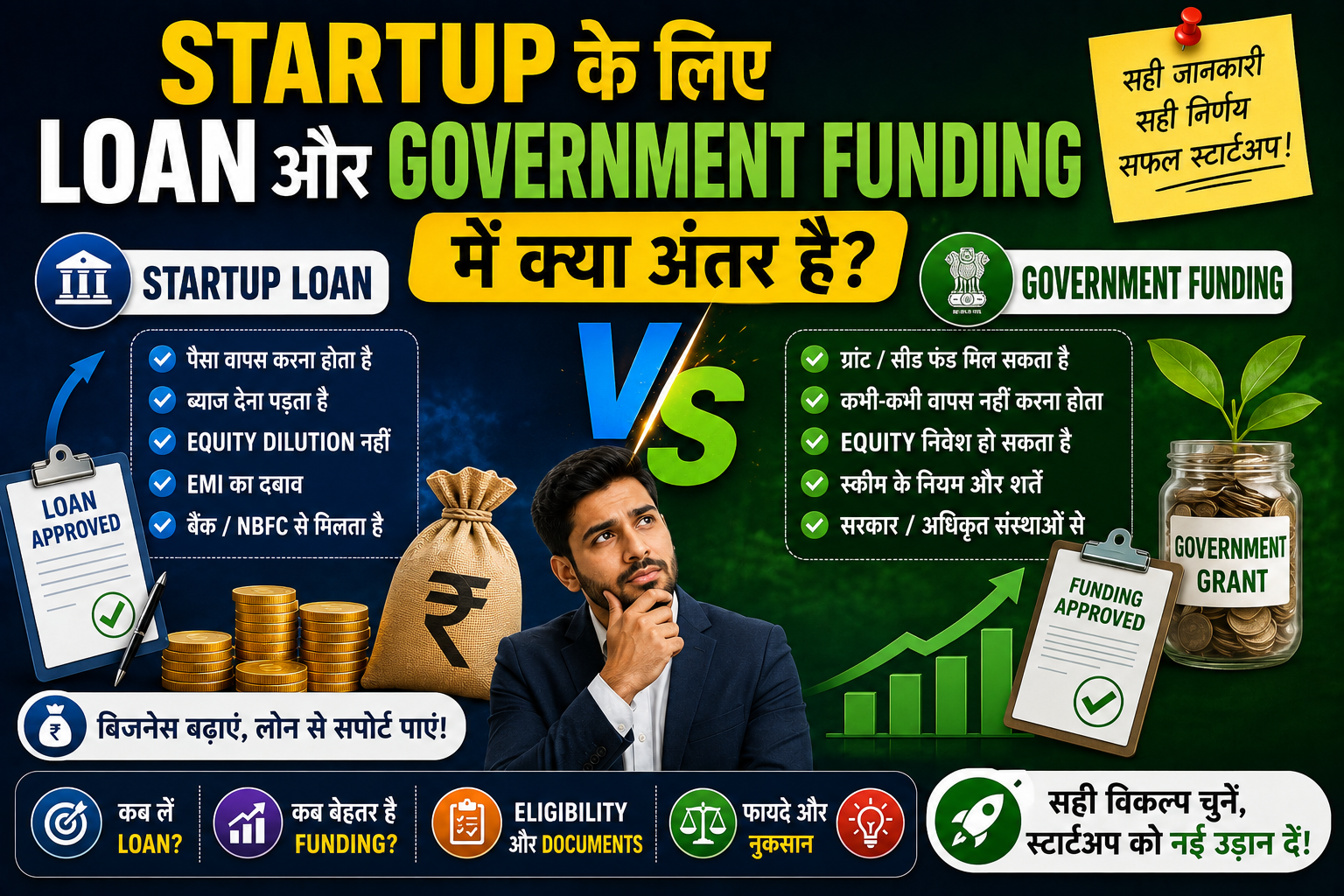
Startup के लिए Loan और Government Funding में क्या अंतर है? जानिए loan, grant, seed funding, equity funding, CGSS और Startup India schemes में फर्क, eligibility, फायदे, नुकसान और सही funding option कैसे चुनें।
भारत में startup शुरू करना जितना exciting है, उतना ही challenging है। एक entrepreneur के पास अच्छा business idea हो सकता है, technology हो सकती है और market opportunity भी हो सकती है, लेकिन business को idea से actual company बनाने के लिए capital की जरूरत होती है।
यहीं से एक महत्वपूर्ण सवाल सामने आता है:
Startup के लिए Loan लेना बेहतर है या Government Funding?
बहुत से entrepreneurs दोनों को एक ही चीज समझ लेते हैं। लेकिन वास्तव में दोनों के बीच बड़ा अंतर है।
Loan एक debt है।
आप पैसा लेते हैं और उसे तय समय के अनुसार interest सहित वापस करना होता है।
वहीं Government Funding एक broad term है। इसमें अलग-अलग प्रकार के support शामिल हो सकते हैं:
- Grant
- Seed Funding
- Subsidy
- Equity-linked investment
- Debt support
- Credit Guarantee
- Incubation support
- Interest support
- Sector-specific financial assistance
Startup India के official funding guide के अनुसार startup funding broadly equity financing, debt financing और grants जैसे forms में हो सकती है। Equity में investor capital के बदले ownership ले सकता है, debt में पैसा interest के साथ repay करना होता है और grants में सामान्यतः invested amount की repayment नहीं होती।
इसलिए सबसे पहले यह समझना जरूरी है:
हर Government Funding grant नहीं होती और हर Government Scheme free money नहीं देती।
उदाहरण के लिए Credit Guarantee Scheme for Startups (CGSS) startup को सीधे grant नहीं देती। यह eligible lenders द्वारा दिए गए debt को guarantee support देती है। दूसरी तरफ Startup India Seed Fund Scheme में eligible startups को proof of concept और prototype development के लिए grant तथा commercialization/scaling के लिए debt/convertible instruments के रूप में अलग-अलग support मिल सकता है।
इस article में हम विस्तार से समझेंगे कि Startup Loan और Government Funding में क्या difference है, कौन सा option किस stage पर बेहतर हो सकता है और entrepreneur को funding strategy कैसे बनानी चाहिए।
Table of Contents
Startup Loan क्या होता है?
Startup Loan एक debt financing है।
इसमें startup किसी bank, NBFC, financial institution या eligible lending institution से पैसा उधार लेता है।
उदाहरण:
मान लीजिए startup को:
₹20 लाख
की जरूरत है।
Bank ₹20 लाख का loan देता है।
अब startup को:
- Principal
- Interest
- Applicable fees
के साथ loan को तय schedule के अनुसार repay करना होगा।
Loan का फायदा यह है कि सामान्यतः founder को company की ownership का हिस्सा investor को नहीं देना पड़ता।
लेकिन downside यह है कि:
Repayment obligation business के ऊपर रहती है।
Business profit में हो या loss में, contractual repayment obligations बनी रह सकती हैं।
Government Funding क्या होती है?
Government Funding कोई एक single financial product नहीं है।
यह government द्वारा startups और entrepreneurs को support करने के लिए बनाए गए अलग-अलग programs का broad category है।
इसमें शामिल हो सकते हैं:
Grants
Specific project या innovation के लिए financial assistance।
Seed Funding
Early-stage product development, validation और commercialization के लिए support।
Equity-linked Funding
Government-supported ecosystem के जरिए investment funds/AIFs द्वारा startup में equity या equity-linked investment।
Credit Guarantee
Government lender के credit risk का कुछ हिस्सा guarantee करती है ताकि eligible startups के लिए debt access आसान हो सके।
Subsidy/Interest Support
कुछ schemes में project या borrowing cost को support करने वाले incentives हो सकते हैं।
Incubation Support
Funding के साथ infrastructure, mentoring, product development और market access।
इसलिए जब कोई कहता है:
“Government startup funding देती है।”
तो अगला सवाल होना चाहिए:
“किस form में?”
क्योंकि grant, loan और equity तीनों की financial consequences बिल्कुल अलग होती हैं।
Startup Loan और Government Funding में मुख्य अंतर
| Feature | Startup Loan | Government Funding |
|---|---|---|
| Nature | Debt | Grant/Debt/Equity/Other support |
| Repayment | आमतौर पर जरूरी | Instrument पर depend |
| Interest | Usually applicable | Scheme-specific |
| Equity Dilution | सामान्यतः नहीं | Equity component में हो सकता है |
| Collateral | Product/lender dependent | Scheme-specific |
| Eligibility | Credit + business assessment | Scheme-specific |
| Purpose | Working capital, assets, expansion आदि | Innovation, prototype, market entry, sector-specific goals आदि |
| Approval | Lender | Scheme/agency/incubator/institution |
| Cash Flow Pressure | अधिक | Grant में कम |
| Ownership | सामान्यतः founder के पास | Equity funding में share dilute हो सकता है |
इस table से सबसे महत्वपूर्ण बात स्पष्ट होती है:
Loan और Government Funding को “कौन सस्ता है?” से पहले “किस प्रकार का capital है?” के आधार पर समझना चाहिए।
Loan लेने पर Equity क्यों नहीं जाती?
अगर startup ने bank से:
₹50 लाख loan
लिया है, तो सामान्यतः bank company का shareholder नहीं बन जाता।
Founder की equity ownership वही रह सकती है।
लेकिन founder को:
₹50 लाख + applicable interest
repay करना होगा।
यानी loan का major advantage:
Ownership dilution नहीं।
लेकिन major disadvantage:
Repayment pressure।
Government Grant में क्या होता है?
Grant सामान्य loan से अलग होती है।
अगर eligible startup को किसी government scheme के तहत:
₹10 लाख grant
मिलती है, तो सामान्यतः इसे उसी तरीके से EMI के रूप में repay नहीं करना होता, subject to scheme terms and milestone conditions.
लेकिन grant का मतलब यह नहीं कि:
“Government कोई भी startup को ₹10 लाख दे देती है।”
Grant अक्सर:
- Specific purpose
- Eligibility criteria
- Milestones
- Application process
- Evaluation
- Reporting requirements
से जुड़ी होती है।
इसलिए grant प्राप्त करना loan लेने से आसान हो, यह जरूरी नहीं है।
Startup India Seed Fund Scheme इसका अच्छा उदाहरण है
Startup India Seed Fund Scheme (SISFS) early-stage startups के लिए बनाई गई थी ताकि वे proof of concept, prototype development, product trials, market entry और commercialization जैसी activities कर सकें।
Current Startup India June 2026 playbook के अनुसार eligible startups को:
₹20 लाख तक grant
PoC validation, prototype development या product trials के लिए मिल सकती है।
इसके अलावा:
₹50 लाख तक investment
market entry, commercialization या scaling के लिए convertible debentures, debt या debt-linked instruments के रूप में उपलब्ध हो सकती है।
यह example दिखाता है कि एक ही government scheme में भी grant और debt-like funding अलग instruments हो सकते हैं।
क्या Startup India Seed Fund अभी Apply किया जा सकता है?
यहां current status जानना जरूरी है।
Startup India के June 2026 official playbook के अनुसार SISFS के लिए startup applications की last date:
31 May 2026
थी और उस playbook के अनुसार disbursals ongoing हैं। इसलिए August 2026 में नया application करने से पहले current application window/notification official portal पर verify करना चाहिए।
इससे एक important lesson मिलता है:
Government schemes permanent open loan counters नहीं होतीं।
कई schemes:
- Application windows
- Calls for proposals
- Incubator selection
- Periodic notifications
के आधार पर operate करती हैं।
Government Funding का मतलब Free Money नहीं है
यह शायद सबसे important reality check है।
Government funding में:
Grant
हो सकती है।
लेकिन:
Government Loan
भी हो सकता है।
और:
Credit Guarantee
भी हो सकती है।
और:
Government-supported Equity Investment
भी हो सकता है।
इसलिए किसी scheme का नाम देखकर यह assume न करें:
“Government funding है, तो पैसा वापस नहीं करना पड़ेगा।”
Scheme का financial instrument पहले समझें।
Credit Guarantee क्या होती है?
Credit Guarantee को लोग अक्सर funding समझ लेते हैं।
लेकिन यह technically अलग mechanism है।
मान लीजिए एक bank startup को:
₹2 करोड़ loan
देना चाहता है।
लेकिन startup के पास traditional collateral नहीं है।
Credit guarantee mechanism lender के risk को कुछ हद तक cover कर सकता है।
इससे lender को startup को debt देने के लिए अधिक comfort मिल सकता है।
लेकिन:
Government guarantee startup को direct cash नहीं देती।
Startup को loan lender से मिलता है।
Startup के लिए Credit Guarantee Scheme (CGSS)
Government ने Credit Guarantee Scheme for Startups (CGSS) बनाई है ताकि eligible DPIIT-recognised startups को lenders से debt financing access मिल सके।
Startup India के official information के अनुसार CGSS:
- Scheduled Commercial Banks
- NBFCs
- SEBI-registered AIFs के Venture Debt Funds
द्वारा eligible DPIIT-recognised startups को दिए गए credit instruments पर guarantee support प्रदान करती है।
Current revised framework में eligible borrower के लिए guarantee coverage की maximum limit:
₹20 करोड़
तक है।
लेकिन:
CGSS = ₹20 करोड़ government grant
नहीं है।
यह distinction बहुत important है।
CGSS में Startup को पैसा कौन देता है?
Startup सीधे government से loan नहीं लेता।
Process broadly:
Startup → Eligible Lender → Credit Assessment → Loan/Debt Facility → Guarantee Coverage
CGSS के तहत eligible startup को lender के पास जाना होता है। Startup India के official information के अनुसार lender project की feasibility और viability assess करता है और applicable guidelines के अनुसार credit sanction करता है।
इसलिए:
Government guarantee ≠ automatic loan approval
अगर startup का business model weak है, cash flow नहीं है या lender को repayment risk बहुत ज्यादा लगता है, तो guarantee scheme के बावजूद approval automatic नहीं होता।
DPIIT Recognition क्यों Important है?
Government startup schemes में DPIIT recognition बहुत महत्वपूर्ण हो सकती है।
Current Startup India criteria के अनुसार normal startup recognition के लिए:
- Entity का incorporation/registration eligible legal form में होना चाहिए
- Startup की age सामान्यतः 10 years से अधिक नहीं होनी चाहिए
- Annual turnover ₹200 करोड़ से अधिक नहीं होना चाहिए
- Business innovation/improvement या scalable model के साथ employment/wealth creation potential रखता हो
DeepTech startups के लिए age और turnover thresholds अलग हैं। Startup India के current portal के अनुसार DeepTech recognition में 20 years तक की age और ₹300 करोड़ तक turnover threshold दी गई है।
February 2026 की DPIIT notification के बाद normal startup recognition के turnover threshold को ₹100 करोड़ से बढ़ाकर:
₹200 करोड़
किया गया है।
लेकिन:
DPIIT Recognition = Funding Guaranteed
नहीं है।
Startup India के official material के अनुसार recognition startup को विभिन्न benefits के लिए eligible बनाता है, लेकिन प्रत्येक incentive की अपनी eligibility और application process होती है।
Loan के लिए DPIIT Recognition जरूरी है?
हर startup loan के लिए DPIIT recognition जरूरी हो, ऐसा नहीं है।
एक bank सामान्य MSME/business loan के लिए:
- Business financials
- Revenue
- Credit history
- Banking history
- Cash flow
- Promoter profile
जैसी चीजों को देख सकता है।
लेकिन कुछ startup-specific government schemes, जैसे CGSS, में DPIIT recognition eligibility का हिस्सा है।
इसलिए entrepreneur को यह distinction समझना चाहिए:
General Business Loan
और
Startup-specific Government Scheme
एक ही चीज नहीं हैं।
Startup Loan कब बेहतर हो सकता है?
Loan तब ज्यादा suitable हो सकता है जब startup:
- Revenue generate कर रहा हो
- Cash flow predictable हो
- Business model validated हो
- Monthly repayment comfortably कर सके
- Founder equity dilute नहीं करना चाहता
- Funding का use measurable return generate करने में होगा
उदाहरण:
आपका SaaS startup:
₹30 लाख monthly revenue
generate कर रहा है।
Business stable है।
आपको:
₹1 करोड़
नई sales team और technology infrastructure के लिए चाहिए।
अगर expected additional cash flow loan repayment से काफी ज्यादा है, तो debt financing reasonable हो सकती है।
Loan कब Dangerous हो सकता है?
अगर startup:
- अभी pre-revenue है
- Product-market fit नहीं मिला
- Customer demand uncertain है
- Monthly cash burn बहुत ज्यादा है
- Repayment source unclear है
तो loan लेना risky हो सकता है।
क्यों?
क्योंकि startup के पास:
Revenue uncertainty
और साथ में:
Fixed repayment obligation
दोनों हो जाते हैं।
यह combination early-stage startup के लिए dangerous हो सकता है।
Government Grant कब बेहतर हो सकती है?
Grant विशेष रूप से useful हो सकती है जब startup:
- Ideation stage में है
- Prototype बना रहा है
- R&D कर रहा है
- Technology validation कर रहा है
- Product trials कर रहा है
- High-risk innovation पर काम कर रहा है
ऐसी stage में revenue नहीं होता।
इसलिए EMI-based loan unnecessary pressure create कर सकता है।
अगर eligible grant उपलब्ध है, तो non-dilutive support startup को runway दे सकती है।
Equity Funding Government Funding से कैसे जुड़ती है?
Government खुद हर startup में direct equity investment नहीं करती।
उदाहरण के लिए Startup India Fund of Funds 2.0 को April 2026 में ₹10,000 करोड़ के corpus के साथ approve किया गया।
इस scheme का structure ऐसा है कि government fund SEBI-registered Alternative Investment Funds (AIFs) के corpus में contribute करता है, और वे AIFs eligible startups में equity/equity-linked instruments के जरिए invest करते हैं।
इसका मतलब:
Government → Fund of Funds → AIF → Startup
यह direct:
Government → Startup
equity cheque नहीं है।
यह distinction startup founders के लिए बहुत important है।
Fund of Funds 2.0 किस तरह के Startups पर Focus करता है?
April 2026 की notification के अनुसार Startup India Fund of Funds 2.0 का corpus:
₹10,000 करोड़
है।
इसका focus अलग-अलग segments पर है, जिनमें:
- DeepTech
- Early-growth startups
- Technology-driven innovative manufacturing
- Sector/stage-agnostic startups
शामिल हैं।
Scheme SEBI-registered AIFs के corpus में contribution करती है ताकि वे recognised startups में equity और equity-linked instruments में निवेश कर सकें।
इसलिए अगर कोई founder पूछता है:
“क्या मुझे Government से ₹5 करोड़ equity funding मिलेगी?”
तो answer आमतौर पर इतना simple नहीं है।
आपको relevant AIF/investor ecosystem तक पहुंचना पड़ सकता है।
Loan और Government Grant में Repayment का फर्क
यह सबसे आसान तरीके से समझें।
Loan
आप:
₹50 लाख
लेते हैं।
आपको:
₹50 लाख + Interest
वापस करना है।
Grant
आप:
₹20 लाख
eligible grant के रूप में receive करते हैं।
Scheme terms के अनुसार सामान्यतः repayment नहीं होती, लेकिन fund का उपयोग approved purpose और milestones के अनुसार करना पड़ सकता है।
इसलिए:
Loan = Repayable Capital
Grant = Usually Non-Repayable Support
Loan और Equity में Ownership का फर्क
मान लीजिए startup की valuation:
₹10 करोड़
है।
Investor:
₹2 करोड़
invest करता है।
अगर transaction के terms के अनुसार investor को 20% equity मिलती है, तो founder ownership dilute होगी।
लेकिन:
₹2 करोड़ bank loan
हो तो bank सामान्यतः equity shareholder नहीं बनता।
इसलिए:
Debt preserves ownership but creates repayment pressure.
Equity reduces repayment pressure but dilutes ownership.
Government Funding में Equity Dilution हो सकती है?
अगर funding equity या equity-linked instrument के रूप में है, तो dilution हो सकती है।
लेकिन grant में सामान्यतः equity नहीं जाती।
और debt में सामान्यतः equity dilution नहीं होती।
इसलिए founder को funding source का नाम नहीं, बल्कि:
Instrument
समझना चाहिए।
Startup के लिए कौन सा Funding Option किस Stage पर बेहतर है?
Stage 1: Idea Stage
अगर अभी सिर्फ idea है और revenue नहीं है:
Possible options:
- Founder capital
- Incubator support
- Competitions
- Grants
- Early government programs
Loan generally first choice नहीं होना चाहिए।
Stage 2: Prototype Stage
अब product/prototype बन रहा है।
Possible funding:
- Government grants
- Seed funds
- Incubators
- Angel investors
- Founder capital
Startup India Seed Fund Scheme जैसे programs का objective भी PoC, prototype और product trials जैसे early-stage needs को support करना है।
Stage 3: Market Validation
अब:
- Customers मिल रहे हैं
- Product test हो चुका है
- Initial revenue आ रहा है
अब:
- Seed equity
- Angel funding
- Government seed support
- Convertible/debt instruments
जैसे options देखे जा सकते हैं।
Stage 4: Early Traction
अब startup के पास:
- Revenue
- Customers
- KPIs
- Market traction
है।
इस stage पर:
- Bank loan
- NBFC financing
- Venture debt
- Equity funding
- Government credit guarantee
का combination possible हो सकता है।
Startup India की official funding guide भी early traction stage पर banks/NBFCs और venture debt को relevant sources के रूप में बताती है क्योंकि startup market traction और revenue के आधार पर debt service कर सकता है।
Stage 5: Scaling
अब startup:
- Product-market fit हासिल कर चुका है
- Revenue rapidly बढ़ रहा है
- New markets में जाना चाहता है
- Team expand करना चाहता है
तो funding options:
- VC
- Growth equity
- Venture debt
- Bank finance
- AIF investment
- Government-backed ecosystem programs
हो सकते हैं।
Startup India भी scaling stage पर Fund of Funds, Investor Connect और अन्य growth-oriented resources को highlight करता है।
एक Practical Example
मान लीजिए दो founders ने AI-based SaaS startup शुरू किया।
Situation A
Revenue:
₹0
Product:
Prototype stage
Monthly Burn:
₹5 लाख
Funding Need:
₹30 लाख
ऐसी स्थिति में:
₹30 लाख bank loan
लेना risky हो सकता है।
क्योंकि revenue नहीं है और EMI repay करने का clear source नहीं है।
अगर eligible government grant/seed support या equity funding available है, तो वह ज्यादा appropriate हो सकती है।
Situation B
अब वही startup 18 months बाद:
Monthly Revenue:
₹20 लाख
Gross Margin:
70%
Stable Customers:
150+
Funding Need:
₹1 करोड़
Expansion Purpose:
Sales + Technology
अब debt financing consider करना ज्यादा reasonable हो सकता है क्योंकि business के पास repayment capacity दिखाई दे रही है।
अगर startup DPIIT-recognised है और applicable conditions satisfy करता है, तो CGSS जैसे credit-support mechanisms भी explore किए जा सकते हैं।
Government Funding के फायदे
1. Non-Dilutive Options
कुछ grants में equity नहीं देनी पड़ती।
2. Early-Stage Support
Prototype और PoC जैसी activities के लिए useful हो सकती है।
3. Risk Reduction
Government support private investors को भी confidence दे सकता है।
4. Sector-Specific Programs
Biotech, DeepTech, Defence, Agriculture, Space, Manufacturing आदि sectors के लिए targeted programs मिल सकते हैं।
Startup India के June 2026 playbook में central government के startup-related programs की लंबी सूची है, जिसमें biotech, deeptech, agriculture, defence, quantum, space, manufacturing और technology जैसे क्षेत्रों के लिए अलग-अलग initiatives शामिल हैं।
Government Funding की Limitations
Government funding को idealize करना भी गलत है।
1. Competition
हर applicant को funding नहीं मिलती।
2. Eligibility Restrictions
हर scheme हर startup के लिए नहीं है।
3. Application Windows
कुछ schemes specific calls/windows में applications लेती हैं।
4. Documentation
Business plan, incorporation documents, financial projections और technical details मांगी जा सकती हैं।
5. Milestones
Grant या seed support milestone-based हो सकती है।
6. Sector Restrictions
कुछ schemes specific sectors के लिए होती हैं।
Startup India की official 2026 playbook भी बताती है कि schemes समय के साथ modify हो सकती हैं और कुछ programs application windows/calls के आधार पर operate करते हैं।
Startup Loan के फायदे
Ownership Dilution नहीं
Founder equity retain कर सकता है।
Faster Funding
अगर business bankable है तो loan process grant application से faster हो सकती है।
Flexible Usage
Product के अनुसार working capital, equipment, expansion आदि के लिए उपयोग हो सकता है।
Predictable Cost
Interest rate और repayment schedule पहले से पता हो सकता है।
Startup Loan के नुकसान
EMI Pressure
हर महीने repayment obligation।
Interest Cost
Principal के ऊपर interest देना पड़ता है।
Credit Risk
Late payments credit profile को नुकसान पहुंचा सकते हैं।
Early-Stage Risk
Revenue uncertain होने पर debt dangerous हो सकता है।
Covenants/Conditions
कुछ loans में specific financial/security conditions हो सकती हैं।
Government Funding vs Loan: किसमें Risk ज्यादा है?
यह funding instrument पर depend करता है।
Grant
Financial repayment risk comparatively low हो सकता है।
Equity
Repayment pressure कम, लेकिन ownership dilution।
Loan
Ownership dilution कम, लेकिन repayment risk ज्यादा।
Credit Guarantee-backed Loan
Collateral requirement कुछ cases में आसान हो सकती है, लेकिन loan repayment obligation फिर भी रहती है।
इसलिए:
“Government funding safer है”
एक incomplete statement है।
आपको पूछना चाहिए:
किस type की government funding?
क्या Startup को Loan और Government Funding दोनों मिल सकते हैं?
कुछ situations में startup multiple funding sources का combination use कर सकता है, लेकिन यह automatically allowed नहीं है।
उदाहरण:
Startup को:
₹20 लाख grant
मिलती है।
और बाद में:
₹50 लाख bank loan
लेता है।
यह possible हो सकता है अगर दोनों schemes और loan terms इसकी अनुमति देते हों।
लेकिन कुछ schemes में:
- Double funding
- Same expense पर duplicate support
- Previous government monetary support limits
जैसी restrictions हो सकती हैं।
उदाहरण के लिए SISFS eligibility criteria में startup को किसी अन्य Central/State Government scheme से ₹10 लाख से अधिक monetary support प्राप्त नहीं होना चाहिए, subject to scheme rules.
इसलिए:
एक ही expense को दो government schemes से fund करने की planning बिना rules check किए न करें।
Startup Funding के लिए DPIIT Recognition कैसे लें?
Eligible startup Startup India platform के माध्यम से DPIIT recognition के लिए apply कर सकता है।
Current process में eligible entities National Single Window System (NSWS) के माध्यम से startup recognition application submit कर सकती हैं।
DPIIT Startup Recognition Information
ध्यान रखें:
DPIIT recognition के लिए government ने कोई private agent/franchise officially appoint नहीं किया है।
Startup India portal भी recognition application के संबंध में इस बात की warning देता है।
Government Funding खोजने का सही तरीका
Google पर केवल:
“Government loan for startup”
search करना पर्याप्त नहीं है।
पहले startup की:
Stage
Idea / Prototype / Revenue / Scaling
Sector
AI / SaaS / Manufacturing / Agriculture / Biotech / Defence / Space
Funding Need
₹5 लाख / ₹50 लाख / ₹5 करोड़
Instrument
Grant / Loan / Equity / Guarantee
तय करें।
फिर relevant government schemes search करें।
Startup India का official portal central government schemes को sector और startup needs के अनुसार explore करने का option देता है।
Startup India — Government Schemes for Startups
Startup के लिए Funding Strategy कैसे बनाएं?
एक practical funding ladder:
Step 1 — Founder Capital
Idea validate करने के लिए।
Step 2 — Grant/Incubator Support
Prototype और PoC के लिए।
Step 3 — Angel/Seed Equity
Market validation और initial growth के लिए।
Step 4 — Bank/NBFC/Venture Debt
Revenue आने के बाद working capital और predictable expansion के लिए।
Step 5 — VC/Growth Equity
Aggressive scaling के लिए।
यह कोई universal rule नहीं है, लेकिन funding instrument को business stage के साथ match करना generally sensible approach है।
सबसे बड़ी गलती: सिर्फ Funding Amount देखना
मान लीजिए:
Option A
₹1 करोड़ loan
Option B
₹70 लाख equity
Option C
₹30 लाख grant + ₹40 लाख equity
Founder को सिर्फ यह नहीं देखना चाहिए:
“किसमें सबसे ज्यादा पैसा मिल रहा है?”
बल्कि:
- Repayment
- Dilution
- Cost
- Control
- Risk
- Speed
- Eligibility
- Future fundraising
सभी देखना चाहिए।
Example: ₹1 Crore की Funding Requirement
मान लीजिए startup को:
₹1 करोड़
चाहिए।
तीन options हैं।
Option 1: ₹1 Crore Loan
Ownership:
100% founder
लेकिन EMI + interest obligation।
Option 2: ₹1 Crore Equity
Ownership:
कुछ percentage dilute
लेकिन monthly EMI नहीं।
Option 3: ₹30 Lakh Grant + ₹70 Lakh Equity
कम dilution हो सकता है, लेकिन grant eligibility और availability पर depend करेगी।
अगर startup अभी pre-revenue है, Option 1 dangerous हो सकता है।
अगर startup highly profitable और cash-flow positive है, Option 1 attractive हो सकता है।
अगर startup high-growth है और aggressively expand करना चाहता है, Option 2 या 3 अधिक suitable हो सकता है।
Government Funding के लिए कौन से Documents तैयार रखें?
Scheme-specific requirements अलग हो सकती हैं, लेकिन startup को सामान्यतः:
- Certificate of Incorporation
- PAN
- DPIIT Recognition Certificate, where applicable
- Founder KYC
- Pitch Deck
- Business Plan
- Financial Projections
- Bank Statements
- ITR, where applicable
- GST documents, where applicable
- Product/Prototype details
- Market analysis
- Use of Funds
- Cap table
- Intellectual Property details
जैसे documents तैयार रखने चाहिए।
Loan Application के लिए क्या चाहिए?
Bank/NBFC loan के लिए lender के अनुसार requirements बदल सकती हैं, लेकिन सामान्यतः:
- Business registration
- PAN
- KYC
- Bank statements
- ITR
- GST returns
- Financial statements
- Revenue records
- Existing debt details
- Credit history
- Business plan
- Cash-flow projections
महत्वपूर्ण हो सकते हैं।
कौन सा Funding Option सबसे सस्ता है?
इसका कोई universal answer नहीं है।
Grant
अगर eligible और non-repayable है, तो direct financial cost कम हो सकती है।
Loan
Interest देना पड़ता है।
Equity
Interest नहीं देना पड़ता, लेकिन ownership का हिस्सा देना पड़ता है।
इसलिए:
Loan का cost = Interest + Fees + Repayment Risk
Equity का cost = Ownership Dilution + Potential Control Loss
Grant का cost = Eligibility + Compliance + Restrictions + Opportunity Cost
इसलिए “free funding” शब्द practically misleading हो सकता है।
Startup के लिए Golden Rule
अगर revenue नहीं है:
पहले grant/seed/equity options देखें।
अगर revenue शुरू हो चुका है:
Debt और equity दोनों compare करें।
अगर cash flow predictable है:
Loan/venture debt अधिक attractive हो सकता है।
अगर growth बहुत तेज है:
Equity funding अधिक suitable हो सकती है।
अगर innovation/R&D intensive है:
Government grant/sector-specific support explore करें।
अगर collateral problem है:
CGSS जैसे credit guarantee mechanisms check करें, जहां applicable हों।
Final Comparison
| सवाल | Loan | Government Grant | Government-backed Equity | Credit Guarantee |
|---|---|---|---|---|
| पैसा वापस करना? | हां | सामान्यतः नहीं | नहीं, लेकिन equity दी जाती है | Underlying loan repay करना होता है |
| Interest? | हां | नहीं | नहीं | Loan terms के अनुसार |
| Equity Dilution? | सामान्यतः नहीं | नहीं | हां | सामान्यतः नहीं |
| EMI? | हां | नहीं | नहीं | Underlying debt पर हो सकती है |
| Collateral? | Product-specific | आमतौर पर नहीं | नहीं | Scheme/lender-specific |
| Startup Stage | Revenue/traction | Early-stage | Growth | Creditworthy startup |
| Best For | Working capital/expansion | PoC/prototype | High-growth scaling | Debt access |
Final Verdict: Startup के लिए Loan बेहतर है या Government Funding?
इसका जवाब:
“Startup की stage पर depend करता है।”
अगर startup अभी idea या prototype stage में है और revenue नहीं है, तो loan लेना अक्सर सही पहला कदम नहीं होता।
ऐसी स्थिति में:
Grant + Incubator + Seed Funding + Founder Capital
ज्यादा sensible options हो सकते हैं।
अगर startup ने market validate कर लिया है और revenue आने लगा है, तो:
Loan + Equity + Government Credit Support
का combination consider किया जा सकता है।
और अगर startup mature है, cash flow predictable है और expansion के लिए capital चाहिए, तो loan कई situations में equity से बेहतर हो सकता है क्योंकि founder ownership dilute नहीं करता।
लेकिन अगर startup बहुत तेजी से scale कर रहा है और revenue के मुकाबले capital requirement बहुत बड़ी है, तो equity funding debt से ज्यादा appropriate हो सकती है।
सबसे important बात:
Government Funding को “free money” समझकर strategy मत बनाइए।
Government ecosystem में:
- Grants
- Loans
- Credit Guarantees
- Equity-linked investments
- Incubation support
- Subsidies
- Sector-specific programs
सभी अलग-अलग forms में हो सकते हैं।
उदाहरण के लिए Startup India Seed Fund Scheme में eligible startups के लिए ₹20 लाख तक grant और commercialization/scaling के लिए ₹50 लाख तक debt/convertible instruments का framework है।
वहीं CGSS के तहत eligible DPIIT-recognised startups के लिए lenders को credit guarantee support मिलता है; यह startup को direct grant नहीं देता। Current framework में maximum guarantee coverage ₹20 करोड़ तक है।
और Startup India Fund of Funds 2.0 में Government का ₹10,000 करोड़ corpus सीधे startups को cheque देने के बजाय SEBI-registered AIFs के corpus में contribute करता है, जो eligible startups में equity/equity-linked investments करते हैं।
यानी एक ही शब्द:
“Government Funding”
के अंदर कई completely different financial instruments छिपे हो सकते हैं।
निष्कर्ष
Startup financing को समझने का सबसे अच्छा तरीका है कि funding को तीन बड़े buckets में देखें:
1. Debt
Loan
पैसा वापस करना होगा।
Founder ownership सामान्यतः dilute नहीं होती।
2. Equity
Investor Capital
पैसा वापस करने की fixed EMI नहीं होती, लेकिन founder को ownership का हिस्सा देना पड़ सकता है।
3. Non-Dilutive Support
Grant
Eligible होने पर पैसा specific purpose के लिए मिल सकता है और सामान्यतः repayment नहीं होती, लेकिन scheme conditions और milestones लागू हो सकते हैं।
Government इन तीनों में अलग-अलग तरीकों से भूमिका निभा सकती है।
इसलिए startup founder को केवल यह नहीं पूछना चाहिए:
“Government कितना पैसा दे रही है?”
बल्कि पूछना चाहिए:
“यह पैसा किस instrument में है?”
“क्या इसे वापस करना है?”
“क्या equity dilute होगी?”
“क्या collateral चाहिए?”
“क्या EMI आएगी?”
“क्या funding किसी specific milestone या purpose से जुड़ी है?”
“क्या मैं इस funding के लिए वास्तव में eligible हूं?”
यही सवाल आपको गलत funding decision से बचा सकते हैं।
और सबसे महत्वपूर्ण:
सबसे बड़ी funding वही नहीं है जो सबसे ज्यादा पैसा देती है; सबसे अच्छी funding वह है जो startup के current stage, cash flow और long-term ownership goals के साथ सबसे अच्छी तरह fit होती है।
अगर startup अभी revenue generate नहीं कर रहा, तो ₹50 लाख का loan मिल जाना अच्छी खबर नहीं भी हो सकती—वह future EMI burden बन सकता है।
लेकिन अगर startup के पास predictable revenue है और ₹50 लाख का capital investment अगले 2–3 वर्षों में cash flow को significantly बढ़ा सकता है, तो वही loan एक powerful growth tool बन सकता है।
इसी तरह ₹20 लाख की government grant सुनने में बहुत attractive लग सकती है, लेकिन अगर आपका startup उस scheme के eligibility criteria को satisfy नहीं करता या application window बंद है, तो उसे funding plan का आधार बनाना practical नहीं है।
Current 2026 Startup India playbook के अनुसार government startup schemes की eligibility, application windows और operational conditions समय के साथ बदल सकती हैं। इसलिए किसी भी scheme पर apply करने से पहले उसकी latest official notification और guidelines verify करना जरूरी है।
इसलिए startup funding का smart formula है:
Stage → Funding Need → Instrument → Cost → Risk → Eligibility → Repayment/Dilution → Final Decision
और इसी approach से तय करें कि आपके startup के लिए:
Loan बेहतर है, Government Grant बेहतर है, Equity बेहतर है या इनका combination।
Useful Official Resources
- Startup India — Official Portal
- DPIIT Startup Recognition
- Startup India — Government Schemes for Startups
- Startup India Funding Guide
- Startup India Seed Fund Scheme
- Startup India — Credit Guarantee Scheme for Startups
- Startup India Fund of Funds 2.0 — Official Notification
Disclaimer: यह article सामान्य financial और startup-funding education के लिए है। Government schemes की eligibility, funding limits, application windows, interest rates, guarantee coverage और other conditions समय के साथ बदल सकती हैं। किसी भी loan, grant, equity investment या government scheme के लिए apply करने से पहले संबंधित government department, Startup India portal, implementing agency और lender की latest official guidelines verify करें। DPIIT recognition या किसी government scheme की eligibility अपने आप funding approval की guarantee नहीं देती।
