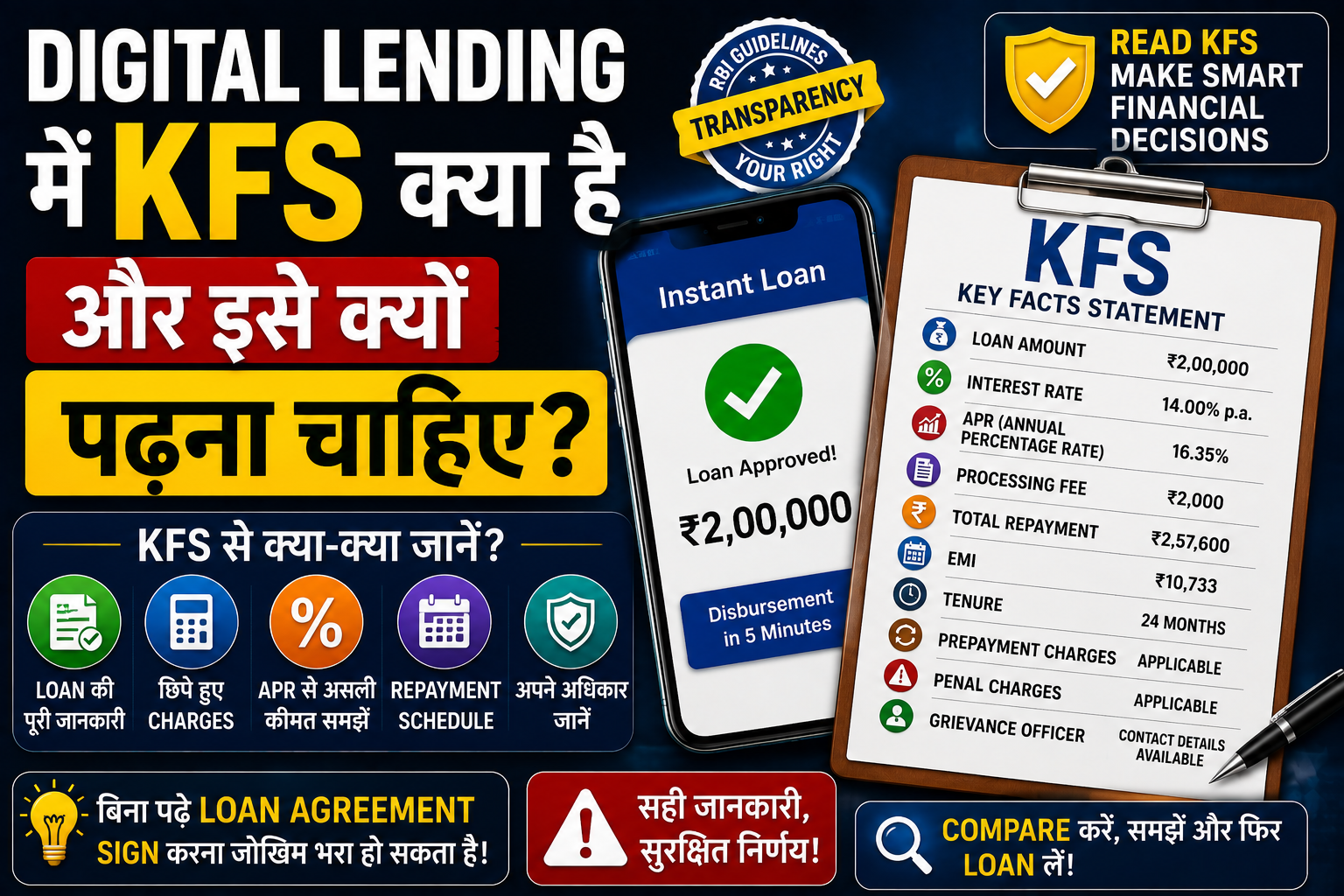
Digital Lending में KFS क्या है? जानिए Key Facts Statement में APR, Interest Rate, Charges, EMI, Repayment Schedule, Penalty और Loan की कुल लागत कैसे देखें और KFS पढ़ना क्यों जरूरी है।
आज के समय में Personal Loan, Business Loan, Consumer Loan और दूसरे digital loans लेना पहले की तुलना में काफी आसान हो गया है। Smartphone पर कुछ details भरकर, KYC complete करके और digital verification के बाद loan offer सामने आ सकता है।
लेकिन digital lending की यही speed एक समस्या भी पैदा करती है।
Borrower अक्सर loan लेने से पहले सिर्फ तीन चीजें देखता है:
Loan Amount कितना है?
Interest Rate कितना है?
EMI कितनी है?
लेकिन असली cost इससे कहीं ज्यादा हो सकती है।
Processing Fee, applicable taxes, insurance या third-party charges, penal charges, repayment terms और दूसरे applicable costs मिलकर loan की वास्तविक financial burden को बदल सकते हैं।
यहीं पर KFS यानी Key Facts Statement महत्वपूर्ण हो जाता है।
KFS को आप loan का एक तरह का financial summary sheet समझ सकते हैं, जिसमें loan agreement की महत्वपूर्ण बातें standardized और relatively आसान format में दी जाती हैं।
Reserve Bank of India ने April 15, 2024 को KFS से संबंधित harmonised framework जारी किया। इसके तहत नए retail और MSME term loans sanctioned on or after October 1, 2024 के लिए regulated entities को standardized KFS requirements follow करनी हैं। Digital lending में भी KFS और APR disclosure महत्वपूर्ण regulatory requirements हैं।
इसलिए अगर आप कोई digital loan लेने जा रहे हैं, तो loan agreement पर blindly e-sign करने से पहले:
Table of Contents
KFS जरूर पढ़ें।
क्योंकि KFS आपको यह समझने में मदद करता है कि:
- Loan वास्तव में कितना महंगा है
- APR कितना है
- कुल repayment कितना होगा
- कौन-कौन से charges हैं
- EMI कितनी है
- Repayment कितने समय तक करना है
- कौन से additional terms लागू हैं
- Loan लेने से पहले किन बातों पर सवाल पूछने चाहिए
इस article में हम समझेंगे कि KFS क्या है, इसमें क्या-क्या होता है, APR क्या है, KFS और loan agreement में क्या अंतर है, digital loan लेते समय KFS को कैसे पढ़ें और कौन-सी गलतियां नहीं करनी चाहिए।
KFS क्या है?
KFS का Full Form है — Key Facts Statement.
यह loan agreement की महत्वपूर्ण financial और contractual information को एक standardized format में summarize करने वाला statement है।
RBI के framework में KFS को loan agreement के key facts का ऐसा standardized statement बताया गया है जो borrower को informed financial decision लेने में मदद करे। इसे सरल और समझने योग्य भाषा में उपलब्ध कराया जाना चाहिए।
सरल भाषा में:
KFS = Loan की महत्वपूर्ण शर्तों का आसान सारांश
मान लीजिए आपको ₹2 लाख का Personal Loan offer हुआ।
पूरे loan agreement में कई pages हो सकते हैं।
आप हर clause पढ़ने में समय न लगाएं, इसके लिए KFS में प्रमुख information एक standardized format में दिखाई जाती है।
इसमें loan की:
- Amount
- Tenure
- Interest Rate
- APR
- Fees/Charges
- Repayment Schedule
- EMI/EPI
- Other important terms
जैसी information हो सकती है।
इसका उद्देश्य borrower को contract sign करने से पहले loan की वास्तविक financial commitment समझने में मदद करना है।
Digital Lending में KFS इतना Important क्यों है?
Digital lending में पूरा process बहुत fast हो सकता है।
आप:
Loan App → Apply → KYC → Offer → e-Sign → Disbursement
कुछ ही समय में पूरा कर सकते हैं।
समस्या यह है कि speed borrower को impulsive decision लेने के लिए भी encourage कर सकती है।
उदाहरण:
आपको app पर दिखाई देता है:
₹1,00,000 Instant Loan
Interest:
12%
EMI:
₹3,321
आप सोच सकते हैं:
“बस ₹3,321 की EMI है, loan सस्ता है।”
लेकिन अगर:
- Processing fee
- Applicable taxes
- Other charges
- Insurance/third-party charges
भी हैं, तो actual borrowing cost अलग हो सकती है।
यहीं KFS महत्वपूर्ण है।
RBI के framework में KFS में APR की computation और loan के amortisation schedule को शामिल करने की requirement है।
इसलिए:
EMI देखकर loan को cheap मत मानिए।
KFS देखकर actual cost समझिए।
KFS कब मिलता है?
KFS loan contract execute होने से पहले prospective borrower को दिया जाना चाहिए।
RBI के KFS framework के अनुसार KFS को borrower को informed decision लेने में मदद करने के लिए loan contract execute होने से पहले उपलब्ध कराया जाना है। इसे borrower की समझ वाली भाषा में दिया जाना चाहिए और contents को explain करके acknowledgement लिया जाना चाहिए।
Digital lending में इसका मतलब है कि:
पहले KFS समझें → फिर loan agreement accept करें।
अगर app आपको:
“Accept Now”
पर तुरंत ले जा रहा है लेकिन KFS स्पष्ट नहीं है, तो रुककर document मांगना उचित है।
KFS में कौन-कौन सी जानकारी होती है?
KFS का exact format loan और applicable RBI framework के अनुसार हो सकता है, लेकिन इसमें महत्वपूर्ण loan information standardized तरीके से दी जाती है।
आम तौर पर आपको इन चीजों पर ध्यान देना चाहिए:
1. Loan Amount
आपको कितना loan sanction किया जा रहा है?
उदाहरण:
₹2,00,000
2. Loan Tenure
Loan कितने समय के लिए है?
उदाहरण:
24 months
3. Interest Rate
Interest rate कितनी है?
उदाहरण:
14% per annum
यह fixed है या floating, यह भी देखना चाहिए।
4. APR
यह सबसे important fields में से एक है।
APR loan की annualised cost of credit को reflect करता है और applicable interest तथा associated charges को capture करता है।
5. EMI/EPI
हर repayment कितना होगा?
और:
कितनी instalments देनी होंगी?
6. Processing Fee
Loan processing के लिए कितना charge लिया जा रहा है?
7. Other Charges
किसी applicable third-party या अन्य charge की details भी देखनी चाहिए।
8. Repayment Schedule
कब-कब payment करनी होगी?
9. Penal Charges
Late payment या loan terms की violation होने पर applicable penal charges क्या हैं?
Digital lending framework में penal charges को upfront disclose करने की requirement है।
10. Grievance Information
किसी समस्या की स्थिति में complaint किस अधिकारी या channel पर करनी है?
Digital lending guidelines में grievance redressal officer से संबंधित information KFS में शामिल करने का प्रावधान है।
APR क्या है?
KFS समझने के लिए APR समझना सबसे जरूरी है।
APR = Annual Percentage Rate
यह loan की annualised cost of credit को represent करता है।
RBI के KFS framework के अनुसार APR में interest rate और credit facility से जुड़े applicable charges शामिल होते हैं।
इसका मतलब:
Interest Rate अकेले पूरी कहानी नहीं बताता।
उदाहरण:
Lender A:
Interest Rate = 12%
Lender B:
Interest Rate = 11%
आपको B सस्ता लगेगा।
लेकिन अगर B में दूसरे applicable charges ज्यादा हैं, तो actual cost अलग हो सकती है।
इसलिए loan compare करते समय:
Interest Rate + APR + Total Repayment
देखना ज्यादा sensible है।
Interest Rate और APR में क्या अंतर है?
| Interest Rate | APR |
|---|---|
| मुख्य interest cost बताती है | Overall annualised credit cost बताती है |
| Loan pricing का एक component | Interest + applicable charges को reflect कर सकती है |
| अकेले देखने से पूरी cost नहीं समझ आती | Loan comparison में ज्यादा useful |
| अक्सर headline rate के रूप में दिखाई जाती है | KFS में prominently disclosed |
RBI के framework में APR को KFS में शामिल करना और उसकी computation sheet देना required है।
इसलिए:
“Lowest Interest Rate” देखकर loan चुनना incomplete comparison है।
KFS में Processing Fee क्यों देखनी चाहिए?
मान लीजिए:
Loan:
₹1,00,000
Processing Fee:
₹2,000
Applicable tax/other disclosed charges के बाद borrower को actual net amount ₹1 लाख से कम मिल सकता है।
लेकिन repayment obligation loan terms के अनुसार हो सकता है।
इसलिए borrower को दो अलग numbers समझने चाहिए:
Sanctioned Loan Amount
और
Net Disbursed Amount
RBI के KFS framework में APR calculation और charges disclosure इसी broader cost transparency के उद्देश्य से महत्वपूर्ण हैं।
Net Disbursed Amount क्या है?
यह वह राशि है जो वास्तव में borrower को प्राप्त होती है, applicable deductions के बाद।
उदाहरण:
Sanctioned Amount:
₹1,00,000
Applicable disclosed charges:
₹2,000
Net amount received:
₹98,000
अब borrower को यह समझना चाहिए कि:
“मेरे हाथ में कितने पैसे आए?”
और:
“मुझे कुल कितने पैसे वापस करने हैं?”
इन दोनों के बीच का अंतर loan की वास्तविक cost समझने में मदद करता है।
KFS में Total Repayment क्यों देखें?
कई borrowers EMI पर focus करते हैं।
लेकिन EMI छोटी करने के दो common तरीके हैं:
Long Tenure
और
Short Tenure
उदाहरण:
₹3 लाख loan के लिए:
3-year EMI = relatively higher
5-year EMI = relatively lower
लेकिन 5-year tenure में कुल interest अधिक हो सकता है।
इसलिए:
Low EMI ≠ Low Cost
KFS में repayment schedule देखने से आपको principal और interest payments की पूरी structure समझने में मदद मिलती है।
Amortisation Schedule क्या है?
KFS में loan tenor के लिए amortisation schedule भी शामिल किया जाता है। RBI के framework में APR computation sheet और amortisation schedule दोनों को KFS का हिस्सा बनाने की requirement है।
Amortisation schedule यह दिखा सकता है कि हर instalment में:
- Principal कितना जा रहा है
- Interest कितना जा रहा है
- Outstanding principal कितना बचा है
उदाहरण:
पहली EMI:
Principal = ₹7,000
Interest = ₹3,000
Total EMI = ₹10,000
बाद की EMIs में interest component घट सकता है और principal component बढ़ सकता है, depending on loan structure.
इससे borrower समझ सकता है कि उसका debt वास्तव में कैसे reduce हो रहा है।
KFS में Third-Party Charges क्या होते हैं?
कुछ loans में lender borrower से third-party services के लिए actual charges recover कर सकता है।
उदाहरण:
- Insurance
- Legal charges
- Valuation charges
- Other applicable third-party services
RBI के KFS framework के अनुसार ऐसे charges, जहां regulated entity borrower से recover करती है, APR में शामिल किए जाने और separately disclosed किए जाने हैं। संबंधित receipts/documents भी borrower को दिए जाने चाहिए।
इसलिए अगर KFS में लिखा है:
Third-party charge: ₹X
तो यह पूछें:
यह किस service के लिए है?
किसे payment जा रहा है?
क्या receipt मिलेगी?
क्या KFS में नहीं लिखा Charge बाद में लगाया जा सकता है?
यह KFS का सबसे important consumer-protection feature है।
RBI के current KFS framework के अनुसार KFS में disclosed न किए गए fees/charges regulated entity borrower से loan tenure के दौरान charge नहीं कर सकती, जब तक borrower की explicit consent applicable requirements के अनुसार न हो।
Digital lending guidelines में भी यह requirement थी कि KFS में शामिल नहीं किए गए charges borrower से charge नहीं किए जा सकते।
इसका practical मतलब:
KFS को save करके रखें।
अगर बाद में कोई unexplained charge दिखाई देता है, तो आपके पास original disclosed terms का reference होगा।
क्या KFS और Loan Agreement एक ही चीज हैं?
नहीं।
KFS:
Summary of key loan facts
है।
Loan Agreement:
Detailed legal contract
है।
KFS आपको important terms जल्दी समझने में मदद करता है।
लेकिन इसका मतलब यह नहीं कि आपको loan agreement पढ़ने की जरूरत नहीं है।
Best approach:
पहले KFS पढ़ें → फिर important clauses के लिए Loan Agreement देखें।
विशेष रूप से:
- Default
- Penal charges
- Prepayment
- Foreclosure
- Security
- Interest reset
- Data/privacy
- Recovery
- Dispute resolution
जैसे clauses ध्यान से पढ़ें।
KFS और Sanction Letter में क्या अंतर है?
Sanction Letter loan approval और terms की communication हो सकती है।
KFS standardized key information statement है।
RBI के framework में KFS को loan agreement के साथ standardized summary के रूप में शामिल करने की requirement है।
इसलिए अगर lender आपको:
- Sanction Letter
- KFS
- Loan Agreement
तीनों देता है, तो इनके numbers में consistency check करें।
Loan Amount
Interest Rate
Tenure
EMI
Charges
APR
अगर कोई mismatch है:
Loan accept करने से पहले clarification मांगें।
KFS में Language क्यों Important है?
Financial documents अक्सर technical language में होते हैं।
RBI के KFS framework के अनुसार KFS borrower द्वारा समझी जाने वाली भाषा में होना चाहिए।
यह बहुत important है क्योंकि:
“Document मिला” और “Document समझ आया”
दो अलग बातें हैं।
अगर आपको KFS की कोई term समझ नहीं आती:
Lender से explanation मांगें।
बिना समझे e-sign करना अच्छा idea नहीं है।
KFS की Validity Period क्या होती है?
यह भी एक important feature है।
RBI के current framework के अनुसार:
Loan tenure 7 days या उससे ज्यादा
हो तो KFS की validity कम से कम:
3 working days
होनी चाहिए।
और:
Loan tenure 7 days से कम
हो तो validity कम से कम:
1 working day
होनी चाहिए।
इस period का उद्देश्य borrower को terms consider करने का समय देना है।
यानी:
“Offer अभी है, 30 seconds में accept करो।”
जैसी pressure situation में तुरंत decision लेना जरूरी नहीं होना चाहिए, जहां KFS framework लागू है।
KFS पढ़ते समय सबसे पहले क्या देखें?
अगर आपके पास केवल 2 मिनट हैं, तो यह order follow करें:
1. Loan Amount
कितना borrow कर रहे हैं?
2. Net Disbursement
Account में वास्तव में कितना मिलेगा?
3. Interest Rate
Rate कितना है?
4. APR
Overall annualised cost क्या है?
5. EMI/EPI
हर instalment कितनी है?
6. Tenure
कितने महीनों/वर्षों तक repayment करना है?
7. Total Repayment
पूरे loan में कितना वापस करना है?
8. Fees
Processing और अन्य charges क्या हैं?
9. Penal Charges
Late payment पर क्या होगा?
10. Prepayment Terms
जल्दी loan बंद करने पर applicable charges/conditions क्या हैं?
KFS में APR ज्यादा दिखे तो क्या करें?
मान लीजिए:
Interest Rate:
12%
APR:
15.5%
तो तुरंत panic करने की जरूरत नहीं।
पहले देखें कि difference क्यों है।
Possible reasons:
- Processing Fee
- Other applicable charges
- Third-party charges
- Loan structure
- Timing/frequency of repayments
KFS की APR computation sheet इसी calculation को समझने में मदद करती है।
सवाल पूछें:
“Interest 12% है लेकिन APR 15.5% क्यों है?”
अगर lender explanation नहीं देता:
Loan reconsider करें।
KFS से Hidden Charges कैसे पहचानें?
एक simple method अपनाएं।
KFS में सारे:
Fees / Charges
sections देखें।
फिर उन्हें अलग-अलग categories में लिखें:
| Charge | Amount | किसलिए? |
|---|---|---|
| Processing Fee | ₹X | Loan processing |
| Insurance | ₹X | Third-party |
| Legal/Valuation | ₹X | Applicable service |
| Penal Charge | ₹X | Default |
| Other | ₹X | Explanation required |
अगर कोई charge समझ नहीं आता:
lender से written clarification मांगें।
KFS और EMI में क्या Relationship है?
EMI loan repayment का periodic amount है।
लेकिन EMI में:
Principal + Interest
दोनों शामिल हो सकते हैं।
मान लीजिए:
Loan:
₹2 लाख
EMI:
₹6,500
Tenure:
36 months
Total EMI payments:
₹6,500 × 36
= ₹2,34,000
इसमें:
₹2,00,000 principal
और:
₹34,000 interest/other repayment components
हो सकते हैं, exact structure loan terms पर depend करेगा।
लेकिन अगर upfront charges अलग हैं, तो total borrowing cost और बढ़ सकती है।
इसलिए:
EMI को अकेले मत देखें।
KFS से दो Loan Offers Compare कैसे करें?
मान लीजिए आपके पास दो offers हैं।
Offer A
Loan = ₹2,00,000
Interest = 12%
APR = 14.1%
Tenure = 24 months
Processing Fee = ₹2,000
Offer B
Loan = ₹2,00,000
Interest = 11.5%
APR = 15.0%
Tenure = 24 months
Processing Fee = ₹4,000
अब headline rate देखकर B सस्ता लगता है।
लेकिन APR देखकर picture बदल सकती है।
यही KFS का बड़ा फायदा है:
यह borrower को apples-to-apples comparison के करीब ले जाता है।
RBI ने KFS framework को transparency और informed financial decision-making बढ़ाने के उद्देश्य से harmonise किया है।
Digital Lending में KFS और ज्यादा Important क्यों है?
Digital platforms पर कई lenders के offers एक ही interface में दिखाई दे सकते हैं।
Borrower को जल्दी decision लेने के लिए:
- EMI
- Interest rate
- Loan amount
जैसी information prominently दिखाई जा सकती है।
लेकिन RBI के digital lending framework में transparency और APR disclosure महत्वपूर्ण हैं। RBI के 2025 framework में multiple loan offers दिखाने वाले digital interfaces पर lender name, loan amount, APR, tenor और associated terms जैसी information दिखाने की दिशा में भी customer-centric approach अपनाई गई है।
इसलिए digital loan comparison में:
KFS + APR
बहुत important tools हैं।
क्या KFS सिर्फ Personal Loan के लिए है?
नहीं।
RBI का April 2024 harmonised KFS framework retail और MSME term loans के लिए regulated entities पर लागू हुआ, और new applicable loans sanctioned from October 1, 2024 से इसकी implementation required हुई। Credit card receivables इस specific circular से exempt हैं।
इसका मतलब KFS केवल Personal Loan तक सीमित concept नहीं है।
यह applicable:
- Retail loans
- MSME term loans
- Digital lending
जैसे areas में relevant हो सकता है, subject to the specific regulatory scope and product.
क्या Home Loan में भी KFS होता है?
Applicable retail lending framework के तहत home loans जैसे retail loan products भी KFS requirements के scope में आ सकते हैं, subject to the applicable regulatory framework.
लेकिन home loan में borrower को KFS के साथ:
- Interest rate
- Processing fee
- Legal charges
- Valuation charges
- Insurance
- Prepayment terms
- EMI
- Tenure
जैसी details carefully compare करनी चाहिए।
Large-ticket loan होने के कारण छोटी percentage difference भी long-term cost पर significant impact डाल सकती है।
MSME Loan में KFS क्यों Important है?
Business owners के लिए KFS खास तौर पर useful है।
मान लीजिए एक MSME को:
₹10 लाख
का term loan चाहिए।
दो lenders offer देते हैं।
एक का headline interest rate कम है।
दूसरे का APR थोड़ा higher है लेकिन fees कम हैं।
Business owner को केवल interest rate नहीं देखना चाहिए।
उसे:
APR + Charges + Repayment Schedule + Total Cost
compare करना चाहिए।
RBI का harmonised KFS framework retail और MSME term loans के लिए transparency बढ़ाने के उद्देश्य से लागू किया गया।
KFS में Penal Charges क्यों देखना चाहिए?
Loan लेने के समय borrower सोचता है:
“मैं EMI समय पर भर दूंगा।”
लेकिन business या personal emergency के कारण कभी payment delay हो सकता है।
इसलिए पहले से देखें:
Late payment पर क्या charge होगा?
Penal charges कैसे calculate होंगे?
Digital lending framework में penal charges को upfront disclose करने की requirement है।
इससे borrower को default की potential financial consequences समझने में मदद मिलती है।
Penal Interest और Penal Charges में अंतर
यह terminology lender-specific documentation में अलग तरह से दिखाई दे सकती है।
RBI ने penal charges को अलग regulatory treatment देने पर जोर दिया है।
एक important principle यह है कि penal charges को loan interest में simply add करके उस पर further interest capitalization जैसी practices को avoid किया जाए, subject to applicable RBI directions. RBI की fair-lending framework में penal charges के treatment पर specific instructions हैं।
इसलिए KFS और loan agreement में:
Penal Charges
की exact wording देखें।
Prepayment और Foreclosure Charges KFS में देखें
अगर आपकी financial situation future में improve हो जाती है, तो आप loan जल्दी खत्म करना चाह सकते हैं।
लेकिन कुछ loans में prepayment/foreclosure से जुड़े terms हो सकते हैं।
इसलिए loan लेने से पहले देखें:
Part-prepayment allowed है?
Full foreclosure allowed है?
कोई charge है?
Minimum lock-in period है?
Applicable RBI rules product और borrower category के अनुसार अलग हो सकते हैं, इसलिए केवल KFS ही नहीं, relevant loan agreement और current lender terms भी देखें।
KFS और Floating Interest Rate
अगर loan floating rate पर है, तो interest rate future में बदल सकती है।
इसलिए KFS में:
- Interest rate type
- Current rate
- Benchmark
- Reset mechanism
जैसी information को ध्यान से पढ़ें।
RBI के floating-rate personal loan framework के अनुसार borrowers को interest rate reset के impact और applicable options के बारे में information दी जानी चाहिए।
इसलिए:
Floating Rate Loan = EMI हमेशा fixed रहेगी
ऐसा assume न करें।
Rate change होने पर EMI या tenure प्रभावित हो सकता है, depending on the loan structure and applicable terms.
KFS पढ़ते समय कौन-सी Mistakes न करें?
Mistake 1: सिर्फ Interest Rate देखना
APR ignore करना।
Mistake 2: सिर्फ EMI देखना
Total repayment ignore करना।
Mistake 3: Processing Fee ignore करना
Net disbursement कम हो सकता है।
Mistake 4: KFS को बिना पढ़े e-Sign करना
यह सबसे common mistake है।
Mistake 5: Loan Agreement नहीं पढ़ना
KFS summary है, पूरा contract नहीं।
Mistake 6: Penal Charges ignore करना
Default costly हो सकता है।
Mistake 7: Prepayment terms नहीं देखना
Future flexibility प्रभावित हो सकती है।
Mistake 8: Lender Verify नहीं करना
Especially digital loan apps में।
क्या KFS मिलने का मतलब Loan अच्छा है?
बिल्कुल नहीं।
यह एक बहुत important reality check है।
KFS:
Transparency Tool
है।
यह loan को automatically:
- Cheap
- Safe
- Suitable
- Affordable
नहीं बनाता।
मान लीजिए KFS पूरी तरह transparent है लेकिन APR:
35%
है।
तो आपको terms पता हैं, लेकिन loan फिर भी महंगा हो सकता है।
इसलिए:
KFS पढ़ना = informed decision
KFS पढ़ना ≠ loan लेना जरूरी
क्या KFS देखकर Loan Compare करना पर्याप्त है?
यह भी नहीं।
KFS बहुत useful है, लेकिन आपको अपनी personal financial situation भी देखनी चाहिए।
उदाहरण:
Loan A:
APR = 14%
Loan B:
APR = 15%
A सस्ता है।
लेकिन A की EMI आपके cash flow के लिए बहुत ज्यादा है और B का tenure आपके लिए manageable है।
तो केवल APR देखकर decision लेना भी incomplete हो सकता है।
इसलिए तीन चीजें साथ देखें:
1. Cost
APR और total repayment
2. Affordability
EMI आपकी income के मुकाबले manageable है या नहीं
3. Flexibility
Prepayment, tenure और other terms
KFS पढ़ने का 5-Minute Method
अगर आपको financial documents पढ़ना मुश्किल लगता है, तो यह simple method use करें।
Minute 1: Loan Amount
कितना loan?
Net disbursement कितना?
Minute 2: Interest + APR
Rate कितना?
APR कितना?
Difference क्यों है?
Minute 3: EMI + Tenure
EMI कितनी?
कितनी instalments?
Minute 4: Charges
Processing?
Insurance?
Third-party?
Penal?
Minute 5: Exit Terms
Prepayment?
Foreclosure?
Cooling-off/look-up period, if applicable?
अगर इन पांच मिनट में कोई चीज समझ नहीं आती:
Loan accept न करें जब तक clarification न मिले।
KFS में Unique Proposal Number क्यों होता है?
RBI के framework के अनुसार KFS को unique proposal number के साथ provide किया जाना चाहिए। इसकी validity period भी specified है।
इससे borrower के पास specific loan offer का identifiable reference रहता है।
यह खासकर digital lending में useful है जहां multiple offers या revised offers दिखाई दे सकते हैं।
अगर KFS और App Screen में अलग जानकारी हो तो?
यह गंभीर matter है।
मान लीजिए app screen:
APR = 14%
दिखा रही है।
लेकिन KFS:
APR = 17%
दिखा रहा है।
या:
App:
Processing Fee = ₹999
KFS:
Processing Fee = ₹2,499
ऐसे case में:
तुरंत clarification मांगें।
जब तक discrepancy clear न हो:
Loan accept न करें।
अगर KFS में कोई Charge बाद में दिखे तो?
Original KFS सुरक्षित रखें।
अगर बाद में कोई unexplained charge दिखाई देता है:
- KFS देखें।
- Loan agreement देखें।
- Lender की customer support/grievance channel पर complaint करें।
- Written response मांगें।
RBI framework के अनुसार KFS में disclosed न किए गए charges के संबंध में borrower protection मौजूद है, subject to the applicable explicit-consent provisions.
Digital Loan लेते समय KFS के साथ क्या-क्या Save करें?
Loan accept करने के बाद:
Screenshot/Download करें:
- KFS
- Loan Agreement
- Sanction Letter
- Repayment Schedule
- APR
- Fee Schedule
- Privacy Policy
- Disbursement details
Digital lending guidelines के अनुसार digitally signed documents जैसे KFS, summary of loan product, sanction letter, terms and conditions, account statements और relevant privacy policy borrower को registered email/SMS आदि channels पर provide करने की requirements रही हैं।
इसलिए documents को सिर्फ app में छोड़ना बेहतर नहीं है।
क्या KFS Hindi में मिल सकता है?
KFS borrower द्वारा समझी जाने वाली भाषा में होना चाहिए।
इसका उद्देश्य यह है कि borrower केवल technical English देखकर loan accept न करे।
अगर आप Hindi में financial terms बेहतर समझते हैं, तो lender से understandable language में explanation मांग सकते हैं।
KFS और Digital Loan Fraud
Fake loan apps अक्सर:
- Low interest
- Instant approval
- No CIBIL
- No documents
जैसे claims करते हैं।
ऐसी situation में KFS एक useful verification point बन सकता है।
अगर app:
Actual lender नहीं बताता
KFS नहीं देता
APR unclear है
Charges hidden हैं
Loan agreement नहीं है
तो borrower को बहुत सावधानी बरतनी चाहिए।
RBI ने unauthorized digital lending apps द्वारा regulated entities से false association claims किए जाने की समस्या को recognize किया है और Digital Lending Apps का public repository बनाने की पहल की है।
इसलिए:
KFS + Actual Lender Verification
दोनों important हैं।
KFS और Loan App Permissions
अगर आप digital loan app use कर रहे हैं, तो KFS financial transparency से संबंधित है, जबकि privacy policy और permissions data privacy से संबंधित हैं।
दोनों को अलग-अलग check करें।
KFS बताता है:
Loan की cost और terms क्या हैं?
Privacy Policy बताती है:
आपका data कैसे handle होगा?
App Permissions बताती हैं:
App आपके device पर क्या access मांग रहा है?
एक safe digital borrowing decision के लिए तीनों जरूरी हैं।
KFS के कारण Borrower को क्या फायदा होता है?
1. Transparency
Loan की key terms स्पष्ट होती हैं।
2. Comparison
Different lenders के offers compare करना आसान हो सकता है।
3. Cost Awareness
APR और charges दिखाई देते हैं।
4. Hidden Charges का Risk कम
Undisclosed charges पर borrower बेहतर सवाल उठा सकता है।
5. Repayment Planning
Amortisation schedule और EMI structure समझ आता है।
6. Better Decision-Making
Borrower impulsive borrowing से बच सकता है।
KFS की Limitations क्या हैं?
KFS useful है लेकिन perfect financial decision tool नहीं है।
Limitation 1
यह आपकी financial affordability तय नहीं करता।
Limitation 2
यह loan को automatically cheap नहीं बनाता।
Limitation 3
Detailed legal clauses loan agreement में हो सकते हैं।
Limitation 4
Future income changes का पूरा risk इसमें नहीं होता।
Limitation 5
Different products की suitability केवल APR से तय नहीं होती।
इसलिए:
KFS पढ़ें, लेकिन KFS के आधार पर blind decision न लें।
Example: KFS से एक Loan को समझें
मान लीजिए:
Loan Amount
₹2,00,000
Tenure
24 Months
Interest Rate
14%
Processing Fee
₹2,000
Other disclosed charges
₹1,000
EMI
Hypothetical ₹9,600 के आसपास
APR
Interest और applicable charges को reflect करते हुए higher effective annualised cost
अब borrower को सिर्फ:
“14% interest”
नहीं देखना चाहिए।
उसे देखना चाहिए:
₹2 लाख में वास्तव में कितना पैसा मिलेगा?
कुल repayment कितना होगा?
APR कितना है?
Charges क्या हैं?
EMI कितने समय तक चलेगी?
यही KFS का purpose है।
क्या KFS पढ़ने से Loan सस्ता हो सकता है?
Directly नहीं।
लेकिन indirectly हां।
क्योंकि KFS आपको:
Compare
करने देता है।
मान लीजिए:
Lender A APR = 14.5%
Lender B APR = 17.2%
और दोनों की EMI लगभग similar दिखाई दे रही है।
अब आप lower-cost offer negotiate या choose करने की कोशिश कर सकते हैं, subject to eligibility and terms.
इसलिए KFS:
Negotiation और comparison का tool भी बन सकता है।
KFS और Financial Literacy
भारत में financial literacy का एक बड़ा challenge यह है कि borrowers अक्सर:
Interest Rate
और
Total Cost
के बीच का difference नहीं समझते।
KFS इसी information gap को कम करने में मदद करता है।
RBI के digital lending working group ने standardized KFS को financial consumer protection और transparency बढ़ाने के उपाय के रूप में recommend किया था।
इसलिए KFS केवल एक regulatory document नहीं है।
यह borrower के लिए:
Financial decision-making tool
है।
KFS को कौन जारी करता है?
KFS regulated entity यानी lender की responsibility के framework में आता है।
Digital lending में app या Lending Service Provider involved हो सकता है, लेकिन regulatory responsibility regulated entity पर रहती है।
RBI की digital lending guidelines स्पष्ट करती हैं कि regulated entity द्वारा LSP/DLA को outsource करने से regulated entity की regulatory obligations समाप्त नहीं होतीं।
इसलिए अगर loan app किसी third-party company द्वारा operated है:
Actual lender कौन है?
यह फिर भी सबसे important question है।
अगर Loan Aggregator कई Offers दिखाता है तो KFS क्यों जरूरी है?
Digital platforms कई lenders के offers aggregate कर सकते हैं।
उदाहरण:
Bank A
APR 13.5%
NBFC B
APR 15.2%
Bank C
APR 14.1%
अगर platform सिर्फ:
“Best Offer — ₹10,000 EMI”
दिखाए, तो borrower को पूरा picture नहीं मिल सकता।
RBI के 2025 digital lending framework में multiple lender offers वाले digital interfaces के लिए lender name, loan amount, APR, tenor और associated terms जैसी information के transparent display पर जोर दिया गया है।
इसलिए borrower को:
Headline “Best Offer” पर नहीं, actual terms पर decision लेना चाहिए।
KFS पढ़ते समय 12 Questions जरूर पूछें
Loan accept करने से पहले खुद से पूछें:
1. मुझे कितना loan मिल रहा है?
2. Net disbursement कितना है?
3. Interest rate कितना है?
4. APR कितना है?
5. APR interest से ज्यादा क्यों है?
6. Processing fee कितनी है?
7. Other charges कौन-कौन से हैं?
8. Total repayment कितना है?
9. EMI कितनी और कितनी बार देनी है?
10. Late payment पर क्या charge होगा?
11. Prepayment/foreclosure terms क्या हैं?
12. Complaint होने पर किससे संपर्क करना है?
अगर इन सवालों के जवाब clear हैं, तो loan को समझना काफी आसान हो जाता है।
KFS पढ़ने के बाद भी Loan लेने से पहले 5 Checks
KFS clear है, फिर भी:
Check 1 — CIBIL
क्या EMI आपके credit profile और existing debt के हिसाब से manageable है?
Check 2 — Income
क्या आपकी monthly income EMI support करती है?
Check 3 — Emergency Fund
क्या loan लेने के बाद भी emergency buffer रहेगा?
Check 4 — Purpose
क्या loan वास्तव में जरूरी है?
Check 5 — Alternative
क्या lower-cost option available है?
उदाहरण:
- Existing savings
- Secured loan
- Lower-cost bank loan
- Balance transfer
- Employer advance
इन options को situation के अनुसार compare किया जा सकता है।
सबसे बड़ी गलती: KFS को Formality समझना
कई borrowers सोचते हैं:
“Bank ने KFS भेज दिया, बस formal document है।”
यह mindset गलत है।
KFS में ऐसी information होती है जो loan की actual financial cost समझने में मदद कर सकती है।
और RBI framework में KFS को standardized format, APR calculation और amortisation schedule के साथ देने का उद्देश्य borrower को informed decision लेने में सक्षम बनाना है।
इसलिए:
KFS को पढ़ना loan application का optional step नहीं समझना चाहिए।
Final Verdict: Digital Lending में KFS क्यों पढ़ना चाहिए?
क्योंकि KFS आपको loan की headline नहीं, उसकी financial reality समझने में मदद करता है।
Loan app पर आपको दिखाई दे सकता है:
“₹2 Lakh Loan”
लेकिन KFS बताएगा:
- Net disbursement कितना है
- Interest rate कितना है
- APR कितना है
- Processing fee कितनी है
- Other applicable charges क्या हैं
- EMI कितनी है
- Tenure कितना है
- Repayment schedule क्या है
- Penal charges क्या हैं
- Grievance mechanism क्या है
RBI के current framework के अनुसार KFS में APR की computation और amortisation schedule शामिल होना चाहिए, और applicable charges की transparency इसका महत्वपूर्ण हिस्सा है।
इसके अलावा, नए applicable retail और MSME term loans के लिए KFS requirements October 1, 2024 से harmonised framework के तहत लागू हैं, जबकि credit card receivables इस specific KFS circular से exempt हैं।
KFS पढ़ने का Golden Formula
Loan लेने से पहले सिर्फ यह मत पूछिए:
“Interest Rate कितना है?”
इसके बजाय पूछिए:
“APR कितना है?”
फिर पूछिए:
“Net Disbursement कितना मिलेगा?”
फिर:
“Total Repayment कितना होगा?”
और अंत में:
“क्या मैं यह EMI comfortably चुका सकता हूं?”
यही चार सवाल आपको एक ज्यादा informed borrowing decision लेने में मदद कर सकते हैं।
KFS के बारे में 10 महत्वपूर्ण बातें
1. KFS का Full Form Key Facts Statement है।
2. यह loan की important terms का standardized summary है।
3. इसे contract execute होने से पहले दिया जाना चाहिए, जहां applicable हो।
4. KFS borrower की समझ वाली भाषा में होना चाहिए।
5. इसमें APR की information शामिल होती है।
6. APR calculation sheet भी KFS का हिस्सा होती है।
7. Loan का amortisation schedule भी दिया जाता है।
8. Applicable charges transparent तरीके से disclose किए जाते हैं।
9. KFS में undisclosed charges के संबंध में borrower protection मौजूद है, subject to applicable explicit-consent provisions।
10. KFS पढ़ना loan लेने की guarantee नहीं, बल्कि informed decision लेने का tool है।
निष्कर्ष
Digital Lending ने loan लेना आसान बनाया है, लेकिन आसान borrowing का मतलब हमेशा आसान repayment नहीं होता।
एक app आपको:
“Instant ₹1 Lakh Loan”
दिखा सकता है।
लेकिन उस ₹1 लाख की वास्तविक cost क्या है, यह समझना आपकी responsibility भी है।
यहीं KFS आपकी मदद करता है।
KFS में loan की महत्वपूर्ण जानकारी standardized format में मिलती है, जिसमें APR, charges और repayment schedule जैसी चीजें शामिल होती हैं। RBI के harmonised framework का उद्देश्य borrower को loan contract execute करने से पहले informed financial decision लेने में सक्षम बनाना है।
इसलिए जब अगली बार कोई Digital Loan App आपको offer दिखाए:
“₹2 Lakh Instant Loan — सिर्फ ₹9,500 EMI!”
तो तुरंत Apply Now पर click न करें।
पहले:
KFS खोलें।
फिर:
APR देखें।
फिर:
Net Disbursement देखें।
फिर:
Total Repayment देखें।
फिर:
सभी Fees और Charges पढ़ें।
फिर:
Repayment Schedule देखें।
और अंत में:
अपनी income के हिसाब से EMI afford कर सकते हैं या नहीं, यह तय करें।
सबसे important बात:
KFS loan को सस्ता नहीं बनाता; KFS आपको यह समझने में मदद करता है कि loan वास्तव में कितना महंगा है।
और यही कारण है कि Digital Lending में KFS को सिर्फ एक document नहीं, बल्कि borrower का financial safety tool समझना चाहिए।
Useful Outbound Resources
- Reserve Bank of India — KFS for Loans & Advances — KFS, loan charges, APR और borrower disclosures से संबंधित RBI framework।
- RBI — Key Facts Statement Master Direction — KFS की definition, APR, validity period, amortisation schedule और undisclosed charges से संबंधित detailed requirements।
- RBI — Guidelines on Digital Lending — Digital lending में KFS, APR, grievance mechanism, recovery और borrower-protection requirements।
- RBI — Digital Lending Public Repository — Digital Lending Apps के regulated entities से association को verify करने की RBI initiative की जानकारी।
- RBI — Annual Report: KFS & Digital Lending — KFS framework और digital lending transparency से संबंधित RBI की official overview।
- RBI — KFS FAQ / Loan-related FAQs — RBI के loan और KFS से संबंधित official FAQs और regulatory information।
Disclaimer: यह article सामान्य financial education और informational purposes के लिए है। KFS की exact contents, applicability, charges, interest rate, APR और loan terms lender तथा loan product के अनुसार अलग हो सकते हैं। Loan लेने से पहले lender की latest KFS, loan agreement, APR, repayment schedule और applicable charges को ध्यान से पढ़ें। केवल कम interest rate देखकर loan न लें; total borrowing cost और अपनी repayment capacity दोनों को ध्यान में रखें।
