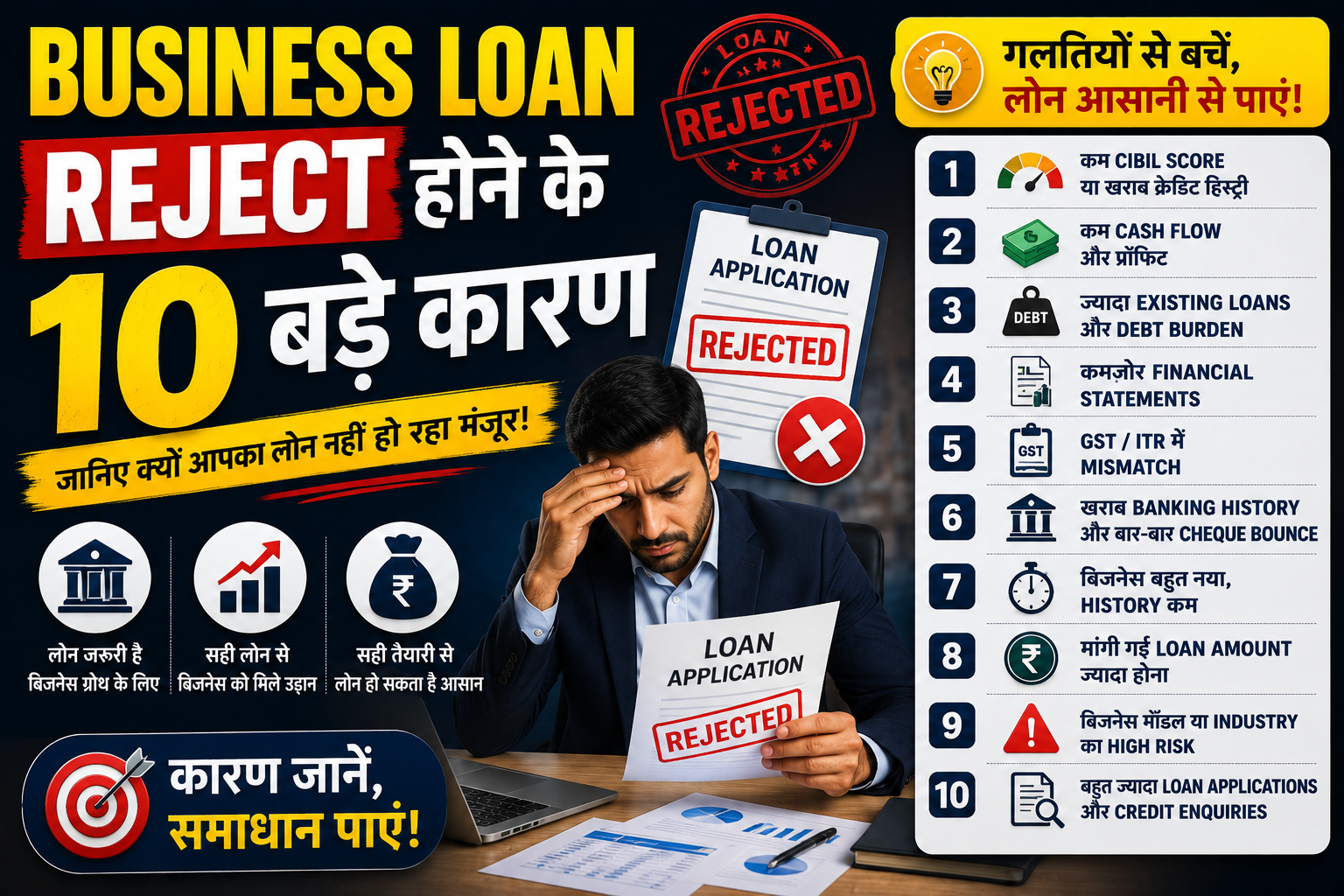
Business Loan Reject होने के 10 बड़े कारण जानिए। CIBIL Score, कम Cash Flow, ज्यादा Existing Debt, खराब Banking History, GST-ITR mismatch, Documents और Repayment Capacity जैसी वजहों को समझें और Loan Approval के chances कैसे बढ़ाएं।
भारत में छोटे और मध्यम business के लिए loan अक्सर growth का महत्वपूर्ण source होता है। किसी business owner को working capital के लिए पैसा चाहिए, किसी को machinery खरीदनी है, किसी को inventory बढ़ानी है, तो कोई नई branch या production unit शुरू करना चाहता है।
लेकिन कई बार पूरी तैयारी के बाद भी Business Loan Application Reject हो जाती है।
इसके बाद सबसे common सवाल होता है:
“मेरा loan reject क्यों हुआ?”
बहुत से borrowers तुरंत मान लेते हैं कि इसका कारण केवल कम CIBIL Score होगा। लेकिन reality इससे काफी ज्यादा complex है।
Lender business loan approve करते समय केवल credit score नहीं देखता। वह borrower की overall creditworthiness, repayment capacity, business performance, cash flow, existing liabilities, banking behaviour और documents को भी evaluate कर सकता है।
Ministry of MSME की 2025 handbook के अनुसार business loan application में PAN, Aadhaar, Udyam Registration, GST certificate/returns, ITR, 6–12 महीने के bank statements, business address/ownership proof और financial statements जैसे documents सामान्यतः relevant हो सकते हैं।
इसीलिए अगर Business Loan reject हुआ है, तो सिर्फ CIBIL को blame करने के बजाय पूरी application को analyze करना चाहिए।
इस article में हम Business Loan Reject होने के 10 बड़े कारण, उनसे बचने के तरीके और rejection के बाद क्या करना चाहिए, विस्तार से समझेंगे।
Table of Contents
Business Loan Reject होने का मतलब क्या है?
जब bank, NBFC या अन्य lender आपकी business financing application को approve नहीं करता, तो इसे loan rejection कहा जाता है।
Rejection के पीछे कई कारण हो सकते हैं:
- Credit profile weak होना
- Business cash flow insufficient होना
- Existing debt ज्यादा होना
- Documents incomplete होना
- Business history कम होना
- GST/ITR information inconsistent होना
- Requested loan amount ज्यादा होना
- Banking history खराब होना
- Credit enquiries बहुत ज्यादा होना
- Lender की internal policy में profile fit न होना
सबसे महत्वपूर्ण बात:
Loan rejection का मतलब यह नहीं कि आपको कभी loan नहीं मिलेगा।
हो सकता है कि current lender की eligibility criteria में आपका profile fit न हो, जबकि किसी दूसरे lender का assessment अलग हो।
लेकिन rejection के तुरंत बाद बिना कारण समझे कई lenders के पास application डालना भी सही strategy नहीं है।
CIBIL के अनुसार multiple loan applications से enquiries बढ़ सकती हैं और short period में बहुत ज्यादा credit applications credit profile पर negative effect डाल सकती हैं।
1. Low CIBIL Score या खराब Credit History
Business Loan rejection का सबसे obvious कारण poor credit history हो सकता है।
CIBIL Score 300 से 900 के बीच होता है। Higher score generally stronger credit profile को indicate करता है, हालांकि loan approval का final decision lender की policy पर depend करता है।
Lender आपकी credit history में देख सकता है:
- EMI payments
- Credit card repayment
- Loan defaults
- Overdue amounts
- Days Past Due
- Existing loans
- Credit utilisation
- Recent enquiries
अगर borrower ने पहले EMI late की है या loan repayment में लगातार problems रही हैं, तो lender को future repayment risk ज्यादा दिखाई दे सकता है।
CIBIL के अनुसार payment history, credit utilisation, age of credit और credit enquiries score के प्रमुख factors हैं।
Example
मान लीजिए business owner की:
CIBIL Score = 620
और पिछले loan में कई late payments हैं।
अब वह ₹20 लाख Business Loan के लिए apply करता है।
Lender के लिए सवाल होगा:
“अगर पहले repayment discipline कमजोर था, तो नया loan समय पर repay होने की probability कितनी है?”
इसीलिए low score loan rejection का कारण बन सकता है।
क्या करें?
Loan apply करने से पहले:
- Existing overdue clear करें
- EMI समय पर pay करें
- Credit card balances control करें
- Credit report में errors check करें
- Unnecessary loan applications avoid करें
CIBIL भी timely payments, low balances, moderate credit applications और regular credit-report monitoring की सलाह देता है।
2. Business का Cash Flow कमजोर होना
यह कारण कई बार CIBIL से भी ज्यादा महत्वपूर्ण हो सकता है।
Lender के लिए सबसे basic सवाल है:
“यह business loan की EMI कैसे चुकाएगा?”
मान लीजिए:
Monthly Revenue = ₹10 लाख
लेकिन:
Monthly Expenses = ₹9.5 लाख
तो business के पास केवल:
₹50,000
का operating surplus बच रहा है।
अगर proposed loan की EMI:
₹80,000
है, तो lender को repayment risk दिखाई देगा।
भले ही business का turnover ₹1.2 करोड़ annual हो, लेकिन अगर cash flow कमजोर है, तो loan approval मुश्किल हो सकता है।
Turnover और Cash Flow एक चीज नहीं हैं।
Business ₹2 करोड़ की sales कर सकता है लेकिन:
- Customers से payment late मिल रहा हो
- Inventory में पैसा फंसा हो
- Supplier payments high हों
- Operating expenses ज्यादा हों
तो actual cash available कम हो सकता है।
क्या करें?
Loan application से पहले:
- Monthly cash inflow calculate करें
- Monthly expenses calculate करें
- Existing EMI जोड़ें
- Proposed EMI जोड़ें
- Worst-case month का scenario बनाएं
अगर business normal और weak दोनों scenarios में EMI comfortably manage कर सकता है, तो application ज्यादा realistic होती है।
3. Existing Loans और Debt बहुत ज्यादा होना
अगर business पहले से कई loans चला रहा है, तो नया loan लेना मुश्किल हो सकता है।
मान लीजिए business पर पहले से:
- Term Loan = ₹15 लाख
- Working Capital = ₹10 लाख
- Business Credit Card = ₹3 लाख
- Personal Loan = ₹5 लाख
का outstanding debt है।
अब business owner ₹30 लाख का नया loan मांगता है।
Lender यह देखेगा कि existing obligations के बाद नया debt कितना manageable है।
High Debt = Higher Risk
अगर revenue उसी proportion में नहीं बढ़ा है, तो lender को लगेगा कि business over-leveraged हो सकता है।
क्या करें?
नई application से पहले:
Total Outstanding Debt
निकालें।
फिर calculate करें:
Monthly Existing EMI + Proposed EMI
और उसे business cash flow के साथ compare करें।
अगर existing debt बहुत ज्यादा है, तो पहले:
- High-cost debt reduce करें
- Small loans close करें
- Unnecessary credit lines reduce करें
- Working capital cycle improve करें
और फिर नया loan consider करें।
4. Business की Financial Statements कमजोर होना
Established business के लिए lender financial statements देख सकता है।
इनमें शामिल हो सकते हैं:
- Profit & Loss Statement
- Balance Sheet
- Cash Flow Statement
- Trading Account
- Receivables
- Payables
Ministry of MSME की official handbook भी financials को सामान्य MSME loan documentation का हिस्सा बताती है।
अगर financial statements दिखाते हैं कि:
- लगातार losses हैं
- Net worth कमजोर है
- Receivables बहुत ज्यादा हैं
- Liabilities लगातार बढ़ रही हैं
- Profit margins गिर रहे हैं
तो lender loan approve करने में cautious हो सकता है।
Example
Business का turnover:
2024 = ₹1 करोड़
2025 = ₹1.2 करोड़
लेकिन profit:
2024 = ₹8 लाख
2025 = ₹2 लाख
यानी sales बढ़ी लेकिन profitability बहुत कम हो गई।
ऐसी situation में lender additional explanation मांग सकता है।
क्या करें?
Loan apply करने से पहले financial statements को properly review करें।
अगर losses हैं, तो lender को realistic explanation और recovery plan दें।
Fake profit दिखाने की कोशिश न करें।
5. GST और ITR में Mismatch
यह Business Loan rejection का practical reason हो सकता है।
मान लीजिए loan application में आपने:
Annual Turnover = ₹2 करोड़
बताया।
लेकिन GST returns में reported sales:
₹80 लाख
दिख रही हैं।
अब lender को clarification चाहिए होगा।
इसी तरह:
- GST turnover
- ITR income
- Bank credits
- Financial statements
में बड़े differences हों तो application पर सवाल उठ सकते हैं।
Ministry of MSME की handbook GST certificate/returns और ITR को सामान्य loan documentation में शामिल करती है।
इसका मतलब यह नहीं कि हर mismatch fraud है।
कभी-कभी accounting treatment, exempt supplies, timing differences या business structure के कारण difference हो सकता है।
लेकिन:
Unexplained mismatch = Credit risk
क्या करें?
Loan apply करने से पहले:
- GST returns verify करें
- ITR figures verify करें
- Bank turnover reconcile करें
- P&L और GST data compare करें
अगर difference legitimate है, तो supporting explanation तैयार रखें।
6. Bank Account और Banking History खराब होना
Lender business के bank statements से actual financial behaviour समझने की कोशिश कर सकता है।
Ministry of MSME की handbook सामान्यतः 6–12 months bank statements को loan documentation में शामिल करती है।
Bank statement में lender को दिखाई दे सकता है:
- Frequent cheque bounces
- EMI returns
- Negative balances
- Irregular transactions
- High cash withdrawals
- Frequent overdraft usage
- Unexplained transactions
- Low business credits
Example
Business का declared monthly turnover:
₹15 लाख
लेकिन bank account में regular business credits:
₹5–6 लाख
ही दिख रहे हैं।
Lender पूछ सकता है:
“बाकी sales कहाँ receive हो रही हैं?”
यह सवाल application को complicated कर सकता है।
क्या करें?
Business transactions को proper business account में route करें।
Cheque bounce और EMI return avoid करें।
Business और personal transactions को unnecessarily mix न करें।
7. Business बहुत नया होना
New business के लिए loan approval comparatively difficult हो सकता है क्योंकि lender के पास historical performance data कम होता है।
Established business के पास:
- GST history
- ITR history
- Bank statements
- Customer records
- Profit history
- Business vintage
हो सकता है।
लेकिन नया business शायद:
Revenue = ₹0
से शुरू हुआ हो।
अब lender के सामने बड़ा सवाल है:
“Future revenue का evidence क्या है?”
इसका मतलब यह नहीं कि new business को loan नहीं मिल सकता।
लेकिन उसे application में ज्यादा clearly दिखाना पड़ सकता है:
- Business model
- Market demand
- Founder experience
- Projected revenue
- Own contribution
- Customer orders
- Purchase orders
- Supplier quotations
- Project report
क्या करें?
अगर business नया है, तो सिर्फ:
“मुझे ₹20 लाख चाहिए।”
कहने की बजाय:
“₹20 लाख कहाँ खर्च होंगे और उससे revenue कैसे generate होगा”
यह clearly explain करें।
8. Requested Loan Amount Business की Capacity से बहुत ज्यादा होना
यह एक common mistake है।
मान लीजिए business का annual turnover:
₹60 लाख
है।
लेकिन owner:
₹50 लाख का unsecured Business Loan
मांगता है।
Lender को यह amount business scale के मुकाबले aggressive लग सकता है।
Loan amount हमेशा maximum possible amount नहीं होना चाहिए।
Need-Based Borrowing बेहतर है।
अगर actual requirement:
₹10 लाख
है, तो केवल इसलिए ₹25 लाख न मांगें क्योंकि lender maximum eligibility दिखा रहा है।
Loan Amount तय करने का simple formula
पहले calculate करें:
Total Project Cost
फिर:
Own Contribution
और:
Required Loan
उदाहरण:
Project Cost = ₹15 लाख
Own Contribution = ₹5 लाख
Loan Requirement = ₹10 लाख
यह application को अधिक logical बनाता है।
9. Business Model या Industry का Risk ज्यादा होना
हर business sector का risk समान नहीं होता।
Lender अपने internal credit policy के अनुसार industry-specific risk को भी consider कर सकता है।
कुछ businesses में:
- Revenue बहुत volatile हो सकता है
- Seasonal demand हो सकती है
- Regulatory risk ज्यादा हो सकता है
- Customer concentration ज्यादा हो सकती है
- Inventory risk high हो सकता है
उदाहरण:
अगर business का 70% revenue केवल एक customer से आता है, तो lender पूछ सकता है:
“अगर यह customer चला गया तो repayment कैसे होगी?”
इसे customer concentration risk की तरह देखा जा सकता है।
इसी तरह seasonal businesses में cash flow पूरे साल समान नहीं होता।
क्या करें?
Application में:
- Customer diversification
- Revenue history
- Industry experience
- Future orders
- Recurring revenue
- Risk management
को clearly explain करें।
10. बहुत ज्यादा Loan Applications और Credit Enquiries
Loan reject होने के बाद सबसे common mistake होती है:
एक lender ने reject किया → तुरंत 10 lenders में apply कर दिया।
यह strategy उल्टा असर डाल सकती है।
CIBIL के अनुसार lenders द्वारा की गई credit enquiries report में record होती हैं और short period में बहुत ज्यादा credit applications negative signal दे सकती हैं।
CIBIL यह भी बताता है कि हर loan application पर lender report access करता है और enquiry record हो सकती है।
इसलिए:
Loan Shopping और Random Applications अलग चीजें हैं।
आपको पहले lenders की eligibility criteria compare करनी चाहिए।
फिर targeted applications करनी चाहिए।
क्या करें?
पहले:
- Credit profile check करें
- Loan requirement calculate करें
- Eligibility criteria देखें
- Documents तैयार करें
और उसके बाद suitable lenders चुनें।
Bonus Reason: Documents Incomplete या गलत होना
यह भी loan rejection या application hold होने का कारण बन सकता है।
Business loan के लिए lender को सामान्यतः कई documents की जरूरत पड़ सकती है।
Ministry of MSME की handbook के अनुसार इनमें:
- PAN
- Aadhaar
- Udyam Registration
- GST Certificate/Returns
- ITR
- Bank Statements
- Business Address Proof
- Financial Statements
जैसी चीजें शामिल हो सकती हैं।
अगर:
- PAN details mismatch
- Business address mismatch
- GST details गलत
- Bank statement incomplete
- ITR missing
- Financial statements inconsistent
हैं, तो application कमजोर हो सकती है।
क्या करें?
Application submit करने से पहले एक complete document checklist बनाएं।
Business Loan Reject होने के बाद क्या करें?
Loan rejection के बाद सबसे गलत कदम है:
“दूसरे lender को तुरंत apply कर देता हूं।”
पहले rejection का कारण पता करें।
Step 1: Rejection Reason समझें
Lender से पूछें कि application किस कारण से reject हुई।
Possible categories:
- Credit
- Income
- Cash flow
- Documents
- Business vintage
- Existing debt
- Internal policy
Step 2: Credit Report Check करें
अपना CIBIL report देखें।
CIBIL report में:
- Accounts
- Payment history
- Enquiries
- Outstanding balances
जैसी information होती है।
अगर कोई account या enquiry आपकी नहीं है, तो dispute raise करें।
CIBIL के अनुसार inaccurate information को verify/dispute करने की process उपलब्ध है।
Step 3: Existing Debt Calculate करें
एक simple table बनाएं:
| Loan | Outstanding | EMI |
|---|---|---|
| Business Loan | ₹8 लाख | ₹25,000 |
| Personal Loan | ₹3 लाख | ₹10,000 |
| Vehicle Loan | ₹5 लाख | ₹15,000 |
| Total | ₹16 लाख | ₹50,000 |
अब proposed loan की EMI जोड़ें।
अगर नया EMI:
₹30,000
है, तो total monthly debt obligation:
₹80,000
हो जाएगी।
अब इसे business cash flow के साथ compare करें।
Step 4: GST, ITR और Bank Data Reconcile करें
Check करें:
GST Turnover
vs.
ITR Revenue
vs.
Bank Credits
vs.
Financial Statements
अगर figures अलग हैं, तो reason identify करें।
Step 5: Business Cash Flow Improve करें
Loan लेने से पहले business को financially stronger बनाएं।
कुछ practical तरीके:
- Receivables जल्दी collect करें
- Inventory optimise करें
- Unnecessary expenses reduce करें
- High-cost debt reduce करें
- Recurring customers बढ़ाएं
- Business banking improve करें
Step 6: Loan Amount Reduce करने पर विचार करें
अगर ₹30 लाख reject हुआ है, तो इसका मतलब यह नहीं कि business को ₹30 लाख की जरूरत ही है।
हो सकता है:
₹15 लाख
का smaller loan business के लिए ज्यादा sustainable हो।
CIBIL Score Improve करने के Practical तरीके
CIBIL के अनुसार credit profile improve करने के लिए:
1. EMI समय पर भरें
Late payments avoid करें।
2. Credit Utilisation कम रखें
Available credit का बहुत बड़ा हिस्सा लगातार use करने से risk perception बढ़ सकता है।
3. Multiple Applications Avoid करें
बार-बार loan applications न करें।
4. Credit History Monitor करें
Regularly report check करें।
5. Existing Overdues Clear करें
Unpaid dues credit profile को नुकसान पहुंचा सकते हैं।
6. Joint/Guaranteed Accounts पर ध्यान दें
CIBIL के अनुसार co-signed, guaranteed और joint accounts में दूसरे व्यक्ति की missed payments भी आपकी credit access को प्रभावित कर सकती हैं।
क्या 750 CIBIL होने पर Business Loan Guaranteed है?
नहीं।
यह एक important misconception है।
CIBIL खुद स्पष्ट करता है कि higher score loan approval की chances बढ़ा सकता है, लेकिन loan sanction का decision lender की credit policy पर depend करता है।
मान लीजिए:
CIBIL = 800
लेकिन:
- Business losses में है
- Cash flow weak है
- Existing debt high है
- GST/ITR mismatch है
तो loan reject हो सकता है।
इसलिए:
Good CIBIL ≠ Guaranteed Loan
और:
Low CIBIL ≠ हर situation में automatic rejection
Lender पूरी profile देख सकता है।
क्या बिना CIBIL History के Business Loan मिल सकता है?
अगर borrower की credit history बहुत limited है, तो कुछ lenders के लिए risk assessment मुश्किल हो सकता है।
CIBIL बताता है कि कुछ lenders ऐसे applicants को loan देने से बच सकते हैं जिनका score NA/NH हो या जिनका credit track record पर्याप्त न हो।
लेकिन इसका मतलब यह नहीं कि हर lender automatically reject करेगा।
अगर business के पास:
- Strong bank history
- Stable revenue
- Good financial records
- Strong promoter profile
है, तो alternative assessment संभव हो सकता है।
क्या Business Loan Reject होने के बाद CIBIL तुरंत खराब हो जाता है?
यह समझना जरूरी है कि:
Loan rejection और credit score गिरना एक ही चीज नहीं हैं।
मुख्य concern अक्सर loan application के दौरान हुई hard enquiry और overall credit behaviour होता है।
CIBIL के अनुसार new credit applications और enquiries का score पर marginal impact हो सकता है और short period में frequent applications negative effect डाल सकती हैं।
इसलिए एक rejection के बाद panic करके कई applications करना avoid करें।
Business Loan Approval के Chances कैसे बढ़ाएं?
1. Strong Credit Profile
Timely repayments रखें।
2. Clean Banking
Cheque bounce और irregular transactions avoid करें।
3. Accurate Financials
GST, ITR, bank statements और financial statements consistent रखें।
4. Realistic Loan Amount
Business requirement के अनुसार loan मांगें।
5. Strong Cash Flow
EMI repayment capacity दिखाएं।
6. Clear Business Purpose
Loan का पैसा कहाँ खर्च होगा, explain करें।
7. Proper Documentation
Complete documents submit करें।
8. Existing Debt Control
Over-leverage avoid करें।
9. Business History
जहां possible हो, stable operating history build करें।
10. Right Lender चुनें
हर lender की credit policy अलग हो सकती है।
Business Loan के लिए Documents Checklist
Loan apply करने से पहले यह checklist तैयार रखें:
Identity
☐ PAN
☐ Aadhaar
☐ Address Proof
☐ Photograph
Business
☐ Udyam Registration
☐ GST Registration
☐ GST Returns
☐ Business Address Proof
☐ Ownership/Lease Documents
Financial
☐ ITR
☐ Bank Statements
☐ Balance Sheet
☐ Profit & Loss
☐ Cash Flow Statement
Loan Purpose
☐ Project Report
☐ Machinery Quotation
☐ Equipment Quotation
☐ Purchase Orders
☐ Working Capital Calculation
Exact requirements lender और business structure के अनुसार अलग हो सकती हैं। Ministry of MSME की official handbook भी इस बात को ध्यान में रखते हुए सामान्य document list देती है।
Business Loan Apply करने से पहले 15-Point Checklist
Loan application submit करने से पहले खुद से ये सवाल पूछें:
☐ मेरा CIBIL/credit report ठीक है?
☐ कोई overdue बाकी है?
☐ कोई गलत credit account report में है?
☐ Existing loans कितने हैं?
☐ Total monthly EMI कितनी है?
☐ Proposed EMI कितनी होगी?
☐ Business cash flow कितना है?
☐ GST और ITR figures match करते हैं?
☐ Bank statement clean है?
☐ Business कितने समय से चल रहा है?
☐ Loan amount वास्तव में कितना चाहिए?
☐ Loan का purpose clear है?
☐ Financial statements updated हैं?
☐ सभी documents ready हैं?
☐ क्या मैंने जरूरत से ज्यादा lenders में apply तो नहीं किया?
अगर इनमें से कई questions के जवाब negative हैं, तो application postpone करके profile मजबूत करना बेहतर हो सकता है।
एक Practical Example
मान लीजिए एक manufacturing business का:
Annual Turnover
₹1.5 करोड़
Annual Profit
₹10 लाख
Existing EMI
₹45,000/month
Requested Loan
₹30 लाख
अब lender proposed loan की EMI जोड़कर देखेगा कि business का cash flow कितना comfortable है।
अगर proposed EMI ₹70,000 है, तो total monthly debt obligation:
₹1.15 लाख
हो सकती है।
अब अगर business का monthly free cash flow केवल:
₹1 लाख
है, तो repayment risk obvious है।
ऐसे case में rejection surprising नहीं होगा।
लेकिन अगर business owner:
- Loan amount ₹15 लाख कर दे
- Existing high-cost debt reduce करे
- Receivables improve करे
- Cash flow बढ़ाए
तो application की overall profile बेहतर हो सकती है।
क्या NBFC से Apply करने पर Loan आसानी से मिल जाएगा?
यह guarantee नहीं है।
Banks और NBFCs की:
- Risk appetite
- Credit policy
- Documentation
- Pricing
- Business segment focus
अलग हो सकते हैं।
एक bank जिस profile को reject करता है, कोई NBFC उसे अलग तरीके से assess कर सकता है।
लेकिन इसका मतलब यह नहीं कि:
“NBFC हमेशा आसानी से loan देता है।”
Higher-risk borrower के लिए interest rate और fees भी अधिक हो सकती हैं।
इसलिए केवल approval probability देखकर lender choose न करें।
Total borrowing cost भी compare करें।
क्या Government Scheme होने से Loan Reject नहीं होगा?
यह भी गलत धारणा है।
अगर business किसी government-backed loan scheme के लिए eligible है, तब भी:
- Documentation
- Credit assessment
- Business viability
- Repayment capacity
जैसी conditions लागू हो सकती हैं।
Government support का मतलब automatic loan approval नहीं है।
इसलिए scheme के नाम पर loan approval guarantee देने वाले agents से सावधान रहें।
Loan Rejection के बाद कितने समय में फिर Apply करें?
इसका कोई universal fixed period नहीं है।
यह rejection reason पर depend करता है।
अगर documents missing थे:
Documents complete करने के बाद reapply किया जा सकता है।
अगर GST/ITR mismatch था:
पहले records reconcile करें।
अगर CIBIL issue था:
पहले credit profile improve करें।
अगर cash flow weak था:
Business financials strengthen करें।
अगर existing debt ज्यादा था:
Debt burden reduce करें।
इसलिए:
Calendar देखकर नहीं, rejection reason ठीक करके reapply करें।
सबसे बड़ी गलती: Rejection को सिर्फ CIBIL Problem समझना
मान लीजिए आपका CIBIL:
780
है।
फिर भी loan reject हो गया।
इसका मतलब यह हो सकता है कि problem कहीं और है:
- Cash flow
- Existing debt
- Business vintage
- Loan amount
- Financial statements
- Banking history
- Internal lender policy
इसीलिए rejection के बाद सबसे पहला सवाल होना चाहिए:
“मेरी पूरी credit application में कौन सा risk lender को acceptable नहीं लगा?”
यही सवाल आपको वास्तविक solution तक ले जाएगा।
Final Verdict: Business Loan Reject होने के 10 बड़े कारण
आइए पूरे article को एक बार short form में समझते हैं:
1. Low CIBIL / Poor Credit History
Past repayment problems lender को risk दिखा सकती हैं।
2. Weak Cash Flow
Business EMI comfortably नहीं चुका पा रहा।
3. High Existing Debt
पहले से debt burden ज्यादा है।
4. Weak Financial Statements
Profitability और balance sheet कमजोर है।
5. GST-ITR Mismatch
Reported business numbers consistent नहीं हैं।
6. Poor Banking History
Cheque bounce, irregular transactions या weak account behaviour।
7. New Business
Historical performance data पर्याप्त नहीं है।
8. Excessive Loan Amount
Requested amount business capacity के मुकाबले बहुत ज्यादा है।
9. High Business/Industry Risk
Revenue या customer base बहुत uncertain है।
10. Too Many Credit Enquiries
Short period में बहुत सारे loan applications।
इनके अलावा incomplete documentation, lender-specific internal policies और eligibility mismatch भी rejection का कारण बन सकते हैं।
निष्कर्ष
Business Loan reject होना frustrating जरूर है, लेकिन इसे केवल failure की तरह देखना सही नहीं है।
कई बार rejection आपको यह signal देता है कि:
“आपका business अभी उस level की debt financing के लिए तैयार नहीं है।”
यह signal useful हो सकता है।
अगर loan reject हुआ है, तो सबसे पहले:
CIBIL Report Check करें
फिर:
Existing Debt Calculate करें
फिर:
Business Cash Flow Analyse करें
फिर:
GST + ITR + Bank Statements Reconcile करें
और उसके बाद:
Required Loan Amount Recalculate करें।
Ministry of MSME की official handbook के अनुसार MSME borrowers को loan application के लिए Udyam Registration, GST documents, ITR, bank statements और financial statements जैसे records तैयार रखने चाहिए।
Credit profile के मामले में CIBIL भी timely repayments, controlled credit utilisation, limited new applications और regular credit-report monitoring की सलाह देता है।
लेकिन सबसे important lesson यह है:
Business Loan approval सिर्फ CIBIL Score का game नहीं है।
एक strong CIBIL score useful है, लेकिन lender यह भी देखना चाहता है कि:
Business पैसा कमाता है या नहीं।
Cash flow stable है या नहीं।
Existing debt कितना है।
Loan की EMI कैसे चुकाई जाएगी।
Financial records reliable हैं या नहीं।
और:
आप जितना loan मांग रहे हैं, क्या business वास्तव में उसे afford कर सकता है?
अगर इन सवालों के answers strong हैं, तो loan application की quality naturally बेहतर होगी।
और अगर answers weak हैं, तो सिर्फ नया lender खोजने के बजाय पहले business की financial profile सुधारना ज्यादा smart strategy है।
याद रखें:
Good CIBIL + Strong Cash Flow + Clean Documents + Controlled Debt + Realistic Loan Amount = Stronger Business Loan Application
और सबसे महत्वपूर्ण:
Loan उतना ही लें जितना आपका business comfortably repay कर सके।
क्योंकि approved loan हमेशा अच्छा loan नहीं होता।
सही loan वही है जिसकी repayment आपके business को growth देने के बजाय financial stress में न धकेले।
Useful Official Resources
- Ministry of MSME — Know Your Lender, Grow Your Business Handbook — MSME loan application, documents और lending basics के लिए official handbook।
- TransUnion CIBIL — Free CIBIL Score & Report — अपना credit score और report check करने के लिए।
- CIBIL — Credit Score & Report FAQs — credit score, loan approval और credit profile की जानकारी।
- CIBIL — Loan Rejections & Disputes — rejected loan और credit-report errors/disputes से संबंधित जानकारी।
- CIBIL — Credit Report & Score Guide — payment history, utilisation और enquiries को समझने के लिए।
Disclaimer: यह article सामान्य financial education और informational purposes के लिए है। Business Loan की eligibility, interest rate, loan amount, documentation और approval criteria lender, borrower profile और loan product के अनुसार अलग-अलग हो सकते हैं। CIBIL Score loan approval की guarantee नहीं देता। Loan लेने से पहले lender की latest terms, charges, repayment schedule और Key Facts Statement/loan agreement को ध्यान से पढ़ें।
