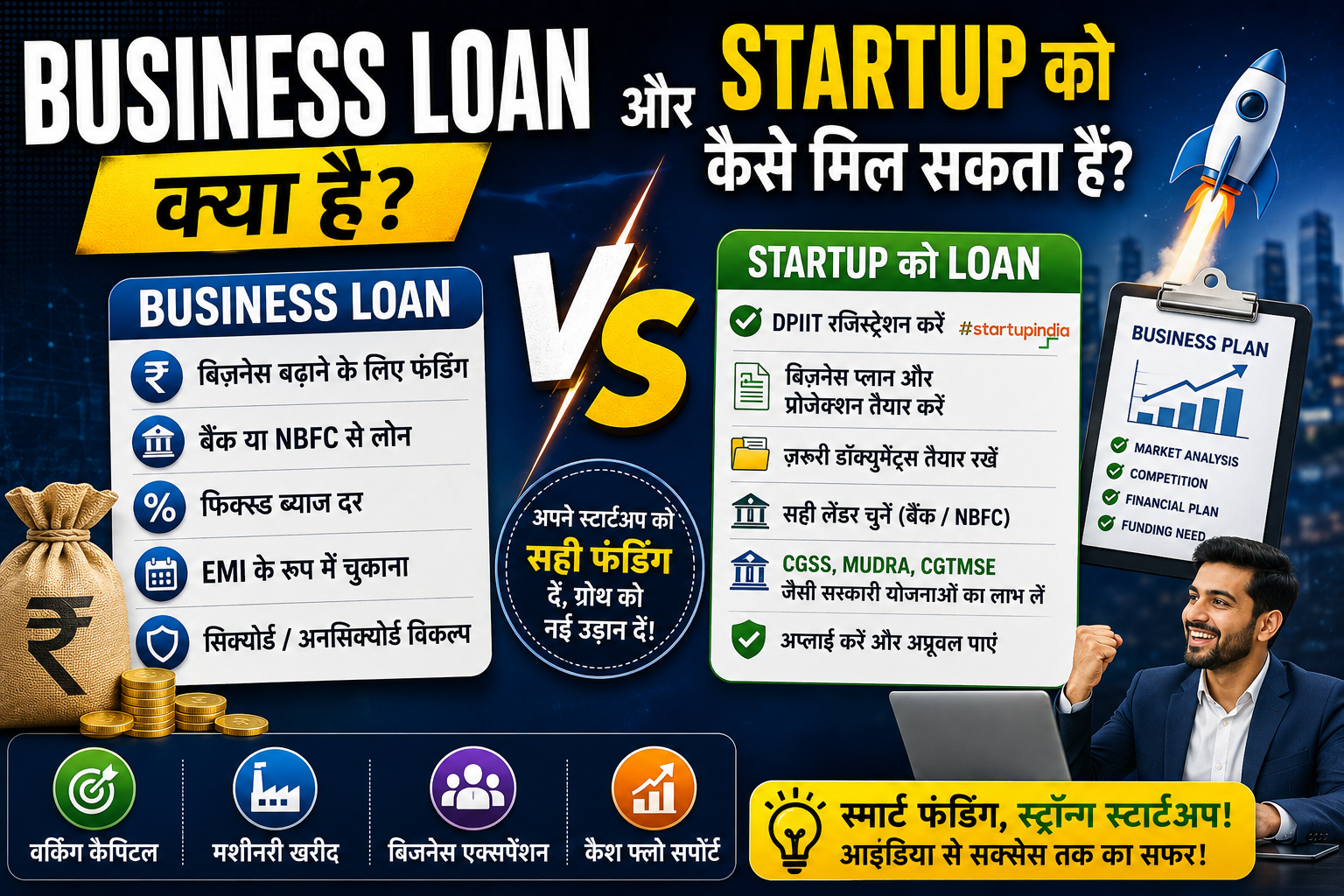
Business Loan क्या है और Startup को कैसे मिल सकता है? जानिए eligibility, documents, CIBIL Score, collateral, DPIIT recognition, government schemes, CGSS, MUDRA, loan process और startup funding की पूरी जानकारी।
भारत में startup शुरू करना पहले से कहीं ज्यादा accessible हुआ है। आज entrepreneurs technology, manufacturing, fintech, healthcare, education, food, logistics, D2C और कई दूसरे sectors में नए businesses शुरू कर रहे हैं।
लेकिन business शुरू करने के लिए सिर्फ अच्छा idea काफी नहीं होता।
आपको चाहिए:
- Product development
- Employees
- Office या infrastructure
- Technology
- Marketing
- Inventory
- Working capital
- Equipment
- Customer acquisition
इन सभी के लिए capital की जरूरत पड़ती है।
यहीं पर Business Loan एक महत्वपूर्ण financing option बन सकता है।
लेकिन startup के लिए Business Loan लेना किसी salaried व्यक्ति के Personal Loan जितना straightforward नहीं होता।
क्योंकि lender के सामने एक बड़ा सवाल होता है:
“क्या यह business future में loan की EMI और interest चुका पाएगा?”
अगर startup नया है और अभी revenue नहीं है, तो traditional bank loan मिलना मुश्किल हो सकता है।
लेकिन इसका मतलब यह नहीं कि startup के लिए debt funding का रास्ता बंद है।
भारत में startups और MSMEs के लिए कई credit-support mechanisms और government-backed schemes उपलब्ध हैं। Startup India के official portal पर startups के लिए Central Government schemes की सूची दी गई है, जिसमें funding और credit-support से संबंधित programs भी शामिल हैं।
इस article में हम समझेंगे:
Business Loan क्या है, startup को loan क्यों चाहिए, eligibility क्या होती है, कौन से documents चाहिए, DPIIT recognition कैसे मदद कर सकती है, collateral-free funding के options क्या हैं और startup को loan लेने से पहले किन बातों का ध्यान रखना चाहिए।
Table of Contents
Business Loan क्या होता है?
Business Loan एक प्रकार की financing है जिसका उपयोग business की जरूरतों को पूरा करने के लिए किया जाता है।
इसका इस्तेमाल कई purposes के लिए हो सकता है:
- Business expansion
- Working capital
- Machinery purchase
- Equipment
- Inventory
- Technology
- Office setup
- Marketing
- Hiring
- Business infrastructure
- Cash-flow management
Loan secured या unsecured दोनों प्रकार का हो सकता है।
Secured Business Loan
इसमें lender collateral मांग सकता है।
Collateral हो सकता है:
- Property
- Equipment
- Fixed Deposit
- Other eligible assets
Unsecured Business Loan
इसमें सामान्यतः कोई specific physical collateral नहीं लिया जाता।
लेकिन lender आपकी:
- Business performance
- Revenue
- Profitability
- Banking history
- CIBIL/Credit history
- GST/ITR records
- Promoter profile
जैसी चीजों को evaluate कर सकता है।
इसलिए:
“Collateral-free” का मतलब “approval guaranteed” नहीं है।
यह distinction startup founders को समझना चाहिए।
Startup के लिए Business Loan की जरूरत क्यों पड़ सकती है?
Startup को funding की जरूरत अलग-अलग stages पर हो सकती है।
1. Idea/Prototype Stage
इस stage पर founder को चाहिए:
- Product prototype
- Software development
- Market research
- Testing
- Initial team
इस stage पर traditional Business Loan मिलना relatively difficult हो सकता है क्योंकि revenue history नहीं होती।
2. Early Revenue Stage
अब startup के पास customers आने लगे हैं।
Funding की जरूरत हो सकती है:
- Inventory
- Marketing
- Hiring
- Technology
- Sales expansion
इस stage पर Business Loan की possibility बढ़ सकती है क्योंकि lender को कुछ actual business activity दिखाई दे सकती है।
3. Growth Stage
Startup के पास:
- Revenue
- Customers
- Business history
- Financial statements
- Cash flows
हो सकते हैं।
अब working capital या expansion loan लेना comparatively easier हो सकता है, subject to lender’s credit assessment.
सबसे पहले एक Reality Check: हर Startup को Loan नहीं लेना चाहिए
यह बहुत महत्वपूर्ण है।
कई founders सोचते हैं:
“Business शुरू करने के लिए loan लेना ही पड़ेगा।”
ऐसा जरूरी नहीं है।
Startup financing के कई sources हो सकते हैं:
- Founder capital
- Bootstrapping
- Friends & family
- Angel investors
- Venture capital
- Government grants
- Seed funding
- Business loans
- Working capital facilities
- Venture debt
Loan की सबसे बड़ी समस्या यह है कि:
Revenue आए या न आए, repayment obligation बनी रहती है।
अगर startup की monthly revenue ₹2 लाख है और EMI ₹80,000 है, तो cash-flow pressure बहुत बड़ा हो सकता है।
इसलिए startup को पहले यह calculate करना चाहिए:
“अगर अगले 6–12 महीने revenue expectation से कम रहा तो क्या हम EMI चुका पाएंगे?”
अगर answer “नहीं” है, तो debt शायद सही funding instrument नहीं है।
Business Loan और Startup Funding में क्या अंतर है?
यह distinction बहुत जरूरी है।
Business Loan
आप lender से पैसा borrow करते हैं और:
Principal + Interest
वापस करते हैं।
Equity Funding
Investor startup में पैसा invest करता है और बदले में:
Company में ownership/equity
ले सकता है।
Grant/Seed Support
कुछ government programs eligible startups को specified purposes के लिए financial support दे सकते हैं। Startup India के official portal पर Seed Fund Scheme को proof of concept, prototype development, product trials, market entry और commercialisation जैसे शुरुआती startup needs के लिए financial assistance के रूप में describe किया गया है।
इसलिए:
Grant ≠ Loan
और:
Equity ≠ Loan
इनके repayment और ownership implications अलग होते हैं।
Startup को Business Loan मिलने के लिए क्या चाहिए?
कोई एक universal eligibility criteria नहीं है।
हर lender की credit policy अलग होती है।
लेकिन lender सामान्यतः इन factors को देख सकता है:
- Business age
- Revenue
- Profitability
- Cash flow
- Banking transactions
- Credit history
- Promoter profile
- Existing liabilities
- Business model
- Industry
- Loan purpose
- Repayment capacity
- Collateral, if applicable
एक established business जिसके पास 3 साल की audited financial history है, उसे loan देना lender के लिए एक बिल्कुल नए pre-revenue startup की तुलना में अलग risk profile हो सकता है।
DPIIT Recognition क्या है?
अगर आप startup चला रहे हैं, तो DPIIT Startup Recognition के बारे में समझना बहुत महत्वपूर्ण है।
Startup India के current official criteria के अनुसार सामान्य DPIIT-recognised startup के लिए entity:
- India में Private Limited Company, registered Partnership Firm, LLP या eligible Cooperative Society के रूप में incorporated/registered होनी चाहिए;
- incorporation/registration से सामान्यतः 10 साल के भीतर होनी चाहिए;
- किसी financial year में turnover ₹200 करोड़ से अधिक नहीं होना चाहिए;
- innovation, development/improvement या scalable business model के जरिए employment/wealth creation की potential रखती हो;
- existing business को split या reconstruct करके बनाई गई entity नहीं होनी चाहिए।
DeepTech startups के लिए current framework में 20 years और ₹300 crore तक के thresholds दिए गए हैं।
ध्यान दें: DPIIT recognition मिलना अपने आप Business Loan approval की guarantee नहीं है।
लेकिन recognised startup के लिए कुछ government support programs और credit mechanisms तक access relevant हो सकता है।
DPIIT Recognition Startup Loan में कैसे मदद कर सकती है?
सबसे महत्वपूर्ण example है:
Credit Guarantee Scheme for Startups — CGSS
Startup India के अनुसार Credit Guarantee Scheme for Startups का उद्देश्य DPIIT-recognised startups को दिए जाने वाले eligible credit facilities के लिए guarantee support provide करना है।
इस scheme के तहत guarantee startup को सीधे cash के रूप में नहीं मिलती।
यह eligible lending institutions को guarantee cover देती है, जिससे eligible startups को debt financing उपलब्ध कराने में मदद हो सकती है। Current Startup India information के अनुसार revised framework में eligible borrower के लिए maximum guarantee limit ₹20 crore तक बढ़ाई गई है।
यह distinction बहुत महत्वपूर्ण है:
CGSS आपको सीधे ₹20 करोड़ नहीं देता।
बल्कि eligible lending institution द्वारा दिए गए eligible credit पर guarantee mechanism काम करता है।
Startup को फिर भी lender की credit appraisal और scheme conditions को satisfy करना पड़ता है।
CGSS के लिए कौन eligible हो सकता है?
Startup India के official information के अनुसार borrower को broadly:
- DPIIT-recognised startup होना चाहिए;
- किसी lending/investing institution में default नहीं होना चाहिए;
- RBI guidelines के अनुसार NPA नहीं होना चाहिए;
- और scheme के लिए member institution द्वारा eligibility certify की जानी चाहिए।
Eligible lending/investing institutions में specified Scheduled Commercial Banks/Financial Institutions, qualifying RBI-registered NBFCs और eligible SEBI-registered AIFs शामिल हो सकते हैं।
इसलिए startup को पहले यह check करना चाहिए कि जिस lender से वह funding लेना चाहता है, वह relevant scheme के तहत eligible/member institution है या नहीं।
CGSS में Startup को क्या फायदा हो सकता है?
सबसे बड़ा potential benefit है:
Collateral-free debt funding तक बेहतर access
लेकिन इसका मतलब यह नहीं कि:
“Startup को बिना collateral के loan automatically मिल जाएगा।”
Lender को फिर भी business की viability देखनी होगी।
उदाहरण:
Startup के पास:
- ₹5 करोड़ annual revenue
- Positive cash flow
- Strong customers
- Good banking history
- Clear business model
है।
ऐसे startup का debt application एक pre-revenue startup की तुलना में बहुत अलग तरीके से evaluate किया जा सकता है।
इसलिए guarantee scheme risk को reduce करने में मदद कर सकती है, लेकिन business viability की जगह नहीं लेती।
Startup के लिए MUDRA Loan क्या है?
Pradhan Mantri MUDRA Yojana (PMMY) micro-enterprises के लिए credit support का एक important government program है।
Startup India के June 2026 official schemes playbook में PMMY को non-corporate, non-farm micro/small enterprises सहित early-stage businesses और startups के लिए collateral-free micro-credit program के रूप में सूचीबद्ध किया गया है। Playbook में Shishu, Kishor और Tarun categories के साथ eligible repeat borrowers के लिए Tarun Plus के तहत ₹20 लाख तक की limit का उल्लेख है।
इसलिए बहुत छोटे business के लिए MUDRA-type financing traditional startup venture funding से कहीं ज्यादा practical हो सकती है।
उदाहरण:
- Small manufacturing unit
- Local service business
- Food business
- Repair/service centre
- Small retail business
- Micro enterprise
ऐसे businesses के लिए debt financing useful हो सकती है।
Stand-Up India भी एक Option हो सकता है
Startup India के current June 2026 government schemes playbook में Stand-Up India को SC/ST और women entrepreneurs के लिए greenfield non-farm enterprise के लिए composite bank loan facility के रूप में listed किया गया है।
इसमें ₹10 लाख से ₹1 करोड़ तक loan support का उल्लेख है।
यह सभी startups के लिए general scheme नहीं है।
इसलिए eligibility और current operational status को official sources पर verify करना जरूरी है।
CGTMSE क्या है?
अगर आपका startup/business micro या small enterprise category में आता है, तो Credit Guarantee Fund Trust for Micro and Small Enterprises (CGTMSE) के बारे में भी जानना उपयोगी है।
CGTMSE का उद्देश्य eligible MSEs को collateral/third-party guarantee के बिना institutional credit तक access facilitate करना है।
CGTMSE के official material के अनुसार borrower को पहले registered Member Lending Institution यानी MLI के पास loan application देना होता है। MLI अपने internal credit appraisal के आधार पर loan sanction/disburse करता है और फिर eligible credit के लिए CGTMSE guarantee cover के लिए apply करता है।
यह भी समझना जरूरी है:
CGTMSE खुद आपको सीधे loan नहीं देता।
यह lender को credit guarantee cover provide करने वाला mechanism है।
Startup के लिए Business Loan की Eligibility कैसे Improve करें?
अगर आपका startup loan लेना चाहता है, तो केवल application submit करना पर्याप्त नहीं है।
आपको lender के सामने business को financially credible दिखाना होगा।
इसके लिए:
1. Proper Business Plan बनाएं
Business plan में शामिल करें:
- Problem
- Solution
- Target customer
- Market size
- Competition
- Revenue model
- Pricing
- Marketing strategy
- Team
- Funding requirement
- Use of funds
- Revenue projection
- Expense projection
- Cash-flow projection
2. Loan का Purpose Clear रखें
अगर आप bank से ₹20 लाख मांग रहे हैं, तो यह मत लिखिए:
“Business growth के लिए ₹20 लाख चाहिए।”
यह बहुत vague है।
इसके बजाय:
₹8 लाख — Machinery
₹5 लाख — Inventory
₹3 लाख — Technology
₹2 लाख — Marketing
₹2 लाख — Working Capital
इस तरह lender को पता चलता है कि पैसा कहाँ इस्तेमाल होगा।
3. Revenue Evidence दिखाएं
अगर startup already operating है, तो यह documents बहुत valuable हो सकते हैं:
- GST returns
- Bank statements
- Sales invoices
- Payment gateway statements
- Income tax returns
- Financial statements
- Purchase records
- Customer contracts
Lender के लिए actual business activity projected numbers से ज्यादा convincing हो सकती है।
4. Banking Transactions Clean रखें
Business के सारे transactions ideally properly documented banking channels से करें।
अगर business revenue ₹50 लाख है लेकिन bank account में सिर्फ ₹10 लाख का visible business flow दिखता है, तो lender के लिए actual cash flow समझना कठिन हो सकता है।
इसलिए:
Business और personal finances को जितना संभव हो separate रखें।
5. GST और Tax Compliance Maintain करें
अगर applicable है तो:
- GST returns
- ITR
- TDS
- Annual accounts
- ROC filings
जैसी compliance को समय पर maintain करें।
A clean compliance history lender confidence improve कर सकती है।
6. Promoter का CIBIL Score भी Important हो सकता है
Startup के शुरुआती stage में company की credit history बहुत छोटी या nonexistent हो सकती है।
ऐसी स्थिति में lender promoter/founders की credit profile को भी consider कर सकता है।
इसलिए founders को:
- Existing EMI समय पर pay करनी चाहिए
- Credit card dues control में रखने चाहिए
- Unnecessary loan applications avoid करनी चाहिए
- Credit report में errors check करने चाहिए
Startup Loan के लिए कौन-कौन से Documents चाहिए?
Exact documents lender और business structure के अनुसार बदलते हैं।
लेकिन सामान्यतः:
Business Documents
- Certificate of Incorporation
- PAN
- GST registration
- Partnership deed/LLP documents, where applicable
- MOA/AOA for company, where applicable
- Udyam Registration, where applicable
- Business address proof
Financial Documents
- Bank statements
- ITR
- GST returns
- Profit & Loss
- Balance Sheet
- Cash-flow statements
- Audited financial statements, where applicable
Promoter Documents
- PAN
- Aadhaar/other KYC
- Address proof
- Photograph
- Personal financial information
Startup-Specific Documents
- DPIIT Recognition Certificate, where applicable
- Pitch deck
- Business plan
- Customer contracts
- Revenue projections
- Cap table, where relevant
- Existing funding details
Startup Loan Apply करने का Step-by-Step Process
Step 1: Funding Requirement Calculate करें
पहले तय करें:
कितना पैसा चाहिए?
₹5 लाख?
₹20 लाख?
₹1 करोड़?
सिर्फ maximum eligible amount के आधार पर loan न लें।
Step 2: Use of Funds बनाएं
हर ₹1 का proposed use स्पष्ट करें।
Step 3: Repayment Capacity Calculate करें
यह सबसे important step है।
मान लीजिए:
Loan = ₹20 लाख
EMI = ₹50,000
तो startup को हर महीने सिर्फ EMI के लिए ₹50,000 cash generate करना होगा।
इसके अलावा:
- Salary
- Rent
- Marketing
- Technology
- Inventory
- Taxes
भी हैं।
इसलिए EMI को revenue के साथ नहीं बल्कि free cash flow के साथ compare करना चाहिए।
Step 4: DPIIT Recognition Check करें
अगर आपका startup eligible है, तो DPIIT recognition के benefits और relevant schemes को evaluate करें।
Current Startup India criteria और application process official portal पर उपलब्ध हैं।
Step 5: Government Schemes Check करें
अपने business के अनुसार देखें:
- CGSS
- MUDRA
- CGTMSE
- Stand-Up India
- State startup schemes
- Other sector-specific schemes
Startup India का official government schemes portal विभिन्न central schemes को एक जगह list करता है।
Step 6: Banks/NBFCs Compare करें
कम से कम 2–3 lenders compare करें।
Compare करें:
- Interest rate
- APR
- Processing fee
- Tenure
- Collateral
- Guarantee fee, where applicable
- Prepayment charges
- Penal charges
- Total repayment
Step 7: KFS जरूर पढ़ें
RBI के lending framework में Key Facts Statement यानी KFS loan की key information को standardized form में समझने में मदद करता है।
KFS में APR यानी annualized cost of credit और repayment schedule जैसी महत्वपूर्ण information शामिल हो सकती है।
इसलिए startup founder को केवल sanction letter नहीं, बल्कि:
KFS + Loan Agreement
दोनों पढ़ने चाहिए।
Step 8: Loan Application Submit करें
Documents submit करने के बाद lender:
- Business verification
- Credit assessment
- Banking analysis
- Income/revenue verification
- Collateral evaluation, where applicable
- Promoter assessment
कर सकता है।
Step 9: Sanction Letter को ध्यान से पढ़ें
Sanction मिलने के बाद तुरंत sign न करें।
Check करें:
- Approved amount
- Interest
- Tenure
- EMI
- Processing fee
- Security
- Conditions
- Repayment schedule
- Prepayment terms
Step 10: Disbursement के बाद Funds Track करें
Loan मिलने के बाद money को unrelated personal expenses में इस्तेमाल करना avoid करें।
अगर loan:
Machinery purchase
के लिए था, तो उसे luxury car खरीदने में इस्तेमाल करना business और compliance दोनों के perspective से problematic हो सकता है।
Startup को कितना Business Loan लेना चाहिए?
यह बहुत important question है।
मान लीजिए startup को:
₹50 लाख
की जरूरत है।
लेकिन founder सोचता है:
“Bank ₹1 करोड़ तक देने को तैयार है, तो ₹1 करोड़ ले लेते हैं।”
यह dangerous thinking है।
Loan amount हमेशा:
Need + Repayment Capacity
पर आधारित होना चाहिए।
न कि:
Maximum Eligibility
पर।
Debt Service Coverage Ratio यानी DSCR क्यों Important है?
Lender यह देखना चाहता है कि business अपने debt obligations को कितनी comfortably service कर सकता है।
Simple concept:
Cash Available for Debt Service ÷ Debt Obligations
अगर business का cash generation debt repayment के मुकाबले बहुत कम है, तो loan risky हो सकता है।
Founder को खुद भी यह calculation करनी चाहिए।
Example
मान लीजिए startup का annual operating cash available:
₹12 लाख
है।
Annual loan repayment:
₹6 लाख
है।
तो business के पास debt repayment के बाद ₹6 लाख बचते हैं।
लेकिन अगर annual repayment:
₹11 लाख
हो जाए, तो cash-flow बहुत tight हो जाएगा।
इसलिए loan लेने से पहले downside scenario भी calculate करें।
Best Case नहीं, Worst Case भी देखें
Startup projections अक्सर optimistic होती हैं।
Founder कहता है:
Revenue अगले साल 3x हो जाएगा।
लेकिन lender और founder दोनों को यह भी पूछना चाहिए:
अगर revenue केवल 50% बढ़ा तो?
अगर customer acquisition cost बढ़ गई तो?
अगर major client चला गया तो?
अगर funding round delay हो गया तो?
अगर product launch 6 महीने late हुआ तो?
अगर इन situations में EMI नहीं चुकाई जा सकती, तो debt amount कम करना चाहिए।
Business Loan vs Equity Funding
यह startup founders के लिए सबसे important strategic decisions में से एक है।
Business Loan
फायदे:
- Ownership dilute नहीं होती
- Investor control नहीं आता
- Business successful होने पर upside founder के पास रहता है
नुकसान:
- EMI/repayment mandatory
- Interest देना पड़ता है
- Cash-flow pressure
- Default risk
Equity Funding
फायदे:
- शुरुआती stage में repayment नहीं
- Investor network/support मिल सकता है
- High-growth startups के लिए suitable हो सकता है
नुकसान:
- Ownership dilute होती है
- Investor expectations
- Board/control implications
- Valuation pressure
इसलिए pre-revenue startup के लिए equity/seed funding कई cases में debt से ज्यादा appropriate हो सकती है।
लेकिन established revenue-generating startup के लिए debt attractive हो सकता है।
Startup के लिए Loan कब लेना बेहतर है?
Business Loan तब ज्यादा sensible हो सकता है जब:
- Revenue predictable है
- Cash flow relatively stable है
- Loan का clear productive use है
- Business expansion से measurable return expected है
- EMI comfortably manageable है
- Founder emergency reserve maintain कर सकता है
उदाहरण:
आपके manufacturing startup के पास ₹1 करोड़ annual sales हैं।
एक नई machine ₹20 लाख की है।
Machine production capacity बढ़ाकर additional cash flow generate कर सकती है।
ऐसी situation में term loan logical हो सकता है।
Startup को Loan कब नहीं लेना चाहिए?
अगर:
- अभी product-market fit नहीं मिला
- Revenue zero है
- Business model untested है
- Cash flow negative है
- EMI repayment का source unclear है
- Loan personal expenses के लिए लिया जा रहा है
- Founder केवल valuation बढ़ाने के लिए debt लेना चाहता है
तो Business Loan risky हो सकता है।
विशेष रूप से:
Pre-revenue startup + large EMI = high financial risk
Collateral-Free Loan का मतलब क्या है?
Collateral-free loan का मतलब है कि lender को property या specific asset को security के रूप में pledge करने की आवश्यकता नहीं होती, subject to the product/scheme terms.
लेकिन:
Collateral-free ≠ Risk-free
अगर borrower loan default करता है तो lender के पास contractual and legal recovery mechanisms हो सकते हैं।
CGTMSE के official material में collateral-free credit access को facilitate करने की बात है, लेकिन loan application और sanctioning का निर्णय Member Lending Institution अपने credit appraisal के आधार पर करता है।
इसी तरह CGSS भी lender को guarantee support देता है; startup को loan approval automatically नहीं मिलता।
Startup Loan में कौन-कौन से Charges हो सकते हैं?
Loan की total cost केवल interest नहीं होती।
इसमें हो सकते हैं:
- Processing fee
- Documentation charges
- Legal charges
- Valuation charges
- Guarantee-related fees, where applicable
- Insurance, where applicable
- Penal charges
- Prepayment charges
- Other service charges
इसलिए:
Interest Rate के बजाय Total Cost of Credit देखें।
RBI के KFS framework में APR का purpose ही annualized cost of credit को reflect करना है, जिसमें interest और associated charges शामिल हो सकते हैं।
Startup Business Loan लेने की 10 Smart Tips
1. जरूरत से ज्यादा loan न लें
Maximum eligibility आपका target नहीं होना चाहिए।
2. Loan का productive use रखें
ऐसी चीज पर खर्च करें जो business revenue या efficiency बढ़ा सके।
3. Cash-flow projection बनाएं
सिर्फ revenue projection नहीं।
4. Personal और business finances अलग रखें
इससे financial tracking बेहतर होती है।
5. Credit history maintain करें
Founder और business दोनों की credit profile important हो सकती है।
6. Government schemes check करें
DPIIT, CGSS, MUDRA, CGTMSE और applicable state schemes देखें।
7. Multiple lenders compare करें
पहला offer accept न करें।
8. KFS पढ़ें
APR और repayment schedule समझें।
9. Prepayment rules देखें
Future में loan जल्दी बंद करना हो सकता है।
10. Worst-case scenario calculate करें
Revenue गिरने पर भी EMI manageable होनी चाहिए।
Startup Loan के लिए एक Practical Funding Strategy
मान लीजिए startup को ₹30 लाख चाहिए।
पूरे ₹30 लाख debt लेने के बजाय founder structure बना सकता है:
₹5 लाख — Founder Capital
₹10 लाख — Equity/Angel Funding
₹10 लाख — Business Loan
₹5 लाख — Working Capital Reserve
यह सिर्फ illustrative structure है।
Actual financing mix startup की stage, valuation, cash flow और risk profile पर depend करेगा।
इस strategy का फायदा यह हो सकता है कि startup का पूरा capital burden debt पर नहीं आता।
Startup India से क्या-क्या मदद मिल सकती है?
Startup India केवल loan platform नहीं है।
Official portal पर startups के लिए:
- DPIIT Recognition
- Government schemes
- Seed Fund
- Investor Connect
- Mentorship
- IPR support
- Public procurement support
- Funding resources
जैसी सुविधाओं और programs की जानकारी दी गई है।
इसलिए founder को केवल:
“Loan कहाँ मिलेगा?”
पर focus नहीं करना चाहिए।
उसे पूरा funding ecosystem देखना चाहिए।
Startup के लिए Funding का सही Order क्या हो सकता है?
हर startup के लिए एक ही order नहीं होता, लेकिन broadly:
Idea Stage
Founder capital → Incubator/Grant/Seed support
Prototype Stage
Founder capital → Grants/Seed Fund → Angel/Equity
Early Revenue
Equity + Working Capital/Debt
Growth Stage
Debt + Equity + Venture Debt
यह सिर्फ general framework है।
Business model और cash flow के अनुसार order बदल सकता है।
क्या DPIIT Recognition से Bank Loan Guaranteed है?
नहीं।
यह एक बहुत common misconception है।
DPIIT recognition आपको startup ecosystem में recognised status और eligible benefits/schemes तक access दे सकता है।
लेकिन bank/NBFC loan approval फिर भी lender की credit appraisal पर depend करता है।
CGSS के official explanation में भी स्पष्ट है कि eligible startups को lending institutions approach करना होता है और institution feasibility, viability तथा applicable eligibility parameters को assess करता है।
इसलिए:
DPIIT Certificate ≠ Automatic Loan Approval
Business Loan लेते समय सबसे बड़ी गलतियां
1. Revenue के बिना बड़ा loan लेना
Debt repayment future cash flow पर depend करता है।
2. Personal expenses को business loan से fund करना
यह financial discipline को खराब करता है।
3. केवल EMI देखना
Total repayment देखें।
4. Government scheme को free money समझना
Loan फिर भी loan है।
5. DPIIT recognition को loan guarantee समझना
यह गलत है।
6. एक lender पर निर्भर रहना
Offers compare करें।
7. KFS पढ़े बिना sign करना
Charges बाद में surprise बन सकते हैं।
8. Emergency reserve न रखना
Business downturn में EMI pressure बढ़ सकता है।
Startup Business Loan Checklist
Loan apply करने से पहले:
☐ Business legally registered है
☐ PAN और GST, where applicable, ready हैं
☐ Business bank account active है
☐ Financial statements ready हैं
☐ ITR/GST returns available हैं
☐ Promoter KYC ready है
☐ Credit reports checked हैं
☐ DPIIT recognition applicable है तो प्राप्त/checked है
☐ Loan purpose clearly defined है
☐ Cash-flow projection तैयार है
☐ Repayment capacity calculate की है
☐ 2–3 lenders compare किए हैं
☐ Interest rate compare की है
☐ APR check किया है
☐ Processing fee check की है
☐ Prepayment terms check किए हैं
☐ KFS पढ़ा है
☐ Loan agreement पढ़ा है
☐ Worst-case cash-flow scenario बनाया है
Final Verdict
Startup के लिए Business Loan एक useful financing tool हो सकता है, लेकिन यह हर startup के लिए सही first funding option नहीं है।
अगर startup के पास अभी revenue नहीं है, business model tested नहीं है और cash flow negative है, तो large loan लेना risky हो सकता है।
ऐसी स्थिति में founder को:
- Bootstrapping
- Grants
- Incubators
- Seed funding
- Angel investment
- Government startup programs
जैसे options भी explore करने चाहिए।
दूसरी तरफ अगर startup के पास:
- Stable revenue
- Predictable cash flow
- Existing customers
- Clear unit economics
- Strong banking history
- Profitable expansion opportunity
है, तो Business Loan growth को accelerate कर सकता है।
DPIIT recognition भी relevant हो सकती है, खासकर उन startups के लिए जो eligible government support programs का उपयोग करना चाहते हैं। Current Startup India criteria के अनुसार सामान्य startup recognition के लिए 10-year age limit और ₹200 crore turnover threshold है, जबकि DeepTech startups के लिए 20 years और ₹300 crore तक के thresholds हैं।
Eligible DPIIT-recognised startups के लिए Credit Guarantee Scheme for Startups (CGSS) भी महत्वपूर्ण है। Current Startup India information के अनुसार revised framework में eligible borrower के लिए guarantee coverage की maximum limit ₹20 crore तक है। लेकिन guarantee सीधे startup को cash नहीं देती; lending institution को guarantee support मिलता है और loan approval lender की appraisal पर निर्भर करता है।
Micro और small businesses के लिए MUDRA और CGTMSE जैसे credit-support mechanisms भी relevant हो सकते हैं। Startup India के June 2026 schemes playbook में PMMY के तहत eligible micro/small enterprises और early-stage businesses के लिए ₹10 लाख तक के loans तथा eligible repeat borrowers के लिए Tarun Plus के तहत ₹20 लाख तक की facility का उल्लेख है।
CGTMSE का उद्देश्य eligible MSEs के लिए collateral-free institutional credit access facilitate करना है, लेकिन loan sanction फिर भी Member Lending Institution की internal credit assessment पर निर्भर करता है।
इसलिए startup founder को loan लेने से पहले एक बात जरूर समझनी चाहिए:
Business Loan growth का fuel हो सकता है, लेकिन खराब business model को बचाने का solution नहीं।
अगर ₹10 लाख loan लेने के बाद आपका business ₹15 लाख का additional predictable cash flow generate कर सकता है, तो debt strategic हो सकता है।
लेकिन अगर ₹10 लाख loan सिर्फ इसलिए लिया जा रहा है क्योंकि:
“Funding चाहिए, शायद business चल जाए।”
तो risk बहुत अधिक है।
सबसे अच्छी strategy यह है:
पहले business model validate करें → revenue/cash flow समझें → funding requirement calculate करें → government schemes check करें → lenders compare करें → total cost देखें → फिर debt लें।
निष्कर्ष
Business Loan startup के लिए working capital, expansion, machinery, technology और business growth के लिए उपयोगी financial tool हो सकता है।
लेकिन startup को loan लेने से पहले यह समझना चाहिए कि loan और startup funding एक ही चीज नहीं हैं।
Loan में:
Principal + Interest
वापस करना पड़ता है।
Equity funding में ownership dilute हो सकती है।
Grant/seed support में eligibility और purpose-specific conditions हो सकती हैं।
इसलिए सही funding instrument चुनना उतना ही महत्वपूर्ण है जितना सही business idea चुनना।
अगर आपका startup शुरुआती stage में है और अभी revenue नहीं है, तो सीधे बड़ा Business Loan लेने की बजाय Startup India के funding ecosystem, seed programs, incubators और eligible government schemes को explore करना अधिक sensible हो सकता है। Startup India official portal पर government schemes और startup funding resources की जानकारी उपलब्ध है।
अगर आपका startup already revenue generate कर रहा है, तो Business Loan working capital और expansion के लिए useful हो सकता है।
DPIIT recognition eligible startups के लिए कई government benefits और programs तक access का रास्ता खोल सकती है। Current rules के अनुसार normal startups के लिए recognition period 10 years और turnover threshold ₹200 crore है, जबकि DeepTech startups के लिए 20 years और ₹300 crore तक का framework है।
Loan लेने से पहले:
CIBIL/credit profile check करें।
Business financials तैयार रखें।
Cash-flow projections बनाएं।
Loan का exact purpose तय करें।
2–3 lenders compare करें।
Interest rate के साथ APR और total cost देखें।
KFS और loan agreement पढ़ें।
और सबसे जरूरी:
इतना ही debt लें जिसे आपका business खराब महीने में भी संभाल सके।
क्योंकि startup में revenue हमेशा linear नहीं होता।
एक महीने sales बहुत अच्छी हो सकती हैं और अगले महीने cash flow गिर सकता है।
इसलिए Business Loan की EMI को optimistic revenue projection से नहीं, बल्कि realistic और conservative cash-flow scenario से match करें।
अंततः एक अच्छा startup वह नहीं है जो सबसे बड़ा loan उठाता है।
अच्छा startup वह है जो capital का इस्तेमाल intelligently करता है और borrowed money को sustainable growth में बदल पाता है।
Useful Official Resources
- Startup India — Official Portal
- Startup India — DPIIT Startup Recognition
- Startup India — Government Schemes for Startups
- Startup India — Credit Guarantee Scheme for Startups (CGSS)
- Startup India — Startup Funding & Programs
- CGTMSE — Official Website
- Reserve Bank of India — Official Website
- RBI — Key Facts Statement / Loan Cost Framework
Disclaimer: यह article सामान्य financial education और informational purposes के लिए है। Business Loan की eligibility, interest rate, collateral requirements, processing fees, tenure, guarantee coverage और other terms lender, business profile और applicable scheme guidelines के अनुसार अलग-अलग हो सकते हैं। Government schemes की eligibility, limits और operational guidelines समय के साथ बदल सकती हैं; आवेदन करने से पहले संबंधित official portal और lender की latest conditions verify करें। DPIIT recognition या किसी credit guarantee scheme को automatic loan approval न समझें। बड़े financial decision से पहले qualified financial advisor/CA या संबंधित lender से professional advice लेना उचित है।
