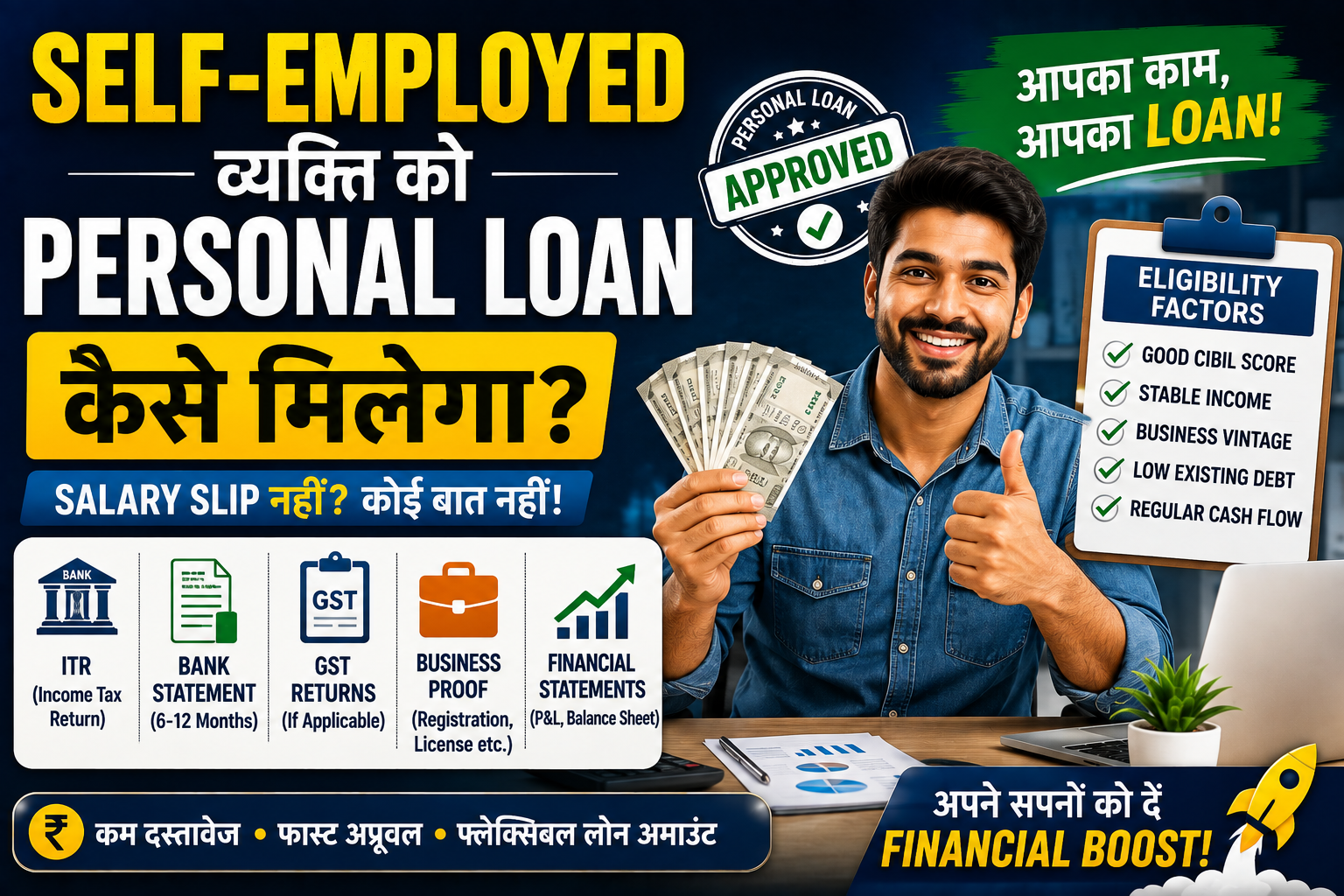
Self-Employed व्यक्ति को Personal Loan कैसे मिलेगा? जानिए Eligibility, CIBIL Score, ITR, Bank Statement, GST, Income Proof, Documents, Loan Amount, EMI और बिना Salary Slip Personal Loan लेने की पूरी जानकारी।
भारत में अब income कमाने का तरीका सिर्फ नौकरी तक सीमित नहीं है। लाखों लोग business, freelancing, consultancy, professional services, trading, agency work और अन्य self-employment activities से income generate करते हैं।
लेकिन जब ऐसे लोगों को Personal Loan की जरूरत पड़ती है, तो एक common सवाल सामने आता है:
“मैं Self-Employed हूं, Salary Slip नहीं है—तो Personal Loan कैसे मिलेगा?”
इसका सीधा जवाब है:
Table of Contents
Self-Employed व्यक्ति को Personal Loan मिल सकता है।
लेकिन salaried employee की तरह salary slip के आधार पर income verify करने के बजाय lender आपकी ITR, bank statements, business income, financial statements, GST records, business vintage, credit history और repayment capacity जैसे factors को देख सकता है।
TransUnion CIBIL के अनुसार Personal Loan approval में CIBIL Score और Report के साथ income, employment status और repayment behaviour जैसे factors महत्वपूर्ण होते हैं। Self-employed applicants के लिए CIBIL की indicative documentation list में bank statements, income/financial statements और पिछले वर्षों के ITR जैसे documents शामिल हो सकते हैं।
इसलिए self-employed व्यक्ति के लिए Personal Loan का सबसे important principle है:
Salary Slip नहीं है तो कोई समस्या नहीं, लेकिन आपकी income और repayment capacity का reliable proof होना चाहिए।
इस article में हम विस्तार से समझेंगे कि Self-Employed व्यक्ति Personal Loan कैसे ले सकता है, कौन-कौन से documents चाहिए, CIBIL Score कितना जरूरी है, ITR और GST का क्या role है, loan amount कैसे तय होता है, EMI affordability कैसे calculate करें और किन गलतियों की वजह से loan reject हो सकता है।
Self-Employed व्यक्ति किसे माना जाता है?
Self-employed व्यक्ति वह होता है जिसकी income किसी fixed employer से monthly salary के रूप में नहीं आती।
उदाहरण के लिए:
- Business Owner
- Freelancer
- Consultant
- Doctor/Professional
- Architect
- CA/CS/Legal Professional
- Digital Marketer
- Agency Owner
- Trader
- Shop Owner
- Manufacturer
- Distributor
- Contractor
- Commission-based professional
- Online seller
- Independent service provider
इन लोगों की income monthly salary की तरह fixed नहीं भी हो सकती।
इसीलिए lender को उनकी financial capacity assess करने के लिए अलग documentation की जरूरत पड़ सकती है।
क्या Self-Employed व्यक्ति को Personal Loan मिल सकता है?
हां।
Personal Loan generally unsecured loan होता है, इसलिए lender के लिए applicant की repayment capacity महत्वपूर्ण होती है।
CIBIL के अनुसार Personal Loan में collateral/security की आवश्यकता सामान्यतः नहीं होती और lender applicant की creditworthiness, income और repayment behaviour को carefully evaluate करता है।
Self-employed applicant के लिए lender यह जानना चाहता है:
Business कितना कमाता है?
Income कितनी stable है?
Existing EMI कितनी है?
Loan की नई EMI comfortably चुकाई जा सकती है या नहीं?
Credit history कैसी है?
Business कितने समय से चल रहा है?
यानी सिर्फ business owner होना पर्याप्त नहीं है।
Business की financial strength भी महत्वपूर्ण है।
Salaried और Self-Employed Personal Loan में क्या अंतर है?
| Factor | Salaried | Self-Employed |
|---|---|---|
| Income Proof | Salary Slip | ITR/Financials/Bank Statement |
| Employer Proof | Employment Proof | Business Proof |
| Income Pattern | Generally monthly | Variable हो सकती है |
| GST | Usually irrelevant | Applicable होने पर useful |
| ITR | Depending on lender | अक्सर अधिक important |
| Bank Statement | Important | Very Important |
| Business Vintage | Not applicable | Important |
| Financial Statements | Usually less relevant | Often relevant |
CIBIL की indicative documentation list भी self-employed applicants के लिए income/financial statements, bank statements और ITR जैसी additional documentation का उल्लेख करती है।
इसलिए self-employed applicant को loan application से पहले documentation पर ज्यादा ध्यान देना चाहिए।
Self-Employed व्यक्ति के लिए Personal Loan Eligibility
हर bank और NBFC की eligibility अलग हो सकती है।
लेकिन सामान्यतः lender इन factors को evaluate कर सकता है:
1. Age
Applicant की age lender की prescribed range में होनी चाहिए।
2. Business Vintage
Business कितने समय से चल रहा है, यह महत्वपूर्ण हो सकता है।
3. Income
Annual और monthly effective income कितनी है?
4. CIBIL Score
Credit history और repayment behaviour कैसा है?
5. Existing Debt
पहले से कितने loans और EMIs चल रहे हैं?
6. Banking History
Bank account में cash flow और transactions कैसे हैं?
7. Business Stability
Business लगातार चल रहा है या income बहुत volatile है?
8. Documentation
Financial information कितनी accurately documented है?
CIBIL Score Self-Employed व्यक्ति के लिए कितना Important है?
बहुत important।
क्योंकि Personal Loan unsecured होता है। Lender के पास property या gold जैसा collateral नहीं होता जिसे वह default की स्थिति में recover कर सके।
इसलिए credit history lender के risk assessment में महत्वपूर्ण भूमिका निभाती है।
CIBIL के अनुसार score 300 से 900 के बीच होता है और higher score generally better creditworthiness को indicate करता है। CIBIL यह भी स्पष्ट करता है कि loan sanction का final decision lender का होता है, CIBIL का नहीं।
एक important reality check:
Good CIBIL = Guaranteed Loan
नहीं।
मान लीजिए:
CIBIL = 800
लेकिन:
- Business losses में है
- Existing debt बहुत ज्यादा है
- Bank cash flow weak है
- ITR और bank transactions inconsistent हैं
तो loan reject हो सकता है।
इसी तरह सिर्फ CIBIL कम होने का मतलब यह भी नहीं कि हर lender automatically reject करेगा।
Self-Employed व्यक्ति के लिए कितना CIBIL Score अच्छा है?
कोई एक universal number ऐसा नहीं है जो हर bank/NBFC में approval guarantee करे।
CIBIL Score 300–900 range में होता है। Higher score generally better chances से associated है।
CIBIL के अनुसार payment history, credit utilisation, credit age और enquiries जैसे factors score को प्रभावित करते हैं।
इसलिए practical goal यह होना चाहिए:
Highest possible score नहीं, बल्कि healthy credit profile।
इसके लिए:
- EMI समय पर pay करें
- Credit card dues control करें
- Existing overdue clear करें
- Unnecessary loans avoid करें
- Multiple loan applications कम रखें
Self-Employed व्यक्ति को Personal Loan के लिए कौन-कौन से Documents चाहिए?
Exact requirements lender पर depend करती हैं।
लेकिन commonly required documents में शामिल हो सकते हैं:
KYC Documents
- PAN Card
- Aadhaar Card
- Passport
- Driving Licence
- Voter ID
- Address Proof
Income Documents
- ITR
- Computation of Income
- Profit & Loss Statement
- Balance Sheet
- Audited Financial Statements, where required
- Bank Statements
Business Documents
- Business Registration
- GST Registration
- Udyam Registration
- Shop & Establishment Certificate
- Partnership Deed
- Company Incorporation Documents
- Professional Registration
Banking Documents
- Personal Bank Statement
- Business Bank Statement
- Existing loan statements, where required
CIBIL की indicative Personal Loan checklist self-employed applicants के लिए audited financials, six-month bank statement और office address proof जैसी documentation का उल्लेख करती है, जबकि exact requirements lender-to-lender अलग हो सकती हैं।
ITR Self-Employed व्यक्ति के लिए इतना Important क्यों है?
Self-employed applicant के पास salary slip नहीं होती।
इसलिए lender के लिए ITR एक useful source हो सकता है जिससे annual declared income समझने में मदद मिलती है।
उदाहरण:
Annual business revenue:
₹30 लाख
लेकिन expenses:
₹24 लाख
तो net income अलग होगी।
Lender केवल ₹30 लाख turnover देखकर यह assume नहीं कर सकता कि आपकी personal income ₹30 लाख है।
इसीलिए:
Turnover और Income अलग चीजें हैं।
ITR और financial statements business की actual financial position समझने में मदद कर सकते हैं।
क्या बिना ITR Self-Employed व्यक्ति को Personal Loan मिल सकता है?
कुछ lenders alternative income documents के आधार पर application consider कर सकते हैं, लेकिन यह universal rule नहीं है।
अगर आपके पास:
- Strong bank statements
- GST returns
- Business proof
- Financial statements
- Regular income credits
- Good credit history
है, तो कुछ lenders alternative assessment कर सकते हैं।
लेकिन कई lenders self-employed applicants से ITR को महत्वपूर्ण या mandatory document के रूप में मांग सकते हैं।
CIBIL की indicative checklist self-employed applicants के लिए पिछले 3 वर्षों के ITR का उल्लेख करती है।
इसलिए:
No ITR ≠ Automatic Rejection
लेकिन:
No ITR + Weak Financial Records = Approval Difficult
Bank Statement Self-Employed व्यक्ति के लिए क्यों Important है?
Bank statement lender को actual money movement समझने में मदद कर सकता है।
उदाहरण:
January = ₹1.2 लाख inflow
February = ₹1.4 लाख
March = ₹1.3 लाख
April = ₹1.5 लाख
May = ₹1.35 लाख
June = ₹1.6 लाख
अगर यह legitimate business receipts हैं, तो lender को income consistency का बेहतर picture मिल सकता है।
लेकिन:
Bank Balance और Cash Flow अलग चीजें हैं।
Account में ₹10 लाख पड़े होने का मतलब यह नहीं कि आपकी monthly income ₹10 लाख है।
Lender income source और transaction pattern को भी देख सकता है।
Personal Bank Account या Current Account?
Self-employed व्यक्ति को ideally business transactions के लिए appropriate business banking arrangement रखना चाहिए।
उदाहरण:
अगर business का monthly turnover:
₹10 लाख
है और पूरा business transaction personal savings account में mixed है, तो financial records समझना मुश्किल हो सकता है।
Business और personal transactions को उचित तरीके से separate रखना accounting और financial documentation दोनों के लिए helpful हो सकता है।
यह loan approval की guarantee नहीं है, लेकिन financial records को cleaner और easier-to-understand बना सकता है।
GST का Personal Loan में क्या Role है?
अगर आपका business GST के scope में आता है और registered है, तो GST records business activity को support कर सकते हैं।
GST returns से lender को:
- Reported turnover
- Business activity
- Tax compliance
समझने में मदद मिल सकती है।
लेकिन फिर से:
GST Turnover = Personal Income नहीं।
उदाहरण:
Turnover = ₹50 लाख
Expenses = ₹42 लाख
तो ₹50 लाख आपकी personal earning नहीं है।
Lender profitability और repayment capacity को अलग तरीके से evaluate करेगा।
Business Vintage क्यों Important है?
मान लीजिए:
Business A
10 साल पुराना है।
और:
Business B
4 महीने पुराना है।
दोनों का monthly revenue समान हो सकता है।
फिर भी lender के लिए Business A के पास historical evidence ज्यादा होगा:
- Past ITR
- Bank statements
- GST records
- Customer history
- Profit history
इसलिए business vintage lender के risk assessment में relevant हो सकता है।
इसका मतलब new business को loan नहीं मिलेगा?
नहीं।
लेकिन नए business को repayment capacity prove करने के लिए alternative evidence की जरूरत अधिक हो सकती है।
Business Revenue और Personal Income में अंतर
यह self-employed applicants की सबसे common mistakes में से एक है।
मान लीजिए:
Annual Turnover = ₹1 करोड़
लेकिन:
Business Expenses = ₹85 लाख
Net Profit = ₹15 लाख
तो lender के लिए ₹1 करोड़ को आपकी annual income मानना गलत होगा।
इसलिए loan application में:
Revenue को Income के रूप में incorrectly report न करें।
Accurate financial information दें।
Existing EMI का Personal Loan Approval पर असर
मान लीजिए self-employed व्यक्ति की monthly effective income:
₹1 लाख
है।
Existing EMIs:
₹40,000
हैं।
अब proposed loan की EMI:
₹30,000
है।
Total EMI:
₹70,000
हो जाएगी।
अब lender को देखना होगा कि ₹1 लाख income के मुकाबले ₹70,000 monthly debt obligations sustainable हैं या नहीं।
CIBIL भी बताता है कि lenders income और existing EMI burden को loan assessment में देख सकते हैं।
इसलिए:
Loan Amount से ज्यादा important है Repayment Capacity।
कितने Loan के लिए Apply करना चाहिए?
यह आपकी income और cash flow पर depend करता है।
गलती यह है कि:
“Bank ₹20 लाख तक दे रहा है, इसलिए ₹20 लाख ले लेते हैं।”
यह जरूरी नहीं कि सही financial decision हो।
अगर आपको वास्तव में:
₹5 लाख
की जरूरत है, तो ₹15 लाख का loan सिर्फ maximum eligibility देखकर लेना unnecessary debt create कर सकता है।
Borrow according to need, not maximum eligibility.
Self-Employed व्यक्ति के लिए EMI कैसे Calculate करें?
मान लीजिए:
Loan = ₹5 लाख
Tenure = 3 years
Interest = hypothetical 14%
तो EMI roughly ₹17,000 के आसपास हो सकती है।
लेकिन actual EMI lender के rate और tenure पर depend करेगी।
अब अगर existing EMI:
₹20,000
है, तो total EMI लगभग:
₹37,000
हो सकती है।
अब इस amount को आपकी stable monthly cash flow के against evaluate करें।
सबसे जरूरी:
Business के सबसे कमजोर महीने में भी EMI comfortably pay होनी चाहिए।
सिर्फ peak-season income देखकर loan न लें।
Seasonal Business वाले Self-Employed लोगों को क्या ध्यान रखना चाहिए?
मान लीजिए आपका business:
- Wedding season
- Festival season
- Tourism season
- Agricultural cycle
पर heavily dependent है।
आपकी income:
Peak Season = ₹3 लाख/month
Off Season = ₹70,000/month
हो सकती है।
अगर आपने peak income देखकर बड़ी EMI ले ली, तो off-season में cash-flow problem हो सकती है।
इसलिए:
EMI affordability का calculation average और weak cash-flow months दोनों से करें।
Freelancers को Personal Loan कैसे मिलेगा?
Freelancers self-employed category में आ सकते हैं।
उदाहरण:
- Web Developer
- Graphic Designer
- Video Editor
- Content Writer
- Digital Marketer
- Photographer
- Consultant
इनकी income कई clients से आ सकती है।
Useful documents:
- Bank statements
- ITR
- Client invoices
- Contracts
- Payment receipts
- GST records, where applicable
- Professional registration, where relevant
अगर income नियमित और documented है, तो profile stronger हो सकती है।
लेकिन cash-only freelance income के मामले में verification मुश्किल हो सकता है।
Consultant को Personal Loan कैसे मिलेगा?
Consultants के पास salary slip नहीं होती।
लेकिन उनके पास:
- Client agreements
- Professional invoices
- Bank credits
- ITR
- GST records
जैसे documents हो सकते हैं।
उदाहरण:
Monthly consulting income:
₹1.25 लाख
और पिछले 12 months में consistent client payments हैं।
यह lender को income stability समझने में मदद कर सकता है।
Doctor, CA, Lawyer जैसे Professionals को Loan कैसे मिलेगा?
Professionals के लिए:
- Professional registration
- ITR
- Bank statements
- Practice/business proof
- Office address proof
- Financial statements
जैसे documents relevant हो सकते हैं।
कुछ lenders specific professional/self-employed segments के लिए अलग products या eligibility criteria भी रखते हैं।
इसलिए professional होना कभी-कभी useful segment हो सकता है, लेकिन approval फिर भी lender assessment पर depend करता है।
क्या Self-Employed व्यक्ति बिना Collateral Personal Loan ले सकता है?
हां।
Personal Loan सामान्यतः unsecured होता है।
CIBIL भी Personal Loan को unsecured credit product के रूप में describe करता है।
इसका मतलब:
- Property mortgage नहीं
- Gold pledge नहीं
- Vehicle collateral नहीं
लेकिन collateral न होने के कारण lender credit risk को ज्यादा carefully assess कर सकता है।
इसलिए self-employed applicant के लिए:
Strong Credit + Strong Income Documentation
और भी important हो जाते हैं।
क्या Self-Employed व्यक्ति को Salaried व्यक्ति से ज्यादा Interest Rate देनी पड़ेगी?
यह जरूरी नहीं।
Interest rate lender की risk assessment पर depend करती है।
अगर self-employed applicant की:
- Strong credit history
- Stable income
- Good banking
- Low existing debt
- Strong financial records
हैं, तो profile competitive हो सकती है।
लेकिन highly volatile income, weak documentation या high debt risk को बढ़ा सकते हैं।
इसलिए:
Self-employed = Automatically Higher Interest
यह universal rule नहीं है।
Personal Loan Apply करने से पहले CIBIL Report Check करें
यह सबसे practical steps में से एक है।
CIBIL के अनुसार credit report में:
- Active accounts
- Closed accounts
- Payment history
- Credit enquiries
- Credit history
जैसी information होती है।
Loan apply करने से पहले check करें:
कोई overdue है?
कोई गलत account है?
कोई unknown enquiry है?
Credit card utilisation बहुत high है?
Existing loans properly updated हैं?
CIBIL एक calendar year में free CIBIL Score & Report उपलब्ध कराता है।
CIBIL पर अपना Free Credit Score & Report देखें
Multiple Loan Applications क्यों Avoid करें?
एक lender से reject होने के बाद:
Bank A → Bank B → NBFC A → NBFC B → Loan App A → Loan App B
ऐसे लगातार applications करना अच्छी strategy नहीं है।
CIBIL के अनुसार multiple credit enquiries score और credit profile पर negative impact डाल सकती हैं, खासकर जब borrower बार-बार नया credit seek करता दिखाई दे।
बेहतर तरीका:
पहले:
Eligibility → Documentation → Lender Comparison → Targeted Application
करें।
Self-Employed व्यक्ति के लिए Personal Loan Apply करने का Step-by-Step Process
Step 1: Credit Profile Check करें
CIBIL report देखें।
Step 2: Annual Income Calculate करें
Turnover नहीं।
Actual documented income/profitability को समझें।
Step 3: Existing Debt Calculate करें
सभी:
- Personal Loans
- Business Loans
- Credit Card dues
- Vehicle Loans
का monthly obligation निकालें।
Step 4: Bank Statements Prepare करें
Recent months की clear bank statements रखें।
Step 5: ITR और Financials तैयार रखें
जहां applicable हों।
Step 6: GST/Business Documents तैयार रखें
अगर applicable हैं।
Step 7: Loan Amount तय करें
Need-based borrowing करें।
Step 8: Lenders Compare करें
सिर्फ interest rate नहीं।
Compare:
- APR
- Processing Fee
- Tenure
- EMI
- Prepayment charges
- Penal charges
- Total repayment
Step 9: KFS पढ़ें
RBI framework के अनुसार Key Facts Statement loan के key terms और APR जैसी जानकारी को समझने में मदद करता है। APR में interest के साथ applicable credit charges शामिल हो सकते हैं।
Step 10: Loan तभी लें जब EMI Affordable हो
Business की weak cash-flow period में भी repayment manageable होनी चाहिए।
APR क्या है और इसे क्यों देखना चाहिए?
बहुत से borrowers सिर्फ interest rate देखते हैं।
उदाहरण:
Lender A:
Interest Rate = 12%
Lender B:
Interest Rate = 11.5%
आपको B cheaper लग सकता है।
लेकिन अगर B की:
- Processing Fee
- Other applicable charges
- Insurance/ancillary costs
ज्यादा हैं, तो actual borrowing cost अलग हो सकती है।
RBI के KFS framework में APR annual cost of credit को reflect करता है, जिसमें interest और associated charges शामिल हो सकते हैं।
इसलिए:
Interest Rate + APR + Total Repayment
तीनों देखें।
Self-Employed व्यक्ति को Loan App से सावधान क्यों रहना चाहिए?
Online आपको ऐसे advertisements मिल सकते हैं:
“Self-employed? Instant ₹10 Lakh Loan!”
“No ITR!”
“No CIBIL!”
“5 Minute Approval!”
लेकिन advertisement देखकर तुरंत apply करना risky हो सकता है।
RBI digital lending framework borrower को loan cost, data collection और lender/LSP details के बारे में transparency देने पर जोर देता है। RBI material में digital lending arrangements में APR disclosure, consent-based data collection और privacy requirements जैसी बातों का उल्लेख है।
इसलिए किसी loan app को use करने से पहले verify करें:
- Actual lender कौन है?
- Bank/NBFC कौन है?
- Official website क्या है?
- KFS मिला है?
- APR कितना है?
- Processing fee कितनी है?
- Data permissions क्या हैं?
- Grievance mechanism क्या है?
क्या Self-Employed व्यक्ति को Fake ITR बनवानी चाहिए?
बिल्कुल नहीं।
अगर कोई agent कहता है:
“ITR नहीं है? ₹2,000 में ITR बनवा देंगे, loan approve हो जाएगा।”
तो ऐसे offer से दूर रहें।
Fake ITR, fake bank statement या fake income proof से:
- Loan rejection
- Fraud concerns
- Legal consequences
- Future credit problems
हो सकते हैं।
Genuine documents ही इस्तेमाल करें।
क्या Bank Statement में Artificial Transactions दिखाना सही है?
नहीं।
मान लीजिए आपका actual business income:
₹50,000/month
है।
लेकिन loan approval के लिए आप relatives से temporary ₹1 लाख लेकर account में डालते हैं और उसे business income जैसा दिखाते हैं।
यह misleading हो सकता है।
Lender transaction pattern और source of funds की जांच कर सकता है।
Financial profile को artificially inflate करने के बजाय genuinely improve करें।
Self-Employed व्यक्ति के Loan Reject होने के प्रमुख कारण
1. Low CIBIL Score
Past repayment issues।
2. Weak Income Documentation
Income properly prove नहीं हो रही।
3. Short Business Vintage
Business बहुत नया है।
4. Irregular Cash Flow
Income highly volatile है।
5. High Existing Debt
पहले से EMI burden ज्यादा है।
6. GST/ITR Mismatch
Business records consistent नहीं हैं।
7. Poor Banking History
Cheque bounce, overdue या irregular transactions।
8. Excessive Loan Amount
Income के मुकाबले requested loan बहुत ज्यादा है।
9. Multiple Credit Enquiries
Short period में बहुत applications।
10. Lender’s Internal Policy
Profile lender के target segment से match नहीं करती।
Loan Reject हो जाए तो क्या करें?
तुरंत दूसरे 5 lenders को apply न करें।
पहले rejection का reason समझें।
अगर CIBIL issue है:
Credit profile improve करें।
अगर Income issue है:
Financial documentation मजबूत करें।
अगर Existing Debt ज्यादा है:
Debt reduce करें।
अगर Documents incomplete हैं:
Complete documentation तैयार करें।
अगर Loan Amount ज्यादा है:
Required amount reconsider करें।
अगर lender policy issue है:
Suitable lender खोजें।
Self-Employed व्यक्ति के लिए Personal Loan Approval के Chances कैसे बढ़ाएं?
1. Good CIBIL Maintain करें
Timely repayment करें।
2. Clean Bank Statements रखें
Business cash flow traceable रखें।
3. ITR Regularly File करें
Applicable होने पर tax filings को consistent रखें।
4. Business Transactions Properly Record करें
Income और expenses document करें।
5. GST Compliance रखें
जहां applicable हो।
6. Existing Debt Control करें
High EMI burden avoid करें।
7. Realistic Loan Amount मांगें
Maximum eligibility के पीछे न भागें।
8. Business Vintage Build करें
Stable operating history useful होती है।
9. Multiple Applications Avoid करें
Targeted applications करें।
10. Strong Documentation रखें
Lender को financial picture समझने में आसानी हो।
Self-Employed व्यक्ति को कितना Personal Loan मिल सकता है?
इसका कोई fixed universal amount नहीं है।
Loan amount depend कर सकता है:
- Income
- Business profitability
- CIBIL
- Existing debt
- Banking history
- Business vintage
- Lender policy
पर।
उदाहरण:
अगर आपका annual documented income:
₹12 लाख
है और existing debt कम है, तो आपकी borrowing capacity एक ऐसे व्यक्ति से अलग होगी जिसकी annual income:
₹5 लाख
है।
लेकिन यह भी जरूरी नहीं कि ₹12 लाख income वाले व्यक्ति को automatically ₹12 लाख loan मिल जाए।
Loan amount lender की risk assessment से तय होगा।
Self-Employed Person के लिए ₹2 लाख Personal Loan
अगर आपको केवल:
₹2 लाख
की आवश्यकता है, तो excessive borrowing से बचें।
आपकी:
- Income
- Existing EMI
- CIBIL
- Business stability
strong होनी चाहिए।
Small loan amount होने से approval guaranteed नहीं है।
Self-Employed Person के लिए ₹5 लाख Personal Loan
₹5 लाख loan में lender income और debt burden को carefully देख सकता है।
उदाहरण:
Monthly effective income:
₹1 लाख
Existing EMI:
₹15,000
Proposed EMI:
₹12,000
तो total:
₹27,000
हो सकती है।
यह profile potentially manageable हो सकती है, लेकिन actual approval lender-specific assessment पर depend करेगा।
Self-Employed Person के लिए ₹10 लाख Personal Loan
₹10 लाख का unsecured loan लेने के लिए stronger documentation और repayment capacity की आवश्यकता हो सकती है।
अगर:
- Business established है
- ITR strong है
- Bank statements clean हैं
- CIBIL good है
- Existing debt low है
तो application comparatively stronger हो सकती है।
लेकिन केवल high turnover देखकर ₹10 लाख loan लेना सही नहीं है।
क्या Self-Employed व्यक्ति Personal Loan से Business खर्च कर सकता है?
Personal Loan का end-use restrictions lender/product-specific हो सकता है। CIBIL Personal Loan को flexible-use unsecured credit के रूप में describe करता है, लेकिन borrower को अपने lender के agreement और terms देखना चाहिए।
अगर आपका primary उद्देश्य:
- Working Capital
- Machinery
- Inventory
- Business Expansion
है, तो Business Loan या अन्य business financing product Personal Loan से ज्यादा appropriate हो सकता है।
Personal Loan को business financing का automatic replacement न समझें।
Business purpose के लिए dedicated financing की pricing और structure अलग हो सकती है।
Personal Loan vs Business Loan for Self-Employed
| Factor | Personal Loan | Business Loan |
|---|---|---|
| Purpose | Personal/eligible flexible use | Business expenses |
| Collateral | Usually unsecured | Product-dependent |
| Documentation | Moderate | Often more detailed |
| Business Financials | May be less extensive | More important |
| Interest | Usually higher than secured products | Product-specific |
| Tenure | Product-specific | Product-specific |
अगर आपका actual purpose business expansion है, तो दोनों products की total cost compare करें।
Self-Employed व्यक्ति के लिए Loan लेने का Best Time कब है?
Loan तब लेना बेहतर है जब:
- Income stable हो
- Existing debt manageable हो
- Credit profile healthy हो
- Business cash flow predictable हो
- Loan का purpose clear हो
- EMI comfortably affordable हो
सिर्फ इसलिए loan न लें कि:
“Bank मुझे offer कर रहा है।”
Loan offer और financial need अलग चीजें हैं।
क्या Pre-Approved Personal Loan Self-Employed के लिए अच्छा Option है?
अगर आपके existing bank/NBFC ने genuine pre-approved offer दिया है, तो यह convenient हो सकता है।
क्योंकि lender के पास आपके:
- Account history
- Credit history
- Transaction pattern
का data हो सकता है।
लेकिन offer accept करने से पहले:
- Interest rate
- APR
- Processing fee
- Tenure
- EMI
- Total repayment
compare करें।
Pre-approved = Automatically Cheapest
नहीं।
Convenience और affordability अलग चीजें हैं।
Self-Employed व्यक्ति के लिए Personal Loan Checklist
Loan application से पहले:
☐ PAN ready
☐ Aadhaar/KYC ready
☐ Bank statements ready
☐ ITR ready
☐ GST documents, if applicable
☐ Business registration ready
☐ Financial statements ready
☐ CIBIL report checked
☐ Existing EMI calculated
☐ Existing debt calculated
☐ Required loan amount calculated
☐ EMI affordability checked
☐ APR checked
☐ KFS read
☐ Processing fee checked
☐ Prepayment terms understood
☐ Lender verified
Self-Employed व्यक्ति को Personal Loan लेने से पहले 7 Golden Rules
Rule 1: Turnover को Income मत समझिए
Actual profit और repayment capacity देखें।
Rule 2: Maximum Eligibility के पीछे मत भागिए
Need-based borrowing करें।
Rule 3: CIBIL को Ignore मत करें
Credit history future borrowing cost को प्रभावित कर सकती है।
Rule 4: Bank Statements Clean रखें
Financial transactions traceable रखें।
Rule 5: Fake Documents कभी मत बनवाएं
Short-term approval के लिए long-term risk न लें।
Rule 6: APR और KFS जरूर पढ़ें
केवल headline interest rate पर decision न लें।
Rule 7: EMI Worst Month में भी Affordable हो
Peak-season income देखकर debt न लें।
Final Verdict: Self-Employed व्यक्ति को Personal Loan कैसे मिलेगा?
Self-employed होने की वजह से Personal Loan के दरवाजे बंद नहीं होते।
लेकिन salaried employee की तुलना में आपको अपनी financial stability को documents और banking history के माध्यम से ज्यादा clearly demonstrate करना पड़ सकता है।
सबसे मजबूत application आमतौर पर वह होती है जिसमें:
Good CIBIL + Stable Income + Clean Bank Statements + Consistent ITR + Manageable Existing Debt + Realistic Loan Amount
का combination हो।
CIBIL के अनुसार lenders loan application evaluate करते समय credit score/report, income, employment status और payment history जैसे factors देखते हैं।
Self-employed applicant के लिए ITR, financial statements और bank statements विशेष रूप से relevant हो सकते हैं। CIBIL की indicative checklist भी self-employed applicants के लिए पिछले वर्षों के ITR, audited financials और bank statements जैसे documents का उल्लेख करती है।
इसलिए अगर आप self-employed हैं, तो loan लेने की तैयारी application submit करने के दिन से नहीं, बल्कि कई महीने पहले से शुरू करनी चाहिए।
अपनी:
- Income
- Expenses
- Banking
- GST
- ITR
- Credit history
को properly maintain करें।
एक Practical Strategy
मान लीजिए आप अगले 6 महीने में Personal Loan लेना चाहते हैं।
तो अभी से:
Month 1
CIBIL report check करें।
Month 2
Existing overdue clear करें।
Month 3
Business और personal transactions properly organise करें।
Month 4
Financial records और ITR/GST documentation verify करें।
Month 5
Existing debt और required loan amount calculate करें।
Month 6
Lenders compare करें और targeted application करें।
यह approach:
“आज loan चाहिए, आज ही 10 apps पर apply करता हूं”
से कहीं बेहतर है।
सबसे बड़ा Reality Check
Self-employed applicants के बीच एक common misconception है:
“मेरी sales बहुत ज्यादा है, इसलिए bank मुझे बड़ा Personal Loan दे देगा।”
जरूरी नहीं।
Bank के लिए:
Sales ≠ Profit
Profit ≠ Cash Flow
Cash Flow ≠ Free Cash Flow
और:
Free Cash Flow ≠ Unlimited EMI Capacity
उदाहरण:
Annual turnover:
₹1 करोड़
Profit:
₹10 लाख
Existing EMI:
₹3 लाख/year
अब lender को देखना होगा कि proposed loan की additional EMI के बाद business owner के पास कितना sustainable surplus बचता है।
इसीलिए सिर्फ turnover देखकर loan amount तय करना गलत है।
दूसरा Reality Check: Good CIBIL भी पर्याप्त नहीं
मान लीजिए आपका CIBIL:
800
है।
लेकिन:
- Income irregular
- Business losses
- Existing debt high
- Bank statement weak
- ITR inconsistent
है।
तो loan approval फिर भी मुश्किल हो सकता है।
CIBIL खुद स्पष्ट करता है कि score important है लेकिन final lending decision lender का होता है।
इसलिए:
CIBIL + Income + Cash Flow + Debt + Documentation
पूरी picture बनाते हैं।
तीसरा Reality Check: Loan Approval हमेशा Good News नहीं
मान लीजिए आपको:
₹10 लाख
का Personal Loan approve हो गया।
Interest और charges जोड़ने के बाद आपका total repayment काफी अधिक हो सकता है।
अगर business की monthly cash flow weak है, तो approved loan भी financial stress create कर सकता है।
इसलिए:
Loan Approval को Goal मत बनाइए।
Goal होना चाहिए:
Affordable Financing।
RBI के KFS/APR framework का उद्देश्य भी borrowers को borrowing की overall cost समझने में मदद करना है।
निष्कर्ष
Self-employed व्यक्ति के लिए Personal Loan लेना बिल्कुल possible है, लेकिन इसमें सबसे महत्वपूर्ण चीज income verification और repayment capacity है।
अगर आपके पास salary slip नहीं है, तो चिंता करने की जरूरत नहीं है।
आपकी financial profile को support करने के लिए:
- ITR
- Bank Statements
- GST Returns
- Financial Statements
- Business Registration
- Client Invoices
- Professional Records
जैसे documents relevant हो सकते हैं।
लेकिन exact requirements lender-to-lender बदलती हैं।
इसलिए Personal Loan लेने से पहले:
1. अपना CIBIL Report Check करें
2. Income और Profit सही तरीके से Calculate करें
3. Existing EMI और Debt देखें
4. Bank Statements Clean रखें
5. ITR/GST/Financial Records Consistent रखें
6. जितना जरूरी है उतना ही Loan लें
7. APR और KFS Compare करें
8. केवल Genuine/Regulated Lender से Borrow करें
और सबसे important:
Self-employed होने के कारण loan पाने की कोशिश में अपनी financial reality को बढ़ा-चढ़ाकर पेश न करें।
Fake ITR, fake bank statement या artificial transactions से loan approval मिल भी जाए तो वह sustainable financial solution नहीं है।
अगर आपकी documented income ₹8 लाख है, तो ₹20 लाख का Personal Loan सिर्फ इसलिए नहीं लेना चाहिए कि lender maximum eligibility दिखा रहा है।
सही Personal Loan वही है जिसे आपका business या personal cash flow बिना financial stress के repay कर सके।
Useful Outbound Resources
- TransUnion CIBIL — Personal Loans & Eligibility — Personal Loan approval factors और self-employed applicants के indicative documents को समझने के लिए।
- CIBIL — Free CIBIL Score & Report — अपना credit score, accounts और enquiries check करने के लिए।
- CIBIL — Credit Score & Loan Basics — Credit score, payment history और loan approval के basics के लिए।
- CIBIL — Loan Approval Process — Lenders income, credit history और EMI burden जैसे factors कैसे देखते हैं, यह समझने के लिए।
- Reserve Bank of India — KFS & APR Framework — Loan cost, APR और borrower transparency से संबंधित RBI framework के लिए।
Disclaimer: यह article सामान्य financial education और informational purposes के लिए है। Personal Loan की eligibility, interest rate, loan amount, income-proof requirements, processing fees और approval criteria lender तथा applicant profile के अनुसार अलग-अलग हो सकते हैं। Self-employed applicants के लिए ITR, GST, financial statements और bank statements की requirements भी lender-specific हो सकती हैं। Loan लेने से पहले lender की latest terms, Key Facts Statement (KFS), APR, सभी applicable charges और repayment schedule ध्यान से पढ़ें।
