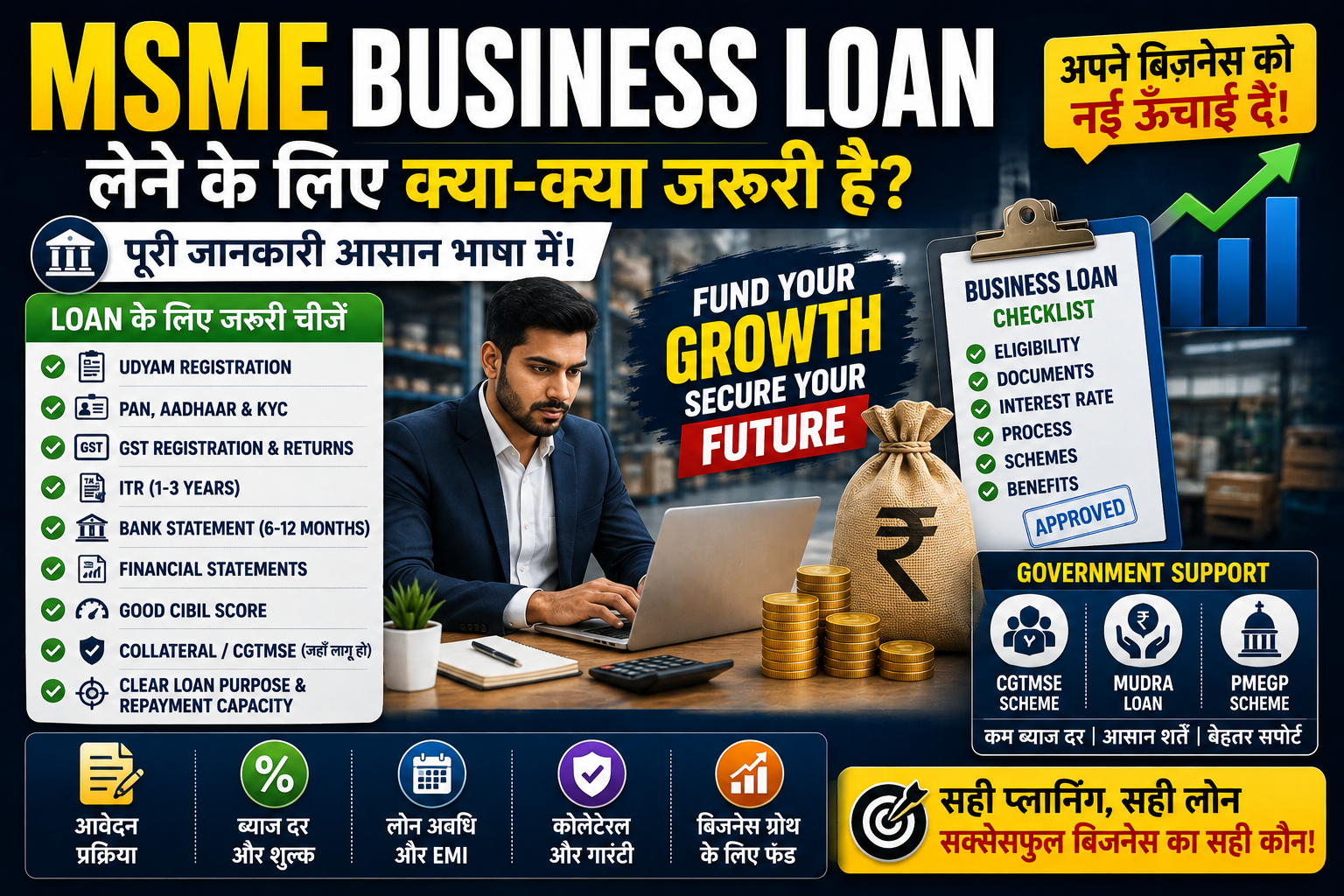
MSME Business Loan लेने के लिए क्या-क्या जरूरी है? जानिए Udyam Registration, eligibility, CIBIL Score, documents, GST, ITR, bank statement, collateral, CGTMSE, interest rate और loan application की पूरी जानकारी।
भारत में Micro, Small और Medium Enterprises यानी MSMEs देश की business economy का एक महत्वपूर्ण हिस्सा हैं। Manufacturing unit हो, trading business हो, service company हो, workshop हो, retailer हो या कोई growing small enterprise—business को चलाने और बढ़ाने के लिए समय-समय पर capital की जरूरत पड़ सकती है।
कई businesses को inventory खरीदने के लिए पैसे चाहिए होते हैं, कुछ को machinery या equipment खरीदना होता है, तो कुछ businesses को employees, technology, expansion या working capital के लिए finance की आवश्यकता होती है।
ऐसी स्थिति में MSME Business Loan एक महत्वपूर्ण financing option हो सकता है।
लेकिन यहां एक common misconception है:
“अगर मेरे पास Udyam Registration है तो मुझे Business Loan मिल जाएगा।”
ऐसा नहीं है।
Udyam Registration आपके enterprise की MSME पहचान और formalisation के लिए महत्वपूर्ण है, लेकिन loan approval lender की credit assessment पर निर्भर करता है। Lender business की financial health, cash flow, credit history, banking transactions, existing liabilities और repayment capacity जैसे factors देख सकता है।
Ministry of MSME की 2025 की “Know Your Lender, Grow Your Business” handbook के अनुसार MSME borrowers loan के लिए offline या online channels से apply कर सकते हैं और सामान्यतः PAN, Aadhaar, Udyam Registration Certificate, GST certificate/returns, ITR, bank statements, business address/ownership proof और financial statements जैसे documents की जरूरत पड़ सकती है।
इस article में हम विस्तार से समझेंगे कि:
- MSME Business Loan क्या है?
- कौन eligible हो सकता है?
- Udyam Registration क्यों जरूरी है?
- कौन-कौन से documents चाहिए?
- CIBIL Score कितना important है?
- GST और ITR क्यों matter करते हैं?
- Collateral-free loan कैसे मिल सकता है?
- CGTMSE क्या है?
- Loan की interest rate और total cost कैसे compare करें?
- Bank/NBFC को loan application कैसे तैयार करके दें?
- Loan reject होने से कैसे बचें?
Table of Contents
MSME Business Loan क्या है?
MSME Business Loan एक प्रकार का business financing है जिसका उपयोग eligible Micro, Small या Medium Enterprise अपनी business-related जरूरतों को पूरा करने के लिए कर सकता है।
इसका उपयोग कई उद्देश्यों के लिए किया जा सकता है:
- Working capital
- Machinery purchase
- Equipment
- Inventory
- Business expansion
- Office setup
- Technology upgrade
- Raw materials
- Business infrastructure
- Cash-flow management
Loan का structure lender और business requirement के अनुसार अलग हो सकता है।
उदाहरण के लिए:
Term Loan
लंबी अवधि की asset या expansion के लिए।
Working Capital Loan
Business के daily operational cash requirements के लिए।
Cash Credit/Overdraft
Short-term working capital requirements के लिए।
Equipment/Machinery Finance
Specific machinery या equipment खरीदने के लिए।
इसलिए Business Loan लेने से पहले यह तय करना जरूरी है कि आपको किस प्रकार का finance वास्तव में चाहिए।
2026 में MSME की नई Definition क्या है?
यह point महत्वपूर्ण है क्योंकि MSME classification के criteria में बदलाव हुआ है।
1 April 2025 से लागू revised classification के अनुसार:
| Category | Investment Limit | Turnover Limit |
|---|---|---|
| Micro | ₹2.5 करोड़ तक | ₹10 करोड़ तक |
| Small | ₹25 करोड़ तक | ₹100 करोड़ तक |
| Medium | ₹125 करोड़ तक | ₹500 करोड़ तक |
Official Udyam Registration portal पर यही revised classification दिखाई गई है।
इसका मतलब है कि पहले की तुलना में कई businesses अब higher investment और turnover के बावजूद MSME classification में रह सकते हैं।
लेकिन केवल classification qualify करना loan approval की guarantee नहीं है।
MSME Business Loan लेने के लिए सबसे पहले क्या जरूरी है?
अगर आप MSME Business Loan लेना चाहते हैं, तो broadly आपको इन चीजों पर ध्यान देना चाहिए:
1. Business की legal identity
2. Udyam Registration
3. PAN और KYC
4. GST registration/returns, जहां applicable
5. ITR और financial records
6. Business bank account
7. Bank statements
8. Good credit history
9. Clear business purpose
10. Repayment capacity
11. Required documents
12. Appropriate lender
इनमें से कोई एक factor अकेले loan approval तय नहीं करता।
1. Udyam Registration क्यों जरूरी है?
Udyam Registration MSME formalisation का official registration mechanism है।
Official Udyam portal के अनुसार registration:
- Online है
- Paperless है
- Free है
- Self-declaration based है
- Permanent registration number देता है
- Registration certificate online जारी करता है
- Renewal की आवश्यकता नहीं होती
Official Udyam Registration Portal
अगर आपका business MSME classification के अंतर्गत आता है और अभी तक Udyam Registration नहीं है, तो loan application से पहले इसे पूरा करना practical step हो सकता है।
लेकिन ध्यान रखें:
Udyam Registration = MSME status
Udyam Registration ≠ Guaranteed Loan
Bank/NBFC फिर भी credit assessment करेगा।
2. Udyam Registration के लिए क्या चाहिए?
Official portal के अनुसार Udyam Registration process में Aadhaar verification और PAN-related information का उपयोग होता है। Applicable entities के लिए GSTIN भी relevant हो सकता है।
Registration के दौरान enterprise की:
- Organisation type
- Business activity
- Address
- Plant/unit details
- Investment
- Turnover
- NIC activity
जैसी information दर्ज की जा सकती है।
सबसे महत्वपूर्ण बात:
Udyam Registration के नाम पर किसी private website को unnecessary fee न दें।
Official portal स्वयं बताता है कि Udyam Registration free of cost है और किसी private portal/agency को official registration authority नहीं माना जाता।
3. PAN Card जरूरी है
Business loan application में PAN महत्वपूर्ण KYC और financial identification document हो सकता है।
Business structure के अनुसार:
- Proprietorship
- Partnership
- LLP
- Private Limited Company
- Other eligible entity
के लिए documentation अलग हो सकता है।
Founder/promoter का PAN भी lender की credit assessment में relevant हो सकता है।
4. Aadhaar और KYC Documents
सामान्यतः lender को identity और address verification के लिए KYC documents की आवश्यकता होती है।
इनमें applicable documents हो सकते हैं:
- Aadhaar
- PAN
- Passport
- Voter ID
- Driving Licence
- Address proof
- Photograph
Exact KYC requirements lender और entity type पर depend करती हैं।
5. GST Registration और GST Returns
अगर आपका business GST registration के लिए liable है, तो GST compliance Business Loan application में महत्वपूर्ण हो सकती है।
Lender GST returns से business activity और reported turnover के बारे में information assess कर सकता है।
उदाहरण:
आप loan application में annual turnover:
₹80 लाख
बताते हैं।
लेकिन GST returns और bank transactions में reported business activity इससे बहुत कम दिखाई देती है।
ऐसी स्थिति में lender clarification मांग सकता है।
इसलिए:
GST data और financial records में consistency रखें।
Ministry of MSME की “Know Your Lender” handbook भी GST certificate/returns को MSME loan application के सामान्य documents में शामिल करती है।
6. Income Tax Returns यानी ITR
ITR lender को business income और tax compliance समझने में मदद कर सकती है।
Ministry of MSME की handbook के अनुसार पिछले 1–3 वर्षों के ITR सामान्य MSME loan documentation का हिस्सा हो सकते हैं।
यह lender-specific requirement हो सकती है।
अगर business नया है और अभी 3 साल की history नहीं है, तो available financial records और alternative evidence की जरूरत पड़ सकती है।
7. Bank Statement क्यों जरूरी है?
Business loan के लिए bank statement बहुत महत्वपूर्ण document है।
Ministry of MSME की handbook सामान्यतः 6–12 months bank statement की जरूरत बताती है।
Bank statement से lender business की:
- Cash inflow
- Cash outflow
- Sales receipts
- EMI payments
- Cheque returns
- Existing debt
- Banking discipline
जैसी चीजों को समझ सकता है।
इसलिए loan apply करने से पहले business bank account में unnecessary irregular transactions और avoidable cheque bounces को minimize करना चाहिए।
8. Financial Statements तैयार रखें
Established business के लिए financial statements बहुत important हो सकते हैं।
इनमें शामिल हो सकते हैं:
- Balance Sheet
- Profit & Loss Statement
- Cash Flow Statement
- Trading Account
- Receivables/Payables details
Ministry of MSME की handbook भी Balance Sheet, P&L और cash-flow statement को सामान्य MSME loan documentation में शामिल करती है।
9. CIBIL Score कितना जरूरी है?
यह एक common question है:
“MSME Business Loan के लिए CIBIL Score कितना होना चाहिए?”
इसका कोई universal number नहीं है जो हर lender पर लागू हो।
लेकिन credit profile important है।
Ministry of MSME की “Know Your Lender” handbook businesses को personal और business CIBIL score को strong रखने, timely EMI repayment करने, cheque bounces avoid करने और banking discipline maintain करने की सलाह देती है। Handbook में 750 से ऊपर personal और business CIBIL score maintain करने को creditworthiness सुधारने का एक तरीका बताया गया है।
लेकिन इसे:
“750 से कम score पर loan नहीं मिलेगा”
के रूप में नहीं समझना चाहिए।
Actual approval lender की policy और overall business profile पर depend करेगा।
10. Existing Loans और EMI
मान लीजिए business का monthly cash inflow:
₹10 लाख
है।
लेकिन existing loan repayments:
₹4 लाख/month
हैं।
अब नया loan लेकर additional EMI:
₹2 लाख/month
हो जाती है।
Total debt servicing:
₹6 लाख/month
हो जाएगा।
अगर business expenses भी high हैं, तो repayment capacity कमजोर हो सकती है।
इसलिए loan apply करने से पहले:
Existing debt + proposed EMI
दोनों calculate करें।
11. Business का Purpose Clear होना चाहिए
Bank/NBFC से ₹50 लाख मांगते समय सिर्फ:
“Business expansion के लिए चाहिए”
लिखना weak application हो सकता है।
इसके बजाय funding का detailed use बताएं।
उदाहरण:
₹20 लाख — Machinery
₹10 लाख — Raw Material
₹8 लाख — Inventory
₹5 लाख — Technology
₹7 लाख — Working Capital
अब lender को पता है कि money किस purpose में इस्तेमाल होगा।
12. Business Plan कब जरूरी होता है?
हर small business loan में detailed startup-style business plan जरूरी नहीं हो सकता।
लेकिन अगर आप:
- बड़ा loan मांग रहे हैं
- नया project शुरू कर रहे हैं
- manufacturing expansion कर रहे हैं
- नई machinery खरीद रहे हैं
- नई branch खोल रहे हैं
तो detailed project report/business plan useful हो सकता है।
इसमें शामिल करें:
- Business overview
- Product/service
- Market
- Customers
- Competition
- Revenue
- Costs
- Profit
- Funding requirement
- Use of funds
- Future projections
- Repayment plan
13. Collateral क्या होता है?
Collateral वह asset है जिसे lender loan के security के रूप में ले सकता है।
Possible collateral:
- Property
- Machinery
- Fixed Deposit
- Other eligible assets
लेकिन हर MSME loan के लिए collateral जरूरी नहीं होता।
यहीं पर credit guarantee schemes important हो सकती हैं।
14. CGTMSE क्या है?
CGTMSE — Credit Guarantee Fund Trust for Micro and Small Enterprises
का उद्देश्य eligible Micro and Small Enterprises को collateral/third-party guarantee के बिना institutional credit तक access facilitate करना है।
CGTMSE की current official website के अनुसार borrower पहले registered Member Lending Institution (MLI)—जैसे eligible bank, NBFC या financial institution—के पास loan के लिए approach करता है। MLI अपने internal credit appraisal के आधार पर loan sanction/disburse करता है और उसके बाद eligible credit के लिए CGTMSE guarantee cover के लिए apply करता है।
यह distinction बहुत महत्वपूर्ण है:
CGTMSE खुद आपको loan नहीं देता।
यह lender को guarantee cover देता है।
इसलिए:
CGTMSE = automatic loan approval नहीं।
CGTMSE में कितने तक का Guarantee Coverage हो सकता है?
CGTMSE की current official information के अनुसार guarantee coverage ceiling को ₹500 lakh से बढ़ाकर ₹10 crore किया गया है।
यह देखकर यह assume नहीं करना चाहिए कि हर MSME को ₹10 करोड़ का collateral-free loan मिल जाएगा।
Actual credit facility:
- Business profile
- Lender policy
- Eligibility
- Cash flow
- Scheme conditions
- Credit appraisal
पर depend करेगी।
15. Collateral-Free Loan का मतलब क्या है?
Collateral-free का अर्थ है कि eligible credit facility के लिए specific collateral security या third-party guarantee की requirement scheme/product के terms के अनुसार नहीं हो सकती।
लेकिन:
Collateral-free ≠ Approval Guaranteed
और:
Collateral-free ≠ Risk-free
अगर business loan repay नहीं करता, तो lender के पास applicable recovery mechanisms हो सकते हैं।
इसलिए “collateral नहीं चाहिए” सुनकर जरूरत से ज्यादा loan लेना सही strategy नहीं है।
16. Term Loan और Working Capital Loan में अंतर
यह भी समझना जरूरी है।
Term Loan
Long-term asset खरीदने के लिए बेहतर हो सकता है।
उदाहरण:
- Machinery
- Equipment
- Factory expansion
- Infrastructure
Working Capital Loan
Daily business operations के लिए।
उदाहरण:
- Raw material
- Inventory
- Supplier payments
- Operating expenses
Ministry of MSME की handbook भी long-term assets के लिए term loan और daily operations के लिए working capital/CC जैसे appropriate credit products का उपयोग करने की सलाह देती है।
Practical Rule:
Long-term asset को short-term expensive debt से finance करने से बचें।
17. Interest Rate कैसे तय होती है?
MSME Business Loan की interest rate हर borrower के लिए समान नहीं होती।
Lender इन factors को consider कर सकता है:
- Credit score
- Business turnover
- Profitability
- Banking history
- Existing liabilities
- Business vintage
- Loan amount
- Tenure
- Collateral
- Industry risk
इसलिए advertisement में:
“Business Loan @ X%”
देखकर यह assume न करें कि आपको वही rate मिलेगी।
आपकी actual offer अलग हो सकती है।
18. केवल Interest Rate नहीं, APR देखें
यह बहुत important है।
Loan की actual cost में:
- Interest
- Processing fee
- Documentation charges
- Legal/valuation charges
- Other applicable fees
शामिल हो सकते हैं।
RBI के KFS framework के अनुसार retail और MSME term loan borrowers को Key Facts Statement दिया जाना चाहिए। इसमें loan की key information, APR और amortisation schedule शामिल होते हैं। RBI की guidance के अनुसार APR में lender द्वारा लगाए गए applicable charges शामिल होते हैं।
इसलिए:
“Interest rate कितनी है?”
के साथ पूछें:
“APR और total repayment कितना है?”
19. KFS क्या है और MSME को इसे क्यों पढ़ना चाहिए?
KFS यानी Key Facts Statement।
यह borrower को loan की important terms समझने में मदद करने वाला standardized document है।
RBI के अनुसार KFS में:
- Loan की key terms
- APR
- Amortisation schedule
- Applicable charges
जैसी information शामिल होनी चाहिए।
RBI के framework के अनुसार KFS borrower को loan contract execute करने से पहले दिया जाना चाहिए और उसे borrower को समझने योग्य language में होना चाहिए।
इसलिए:
KFS पढ़े बिना MSME loan sign न करें।
20. Processing Fee कितनी हो सकती है?
Processing fee lender और loan product के अनुसार अलग हो सकती है।
इसलिए application से पहले पूछें:
- Processing fee
- GST
- Documentation fee
- Legal charges
- Valuation charges
- Guarantee-related charges
- Other service charges
CGTMSE की current fee structure में guarantee fees अलग-अलग credit slabs के लिए निर्धारित हैं। उदाहरण के लिए April 1, 2025 से approved/renewed guarantees के लिए standard annual guarantee fee structure में ₹0–10 lakh slab के लिए 0.37% और ₹10–50 lakh slab के लिए 0.55% जैसी rates दी गई हैं।
लेकिन यह guarantee fee structure है—इसे सीधे borrower के हर loan की processing fee समझना गलत होगा।
21. MSME Loan लेने के लिए Business Vintage जरूरी है?
हर lender का rule अलग हो सकता है।
कुछ lenders established businesses को prefer कर सकते हैं क्योंकि उनके पास:
- Revenue history
- GST history
- ITR history
- Banking history
- Financial statements
होते हैं।
New business के लिए traditional business loan comparatively difficult हो सकता है।
लेकिन government-supported programs, startup schemes, MUDRA/PMEGP जैसे options कुछ eligible businesses के लिए अलग routes provide कर सकते हैं।
Ministry of MSME की official website पर PMEGP, CGTMSE और अन्य MSME schemes listed हैं।
22. New MSME के लिए Loan कैसे संभव है?
अगर business नया है, तो traditional lender के सामने सबसे बड़ा सवाल होगा:
“Repayment कहाँ से आएगा?”
इसलिए नए entrepreneur को alternatives देखना चाहिए:
- PMEGP
- MUDRA
- Eligible government schemes
- CGTMSE-supported lending
- State government schemes
- Incubation/seed support, where relevant
- Promoter contribution
PMEGP portal के अनुसार eligible new units को scheme requirements के अनुसार Udyam registration करना होता है और existing eligible PMEGP/MUDRA units के लिए भी specific conditions लागू होती हैं।
23. PMEGP क्या है?
Prime Minister’s Employment Generation Programme (PMEGP) एक credit-linked subsidy programme है जिसे KVIC और implementing agencies के माध्यम से administer किया जाता है।
यह मुख्य रूप से eligible new micro enterprises के लिए उपयोगी हो सकता है।
लेकिन:
PMEGP = सामान्य Business Loan नहीं।
यह एक specific government scheme है जिसमें eligibility, project limits, beneficiary contribution, subsidy और other conditions लागू होती हैं।
इसलिए अगर आप नया manufacturing/service business शुरू कर रहे हैं, तो सामान्य Business Loan के साथ PMEGP eligibility भी check करना useful हो सकता है।
24. Bank या NBFC—किससे Loan लेना चाहिए?
दोनों के अपने advantages हो सकते हैं।
Bank
संभावित फायदे:
- Competitive pricing
- Established relationship
- Government-backed schemes तक access
- Larger credit facilities
लेकिन documentation और credit assessment relatively detailed हो सकता है।
NBFC
संभावित फायदे:
- Faster processing
- Flexible underwriting
- Certain business profiles के लिए accessibility
लेकिन interest और fees कुछ cases में अधिक हो सकती हैं।
इसलिए:
Bank vs NBFC का फैसला सिर्फ approval speed पर न करें।
Total cost compare करें।
25. Loan Application कहाँ से करें?
Ministry of MSME की handbook के अनुसार MSMEs:
Offline
Bank branch जाकर Common Application Form और required documents submit कर सकते हैं।
Online
Lender की website के माध्यम से application और supporting documents submit कर सकते हैं।
इसके अलावा official government ecosystem में MSME-related portals भी उपलब्ध हैं।
Ministry of MSME की official website पर Udyam Registration, PMEGP, CGTMSE और अन्य important MSME portals के links उपलब्ध हैं।
26. MSME Business Loan Apply करने की Step-by-Step Process
Step 1: MSME Status Check करें
देखें कि आपका business current MSME classification में आता है या नहीं।
Step 2: Udyam Registration करें
अगर applicable है और अभी registration नहीं है, तो official portal पर registration करें।
Udyam Registration — Government of India
Step 3: Loan Purpose तय करें
कितना पैसा चाहिए और क्यों?
Step 4: Financial Records तैयार करें
- ITR
- GST returns
- Bank statements
- P&L
- Balance Sheet
- Cash flow
Step 5: Credit Profile Check करें
Business और promoter credit history देखें।
Step 6: Existing Debt Calculate करें
Current EMI + proposed EMI का total देखें।
Step 7: Government Schemes Check करें
- CGTMSE
- PMEGP
- MUDRA
- State schemes
- Other applicable programs
Step 8: 2–3 Lenders Compare करें
Interest + APR + fees + tenure compare करें।
Step 9: KFS पढ़ें
Loan की actual cost समझें।
Step 10: Application Submit करें
Complete documentation के साथ application submit करें।
Step 11: Sanction Letter Check करें
Approval मिलने पर:
- Loan amount
- Rate
- EMI
- Tenure
- Charges
- Security
- Conditions
verify करें।
27. MSME Loan के लिए Documents की Complete Checklist
Business Documents
☐ Udyam Registration Certificate
☐ Business PAN
☐ GST Certificate, if applicable
☐ GST Returns
☐ Business address proof
☐ Ownership/lease proof
☐ Certificate of Incorporation, where applicable
☐ Partnership Deed, where applicable
☐ MOA/AOA, where applicable
Financial Documents
☐ ITR
☐ Balance Sheet
☐ Profit & Loss
☐ Cash Flow Statement
☐ Bank Statements
☐ Existing loan statements
Promoter Documents
☐ Aadhaar
☐ PAN
☐ Address proof
☐ Photograph
☐ Personal financial details, where required
Loan-Specific Documents
☐ Machinery quotation
☐ Equipment quotation
☐ Project report
☐ Working capital calculation
☐ Purchase orders
☐ Customer contracts, where relevant
Ministry of MSME की official handbook में PAN/Aadhaar, Udyam certificate, GST documents, ITR, bank statements, business address/ownership proof और financial statements को सामान्य MSME loan documentation के रूप में listed किया गया है।
28. Business Loan Approval के Chances कैसे Improve करें?
1. Banking Trail Clean रखें
Business transactions को properly bank account से route करें।
2. GST/ITR समय पर File करें
Compliance history lender confidence improve कर सकती है।
3. EMI समय पर भरें
Credit profile के लिए important है।
4. Cheque Bounce Avoid करें
Frequent cheque returns poor financial discipline का संकेत दे सकते हैं।
Ministry की handbook भी cheque bounces avoid करने और banking discipline maintain करने की सलाह देती है।
5. Existing Debt Control करें
बहुत ज्यादा leverage loan approval को प्रभावित कर सकता है।
6. Realistic Revenue Projection दें
₹20 लाख revenue वाले business को अगले साल ₹5 करोड़ revenue दिखाना बिना strong evidence के credible नहीं लगेगा।
7. Loan Purpose Clearly Explain करें
Lender को दिखाएं कि borrowed money business में productive तरीके से इस्तेमाल होगा।
29. Loan लेने से पहले अपनी EMI कैसे Calculate करें?
मान लीजिए:
Loan = ₹10 लाख
Interest Rate = 12%
Tenure = 5 years
तो EMI लगभग:
₹22,244/month
हो सकती है।
60 months में total repayment लगभग:
₹13.35 लाख
होगा।
यानी interest लगभग:
₹3.35 लाख
के आसपास हो सकता है।
यह सिर्फ illustrative calculation है। Actual EMI lender की exact rate, fees और repayment terms के अनुसार अलग हो सकती है।
इसलिए loan amount बढ़ाने से पहले सोचें:
क्या मेरा business हर महीने ₹22,244 की EMI आराम से generate कर सकता है?
30. Working Capital के लिए ज्यादा Loan लेना सही है?
यह एक common mistake है।
मान लीजिए आपको actual working capital requirement:
₹10 लाख
है।
लेकिन lender ₹25 लाख offer कर रहा है।
आप ₹25 लाख उठा लेते हैं।
अब:
- Interest cost बढ़ेगी
- EMI बढ़ सकती है
- Idle money पर भी cost आएगी
इसलिए:
Need-based borrowing करें, maximum-eligibility-based borrowing नहीं।
31. MSME Loan में Cash Flow क्यों सबसे महत्वपूर्ण है?
Profit और cash flow एक ही चीज नहीं हैं।
मान लीजिए आपके business ने:
₹1 करोड़ sales
की।
लेकिन customers ने payment:
90 days बाद
देनी है।
इस बीच आपको:
- Salary
- Rent
- Supplier
- Electricity
- Tax
pay करना है।
इस situation में profitable business को भी working capital shortage हो सकती है।
इसीलिए lender के लिए cash flow और banking activity महत्वपूर्ण हो सकती है।
32. Loan का पैसा कहाँ इस्तेमाल करें?
अगर loan purpose:
Machinery
है तो machinery पर खर्च करें।
अगर:
Working Capital
है तो business operations में इस्तेमाल करें।
अगर:
Expansion
है तो expansion-related expenses में उपयोग करें।
Loan को personal:
- Vacation
- Luxury purchases
- Unrelated investments
में divert करना financial discipline को नुकसान पहुंचा सकता है और loan terms के विरुद्ध भी हो सकता है।
33. MSME Loan में KFS के अलावा क्या देखें?
Loan sign करने से पहले:
Interest Rate
Fixed या floating?
APR
Total annualized cost क्या है?
Processing Fee
कितनी?
Tenure
कितने महीने/साल?
EMI
Monthly obligation?
Penal Charges
Late payment पर क्या होगा?
Prepayment
Early closure पर क्या charges हैं?
Security
Collateral/hypothecation क्या है?
Insurance
कोई mandatory/optional insurance component है?
Documentation
Additional charges?
34. “Collateral-Free” देखकर तुरंत Loan न लें
मान लीजिए आपको दो offers मिलते हैं:
Offer A
Interest = 11%
Collateral = नहीं
Offer B
Interest = 9.5%
Collateral = कुछ security
अगर business cash flow strong है और collateral देना financially sensible है, तो B का total cost कम हो सकता है।
इसलिए:
Collateral-free होना अपने आप में “best loan” की निशानी नहीं है।
आपको:
Cost + Risk + Flexibility
तीनों compare करने चाहिए।
35. MSME Loan Reject क्यों हो सकता है?
Common reasons:
1. Poor credit history
2. Low or inconsistent revenue
3. High existing debt
4. Weak banking trail
5. GST/ITR inconsistencies
6. Insufficient documentation
7. Business vintage बहुत कम
8. High-risk industry
9. Poor cash flow
10. Loan amount बहुत ज्यादा
11. Unclear loan purpose
12. Collateral/security mismatch
इसलिए loan rejection को केवल “bank ने loan नहीं दिया” के रूप में न देखें।
कई बार application की financial presentation ही कमजोर होती है।
36. अगर MSME Loan Reject हो जाए तो क्या करें?
सबसे पहले पता करें कि rejection का primary reason क्या था।
अगर:
Credit score problem
है → credit profile improve करें।
अगर:
Documentation problem
है → documents complete करें।
अगर:
Cash flow weak
है → loan amount कम करें या business finances strengthen करें।
अगर:
Existing debt high
है → debt restructuring/consolidation options lender से discuss करें, जहां appropriate हो।
एक lender के rejection का मतलब यह जरूरी नहीं कि हर lender reject करेगा।
लेकिन बार-बार बिना strategy के applications करना भी अच्छा नहीं है।
37. MSME Business Loan लेने का Smart Formula
एक practical framework:
Step 1
Business की current financial position समझें।
Step 2
Exact funding requirement calculate करें।
Step 3
Loan purpose define करें।
Step 4
Udyam Registration verify करें।
Step 5
GST/ITR/bank statements तैयार करें।
Step 6
Credit profile check करें।
Step 7
Existing EMI calculate करें।
Step 8
CGTMSE/PMEGP/MUDRA जैसी applicable schemes check करें।
Step 9
Multiple lenders से offers लें।
Step 10
KFS और total repayment compare करें।
Step 11
Worst-case cash-flow scenario बनाएं।
Step 12
तभी final loan amount decide करें।
38. MSME Business Loan के लिए Best Financial Preparation
अगर आप अगले 3–6 महीनों में loan लेने की planning कर रहे हैं, तो अभी से:
- GST returns clean रखें
- ITR timely file करें
- Bank transactions properly record करें
- Existing EMI timely pay करें
- Cheque bounce avoid करें
- Personal/business finances separate रखें
- Financial statements update करें
- Udyam Registration maintain करें
- Business revenue document करें
- Customer invoices preserve करें
यह preparation loan application के समय बहुत useful हो सकती है।
39. एक Practical Example
मान लीजिए आपका manufacturing business:
Annual Turnover = ₹1.2 करोड़
है।
आपको नई machinery के लिए:
₹20 लाख
चाहिए।
आपके पास:
₹8 लाख own contribution
है।
तो आप:
₹12 लाख term loan
consider कर सकते हैं।
अब lender को आप दिखा सकते हैं:
- Udyam Registration
- GST returns
- 3 years ITR
- Financial statements
- Bank statements
- Machinery quotation
- Existing loan details
- Projected additional revenue
- EMI repayment plan
यह application केवल:
“मुझे ₹12 लाख चाहिए”
से ज्यादा मजबूत है।
आप lender को दिखा रहे हैं:
क्यों चाहिए + कहाँ खर्च होगा + repayment कैसे होगी।
40. MSME Business Loan लेने से पहले Final Checklist
Business Status
☐ MSME classification checked
☐ Udyam Registration completed
Compliance
☐ PAN
☐ GST, where applicable
☐ GST returns
☐ ITR
☐ Business registrations
Financials
☐ Bank statements
☐ Balance Sheet
☐ P&L
☐ Cash flow
☐ Existing loan statements
Credit
☐ Business credit profile checked
☐ Promoter credit profile checked
☐ No unnecessary recent loan enquiries
Loan
☐ Exact amount calculated
☐ Loan purpose defined
☐ EMI calculated
☐ Tenure compared
☐ Interest rate compared
☐ APR checked
☐ Processing fee checked
☐ Prepayment terms checked
☐ Penal charges checked
☐ Collateral requirements checked
Government Support
☐ CGTMSE eligibility checked
☐ PMEGP eligibility checked
☐ MUDRA eligibility checked
☐ State-level schemes checked
Final Verdict: MSME Business Loan लेने के लिए क्या-क्या जरूरी है?
अगर इस पूरे article को short answer में बदलें, तो MSME Business Loan के लिए आपको मुख्य रूप से चाहिए:
1. Eligible MSME Business
आपका enterprise current MSME classification में fit होना चाहिए।
2. Udyam Registration
Formal MSME identification के लिए महत्वपूर्ण।
3. KYC
PAN, Aadhaar और अन्य applicable identity/address documents।
4. GST Compliance
जहां applicable हो।
5. ITR
Business की income और tax history दिखाने के लिए।
6. Bank Statements
Business cash flow और banking behaviour दिखाने के लिए।
7. Financial Statements
Balance Sheet, P&L और cash-flow statements।
8. Good Credit Profile
Business और promoter की creditworthiness महत्वपूर्ण हो सकती है।
9. Clear Loan Purpose
Money कहाँ और क्यों इस्तेमाल होगा, यह स्पष्ट होना चाहिए।
10. Repayment Capacity
सबसे important।
Bank आपको loan दे सकता है, लेकिन आपको यह देखना है कि:
क्या आपका business उस loan को comfortably repay कर सकता है?
निष्कर्ष
MSME Business Loan लेना केवल documents जमा करने की प्रक्रिया नहीं है।
असल में यह एक financial credibility test है।
Lender यह जानना चाहता है कि:
आपका business वास्तविक है?
Revenue कितना है?
Cash flow कैसा है?
Credit history कैसी है?
Existing debt कितना है?
Loan का उपयोग कहाँ होगा?
और सबसे महत्वपूर्ण—loan वापस कैसे आएगा?
Udyam Registration इस process का महत्वपूर्ण हिस्सा है। Official Udyam portal के अनुसार registration free, paperless और online है तथा current MSME classification में Micro, Small और Medium enterprises के लिए investment और turnover limits क्रमशः ₹2.5/₹10 करोड़, ₹25/₹100 करोड़ और ₹125/₹500 करोड़ हैं।
Loan application के लिए Ministry of MSME की 2025 handbook PAN/Aadhaar, Udyam Registration Certificate, GST certificate/returns, ITR, 6–12 months bank statements, business address/ownership proof और financial statements जैसे documents को सामान्य requirements के रूप में बताती है।
अगर collateral की समस्या है, तो eligible Micro and Small Enterprises के लिए CGTMSE एक महत्वपूर्ण mechanism हो सकता है। CGTMSE के अनुसार borrower पहले Member Lending Institution से loan application करता है और lender अपने internal credit appraisal के आधार पर loan sanction करता है; guarantee coverage बाद की प्रक्रिया में आती है।
Current CGTMSE information के अनुसार guarantee coverage ceiling ₹10 crore तक बढ़ाई गई है। लेकिन इसका मतलब यह नहीं कि हर MSME को ₹10 करोड़ का collateral-free loan automatically मिलेगा।
इसी तरह government schemes को भी “free money” समझना गलत है। हर scheme की अलग eligibility, purpose और conditions होती हैं।
Loan लेते समय RBI का Key Facts Statement (KFS) भी बहुत important है। RBI के framework के अनुसार MSME term-loan borrowers को KFS में loan की key information, APR और amortisation schedule जैसी details दी जानी चाहिए।
इसलिए loan compare करते समय सिर्फ:
“Interest rate कितनी है?”
न पूछें।
बल्कि पूछें:
“APR कितना है?”
“Total repayment कितना है?”
“Processing fee कितनी है?”
“Prepayment charge क्या है?”
“Collateral क्या लगेगा?”
“Late payment पर क्या होगा?”
और:
“EMI मेरे business cash flow में comfortably fit होती है या नहीं?”
सबसे महत्वपूर्ण बात:
Loan eligibility और loan affordability दो अलग-अलग चीजें हैं।
अगर bank आपको ₹50 लाख का loan देने के लिए तैयार है, तो इसका मतलब यह नहीं कि आपको ₹50 लाख लेना ही चाहिए।
अगर business को वास्तव में ₹15 लाख चाहिए, तो ₹50 लाख का debt लेना केवल इसलिए कि “eligibility है”, खराब financial decision हो सकता है।
इसके विपरीत, अगर ₹15 लाख की machinery business की production capacity और cash flow को meaningful तरीके से बढ़ा सकती है और repayment comfortably possible है, तो Business Loan growth का useful tool बन सकता है।
इसलिए सही formula है:
Udyam Registration + Clean Financials + Strong Credit Profile + Clear Business Purpose + Realistic Cash Flow + Right Lender + Transparent Loan Terms
इन सबका combination MSME Business Loan application को मजबूत बनाता है।
और अंत में सबसे महत्वपूर्ण rule:
Maximum loan मत लें; उतना ही loan लें जितना आपका business realistically चुका सकता है।
Useful Official Resources
- Ministry of MSME — Official Website
- Official Udyam Registration Portal
- MSME “Know Your Lender, Grow Your Business” Handbook
- CGTMSE — Official Website
- PMEGP — Official Portal
- RBI — MSME Lending Directions
- RBI — Key Facts Statement Framework
Disclaimer: यह article सामान्य financial education और informational purposes के लिए है। MSME loan की eligibility, interest rate, loan amount, collateral requirements, processing fee, tenure, guarantee coverage और अन्य terms lender, business profile और applicable scheme के अनुसार अलग-अलग हो सकती हैं। Government schemes और regulatory rules समय के साथ बदल सकते हैं। Loan apply करने से पहले संबंधित lender की latest KFS, sanction terms और official government scheme guidelines verify करें।
